Histocompatibility Laboratory, Centre Hospitalier Régional Universitaire de Nancy, Nancy, France.
Ingénieurie Moléculaire et Physiopathologie Articulaire, team 6 (IMoPA6), Unité Mixte de Recherche 7365 Centre national de la Recherche Scientifique, Université de Lorraine, Nancy, France.
Front Immunol. 2023 Mar 2;14:1028162. doi: 10.3389/fimmu.2023.1028162. eCollection 2023.
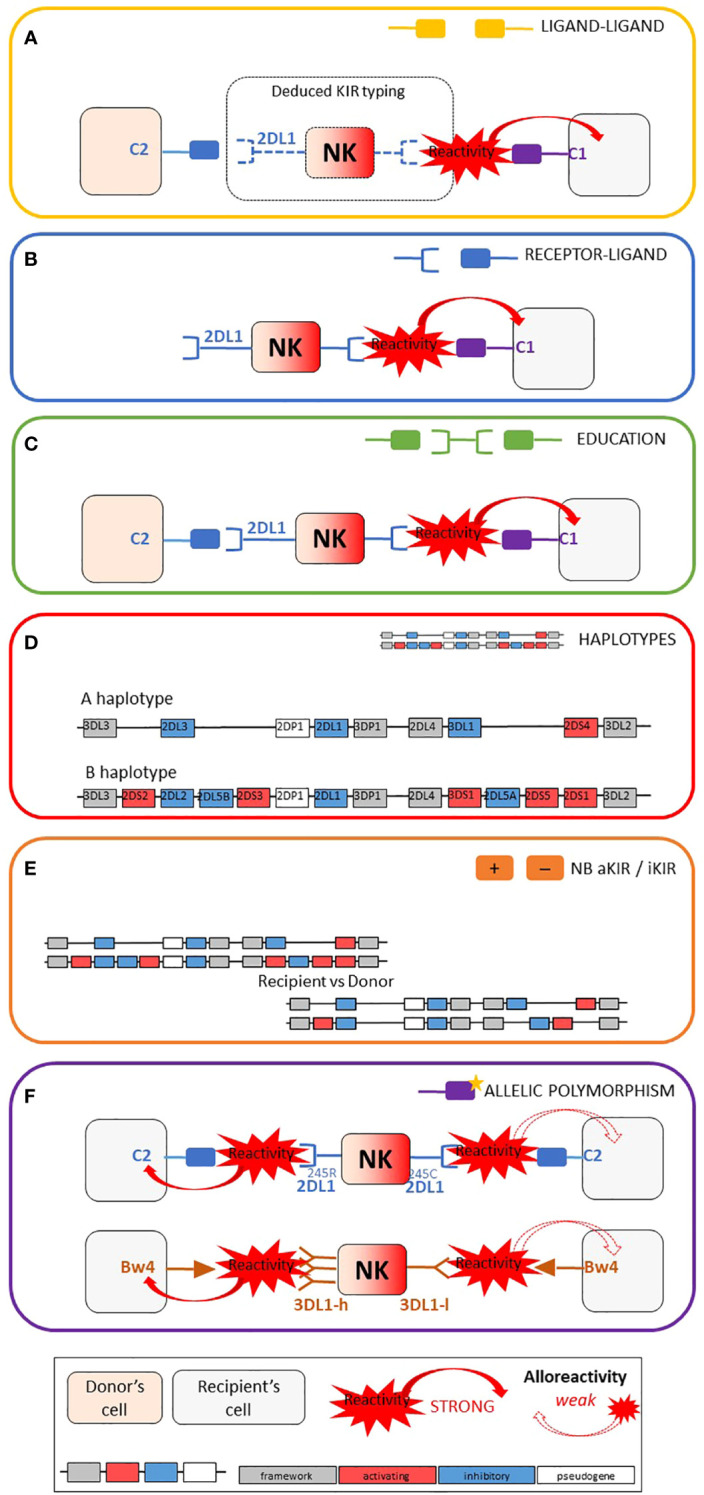
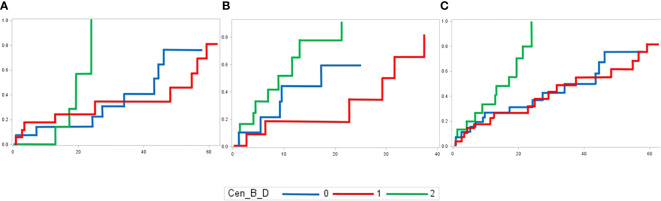
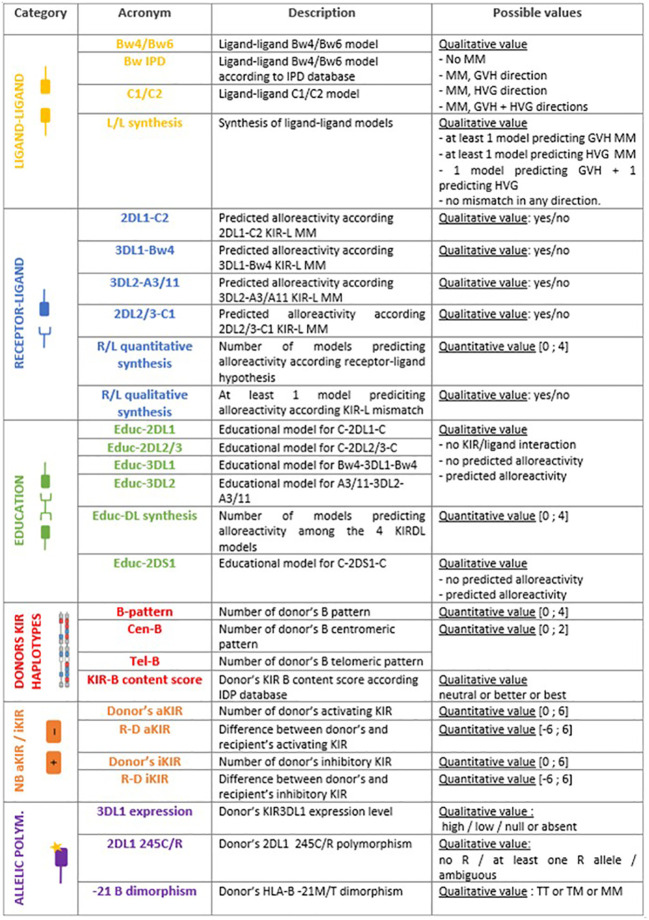
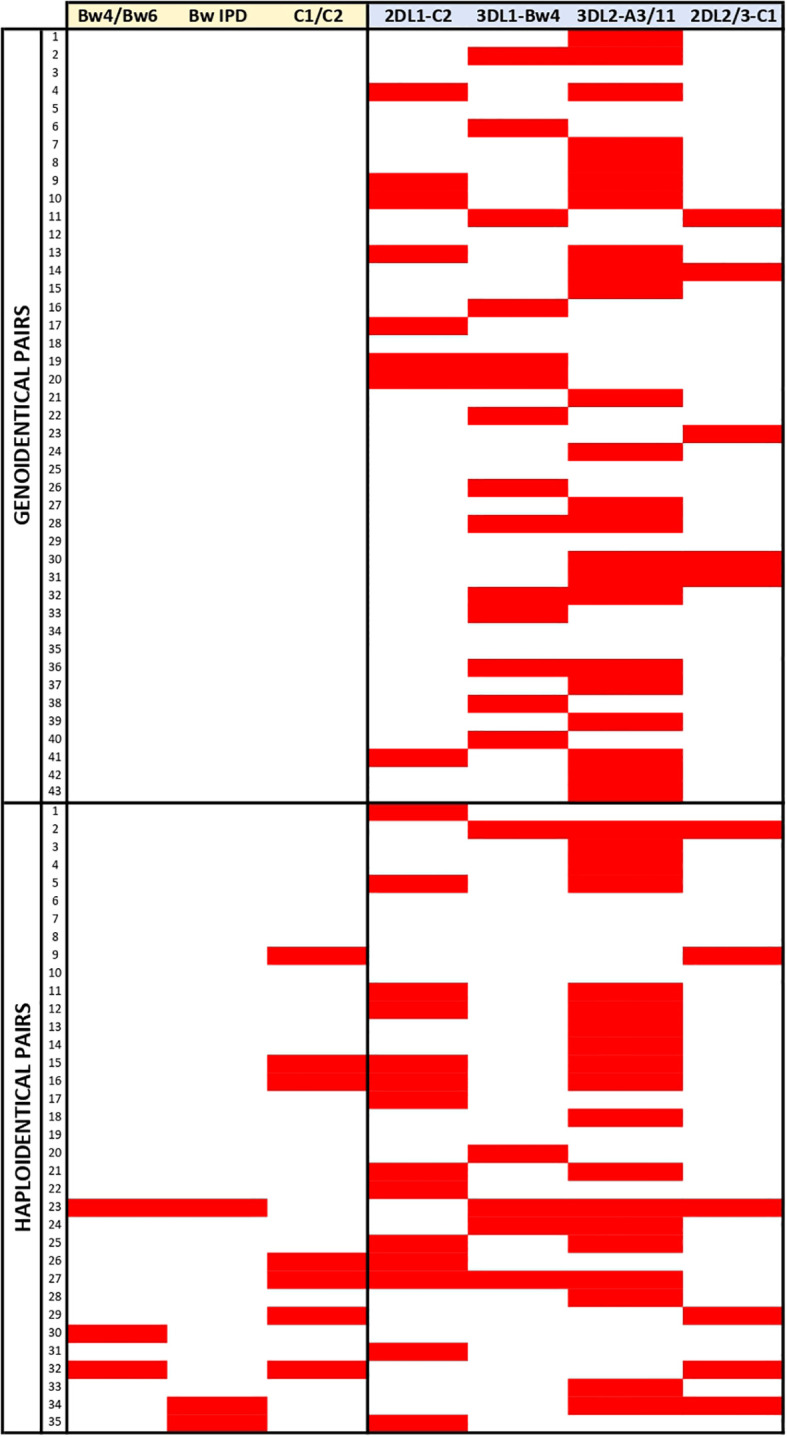
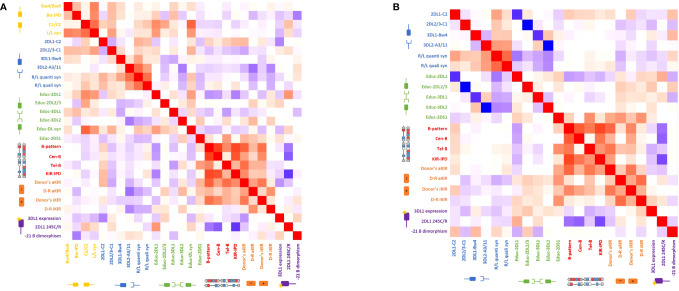
The biological processes underlying NK cell alloreactivity in haematopoietic stem cell transplantation (HSCT) remain unclear. Many different models to predict NK alloreactivity through KIR and MHC genotyping exist, raising ambiguities in its utility and application for clinicians. We assessed 27 predictive models, broadly divided into six categories of alloreactivity prediction: ligand-ligand, receptor-ligand, educational, KIR haplotype-based, KIR matching and KIR allelic polymorphism. The models were applied to 78 NGS-typed donor/recipient pairs undergoing allogeneic HSCT in genoidentical (n=43) or haploidentical (n=35) matchings. Correlations between different predictive models differed widely, suggesting that the choice of the model in predicting NK alloreactivity matters. For example, two broadly used models, and , led to opposing predictions especially in the genoidentical cohort. Correlations also depended on the matching fashion, suggesting that this parameter should also be taken into account in the choice of the scoring strategy. The number of centromeric B-motifs was the only model strongly correlated with the incidence of acute graft-versus-host disease in our set of patients in both the genoidentical and the haploidentical cohorts, suggesting that KIR-based alloreactivity, not MHC mismatches, are responsible for it. To our best knowledge, this paper is the first to experimentally compare NK alloreactivity prediction models within a cohort of genoidentical and haploidentical donor-recipient pairs. This study helps to resolve current discrepancies in KIR-based alloreactivity predictions and highlights the need for deeper consideration of the models used in clinical studies as well as in medical practice.
NK 细胞在造血干细胞移植(HSCT)中的同种异体反应的生物学过程尚不清楚。存在许多不同的模型通过 KIR 和 MHC 基因分型来预测 NK 同种异体反应,这给其在临床医生中的实用性和应用带来了混淆。我们评估了 27 个预测模型,广泛分为六种同种异体反应预测类别:配体-配体、受体-配体、教育、KIR 单倍型、KIR 匹配和 KIR 等位基因多态性。将这些模型应用于 78 对接受 NGS 分型的供体/受者进行同种异体 HSCT 的配对中,包括基因相同(n=43)和单倍体相同(n=35)匹配。不同预测模型之间的相关性差异很大,表明在预测 NK 同种异体反应时选择模型很重要。例如,两种广泛使用的模型和 ,特别是在基因相同的队列中,导致了相反的预测。相关性还取决于匹配方式,这表明在选择评分策略时也应考虑这一参数。在我们的患者群体中,无论是在基因相同还是单倍体相同的队列中,着丝粒 B 基序的数量都是与急性移植物抗宿主病发生率唯一强烈相关的模型,这表明是基于 KIR 的同种异体反应,而不是 MHC 错配,导致了这种情况。据我们所知,这是第一篇在基因相同和单倍体相同供体-受者配对的队列中比较 NK 同种异体反应预测模型的实验论文。本研究有助于解决当前基于 KIR 的同种异体反应预测中的差异,并强调需要更深入地考虑在临床研究以及医疗实践中使用的模型。