Institute of Resource Development and Analysis, Kumamoto University, Kumamoto, Japan.
International Research Center for Medical Sciences, Kumamoto University, Kumamoto, Japan.
Cancer Sci. 2023 Jul;114(7):2821-2834. doi: 10.1111/cas.15794. Epub 2023 Apr 3.
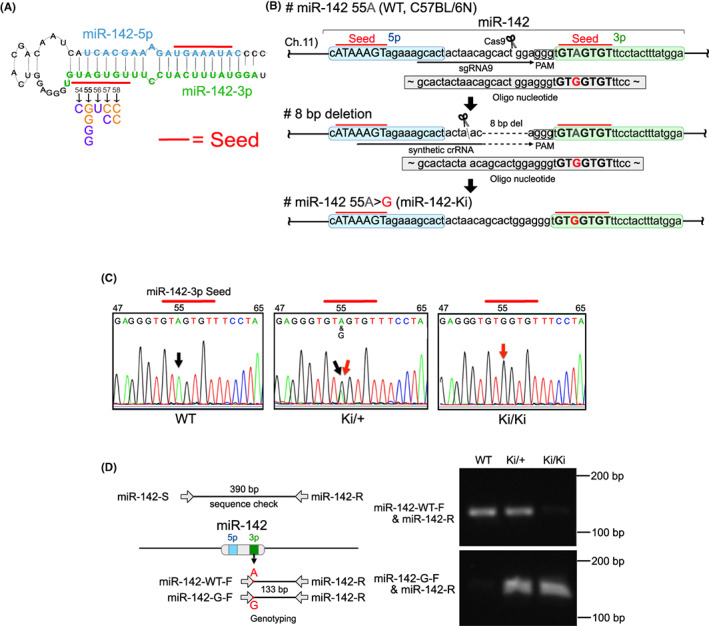
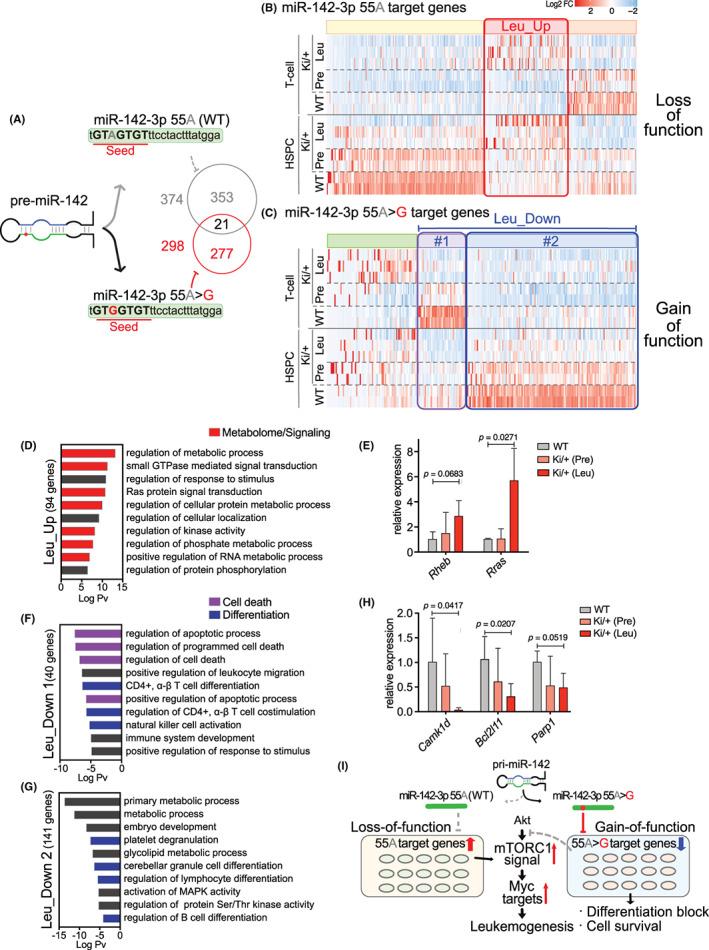
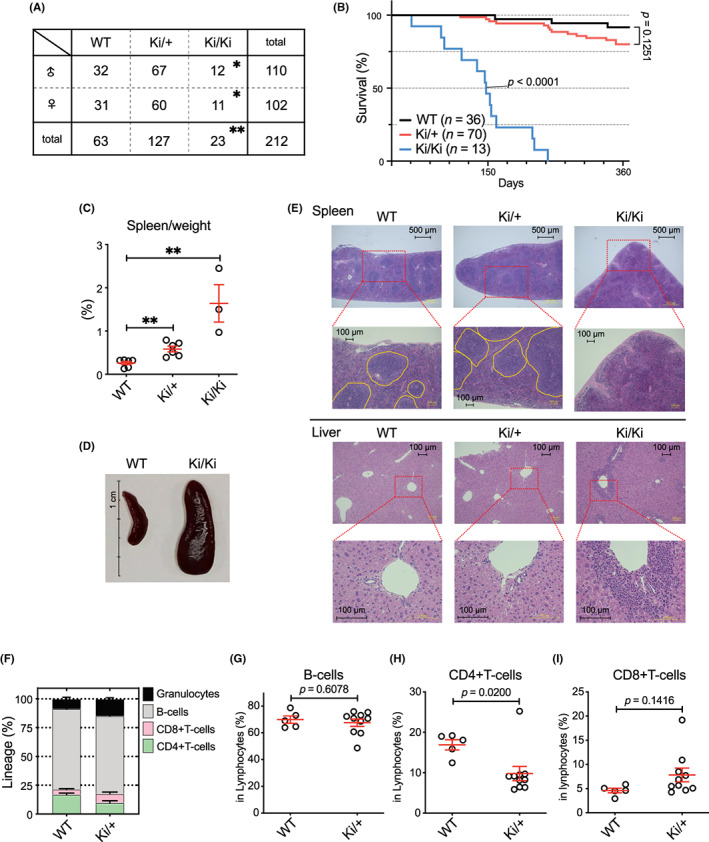
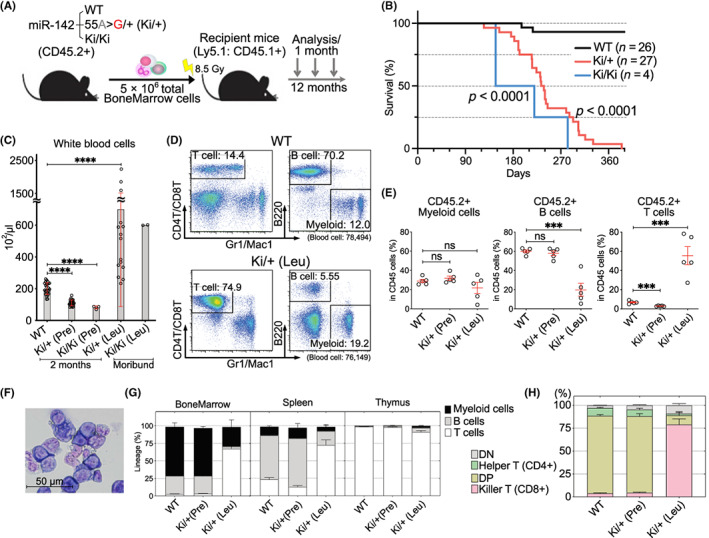
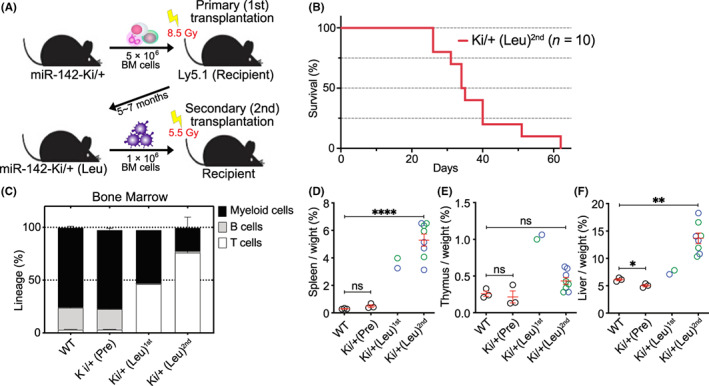
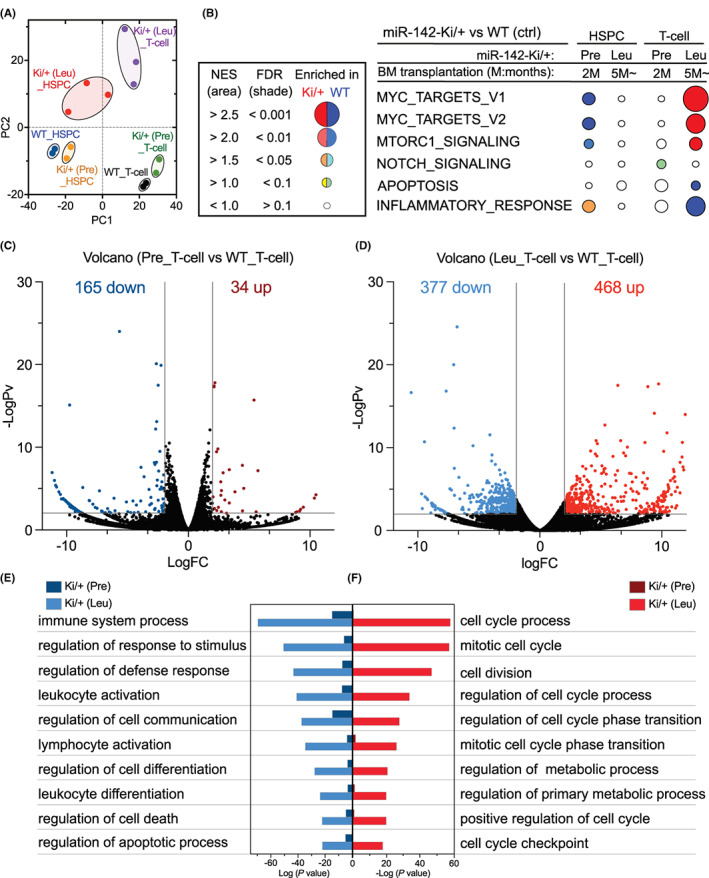
MicroRNAs (miRNAs) play a crucial role in regulating gene expression. MicroRNA expression levels fluctuate, and point mutations and methylation occur in cancer cells; however, to date, there have been no reports of carcinogenic point mutations in miRNAs. MicroRNA 142 (miR-142) is frequently mutated in patients with follicular lymphoma, diffuse large B-cell lymphoma, chronic lymphocytic leukemia (CLL), and acute myeloid leukemia/myelodysplastic syndrome (AML/MDS). To understand the role of miR-142 mutation in blood cancers, the CRISPR-Cas9 system was utilized to successfully generate miR-142-55A>G mutant knock-in (Ki) mice, simulating the most frequent mutation in patients with miR-142 mutated AML/MDS. Bone marrow cells from miR-142 mutant heterozygous Ki mice were transplanted, and we found that the miR-142 mutant/wild-type cells were sufficient for the development of CD8 T-cell leukemia in mice post-transplantation. RNA-sequencing analysis in hematopoietic stem/progenitor cells and CD8 T-cells revealed that miR-142-Ki/+ cells had increased expression of the mTORC1 activator, a potential target of wild-type miR-142-3p. Notably, the expression of genes involved in apoptosis, differentiation, and the inhibition of the Akt-mTOR pathway was suppressed in miR-142-55A>G heterozygous cells, indicating that these genes are repressed by the mutant miR-142-3p. Thus, in addition to the loss of function due to the halving of wild-type miR-142-3p alleles, mutated miR-142-3p gained the function to suppress the expression of distinct target genes, sufficient to cause leukemogenesis in mice.
微小 RNA(miRNAs)在调节基因表达方面发挥着关键作用。miRNA 的表达水平波动,并且在癌细胞中会发生点突变和甲基化;然而,迄今为止,尚未有关于 miRNA 致癌点突变的报道。miRNA 142(miR-142)在滤泡性淋巴瘤、弥漫性大 B 细胞淋巴瘤、慢性淋巴细胞白血病(CLL)和急性髓系白血病/骨髓增生异常综合征(AML/MDS)患者中经常发生突变。为了了解 miR-142 突变在血液癌症中的作用,利用 CRISPR-Cas9 系统成功生成了 miR-142-55A>G 突变敲入(Ki)小鼠,模拟了 miR-142 突变 AML/MDS 患者中最常见的突变。将 miR-142 突变杂合子 Ki 小鼠的骨髓细胞进行移植,我们发现 miR-142 突变/野生型细胞足以在移植后小鼠中发展 CD8 T 细胞白血病。造血干细胞/祖细胞和 CD8 T 细胞中的 RNA 测序分析显示,miR-142-Ki/+细胞中 mTORC1 激活剂的表达增加,这是野生型 miR-142-3p 的潜在靶标。值得注意的是,miR-142-55A>G 杂合细胞中凋亡、分化和 Akt-mTOR 通路抑制相关基因的表达受到抑制,表明这些基因受到突变 miR-142-3p 的抑制。因此,除了由于野生型 miR-142-3p 等位基因减半导致的功能丧失外,突变的 miR-142-3p 还获得了抑制不同靶基因表达的功能,足以在小鼠中引起白血病发生。