Silverberg Jonathan, Jackson J Mark, Kirsner Robert S, Adiri Roni, Friedman Gary, Gao Xing-Hua, Billings Steven D, Kerkmann Urs
The George Washington University School of Medicine & Health Sciences, 2300 I St NW, Washington, DC, 20052, USA.
Division of Dermatology, University of Louisville, 501 S 2nd St, Louisville, KY, 40202, USA.
Dermatol Ther (Heidelb). 2023 Apr;13(4):935-950. doi: 10.1007/s13555-023-00908-0. Epub 2023 Mar 22.
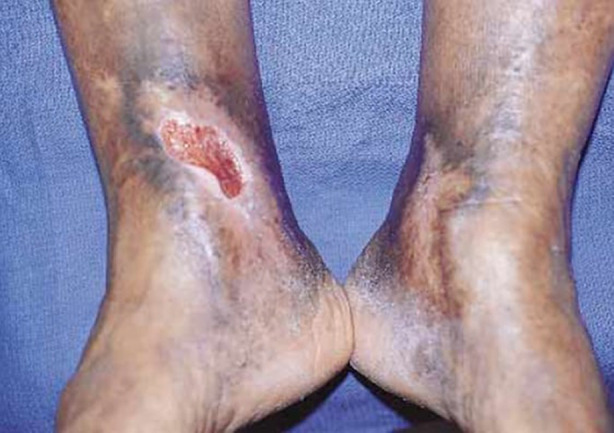
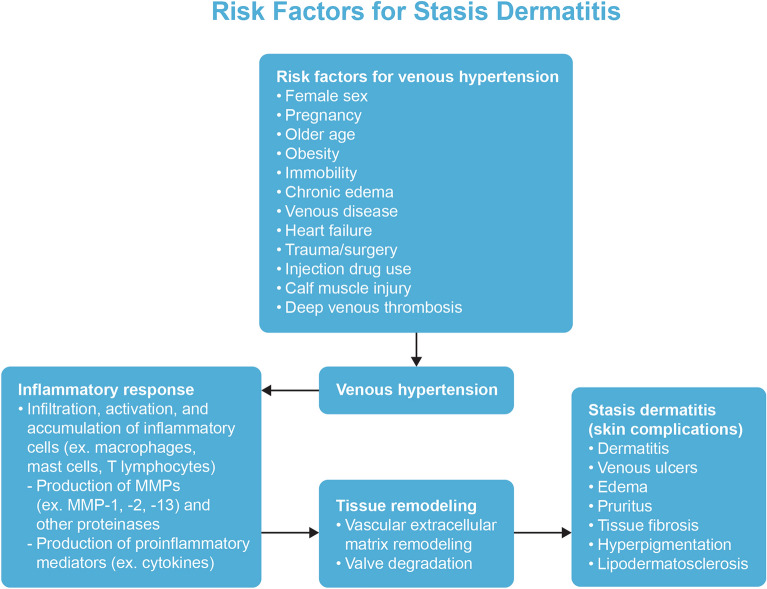
Stasis dermatitis (SD), also known as venous dermatitis, is a form of inflammatory dermatitis of the lower extremities that typically occurs in older individuals and represents a cutaneous manifestation of venous hypertension. Venous hypertension (also known as sustained ambulatory venous pressure) is most often due to retrograde blood flow, which occurs due to calf muscle pump failure. This failure is most commonly secondary to incompetent venous valves, valve destruction, or obstruction of the venous system. Many of the common symptoms associated with SD are caused by inflammatory processes.
This review summarizes the pathogenesis and key role of inflammation in SD by reviewing inflammatory biomarkers associated with SD. The literature was selected though a high-level PubMed search focusing on keywords relating to inflammation associated with SD.
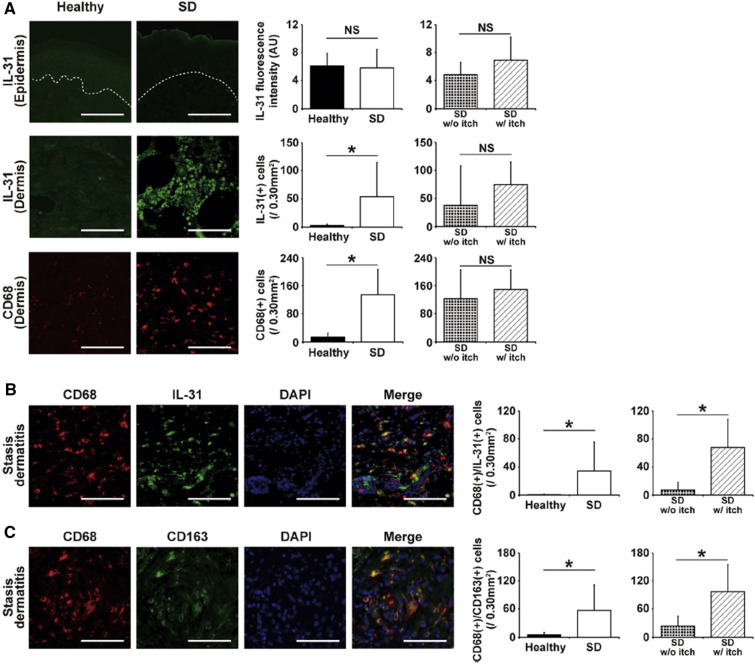
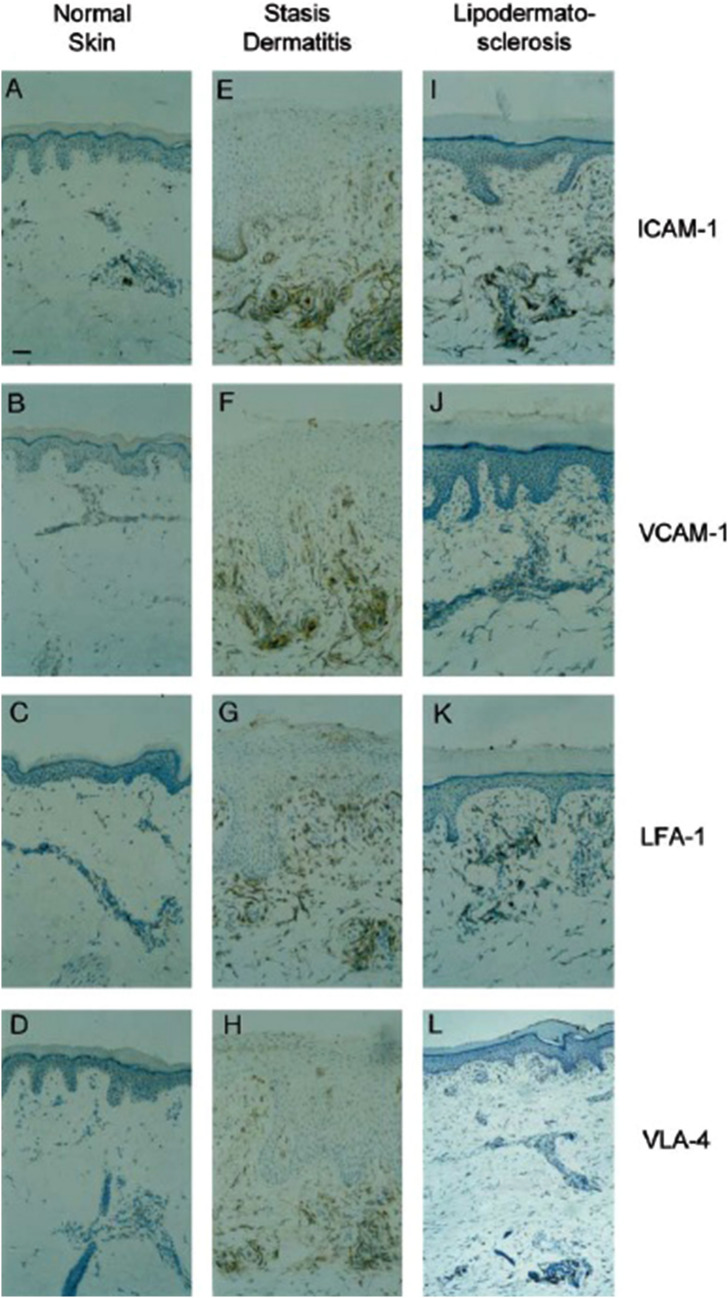
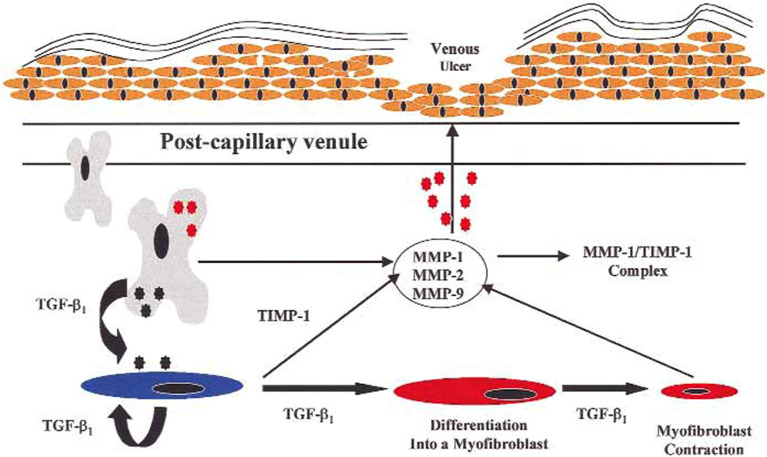
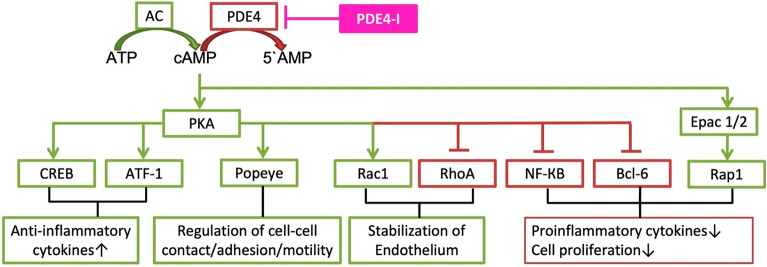
Venous reflux at the lower extremities causes venous hypertension, which leads to chronic venous insufficiency. High venous pressure due to venous hypertension promotes the local accumulation and extravasation of inflammatory cells across the vascular endothelium. Leukocyte trapping in the microcirculation and perivascular space is associated with trophic skin changes. Cell adhesion molecules are linked with the perpetuated influx of activated leukocytes into inflammatory sites. Here, inflammatory cells may influence the remodeling of the extracellular matrix by inducing the secretion of proteinases such as matrix metalloproteinases (MMPs). The increased expression of MMPs is associated with the formation of venous leg ulcers and lesions. Phosphodiesterase 4 activity has also been shown to be elevated in individuals with inflammatory dermatoses compared to healthy individuals.
Because inflammation is a key driver of the signs and symptoms of SD, several of the highlighted biomarkers of inflammation represent potential opportunities to target and interrupt molecular pathways of cutaneous inflammation and, therefore, remediate the signs and symptoms of SD.
Understanding the pathogenesis of SD may help clinicians identify drivers of inflammation to use as potential targets for the development of new treatment options.
淤积性皮炎(SD),也称为静脉性皮炎,是一种下肢炎症性皮炎,通常发生在老年人中,是静脉高压的皮肤表现。静脉高压(也称为持续动态静脉压)最常见的原因是小腿肌肉泵功能衰竭导致的血液逆流。这种功能衰竭最常见的是继发于静脉瓣膜功能不全、瓣膜破坏或静脉系统阻塞。许多与SD相关的常见症状是由炎症过程引起的。
本综述通过回顾与SD相关的炎症生物标志物,总结了SD发病机制及炎症的关键作用。通过在PubMed上进行高级搜索,选择与SD相关炎症的关键词来筛选文献。
下肢静脉反流导致静脉高压,进而导致慢性静脉功能不全。静脉高压引起的高静脉压促进炎症细胞在血管内皮局部积聚和外渗。微循环和血管周围间隙中的白细胞滞留与营养性皮肤改变有关。细胞黏附分子与活化白细胞持续流入炎症部位有关。在这里,炎症细胞可能通过诱导基质金属蛋白酶(MMPs)等蛋白酶的分泌来影响细胞外基质的重塑。MMPs表达增加与下肢静脉溃疡和病变的形成有关。与健康个体相比,炎症性皮肤病患者的磷酸二酯酶4活性也已显示升高。
由于炎症是SD体征和症状的关键驱动因素,一些突出的炎症生物标志物代表了靶向和中断皮肤炎症分子途径的潜在机会,从而缓解SD的体征和症状。
了解SD的发病机制可能有助于临床医生识别炎症驱动因素,作为开发新治疗方案的潜在靶点。