Munasinghe B M, Karunatileke C T
Department of Anaesthesiology and Intensive Care, Queen Elizabeth the Queen Mother Hospital, Margate, Kent, UK.
Department of Surgery, District General Hospital, Mannar, Sri Lanka.
Int J Surg Case Rep. 2023 Apr;105:108010. doi: 10.1016/j.ijscr.2023.108010. Epub 2023 Mar 21.
Tracheobronchial injuries are uncommon complications during oesophagectomies adopting blind dissection or thoracoscopy. Neoadjuvant chemo-radiotherapy is considered a risk factor while double-lumen endotracheal tube insertion and direct surgical damage are other related causalities.
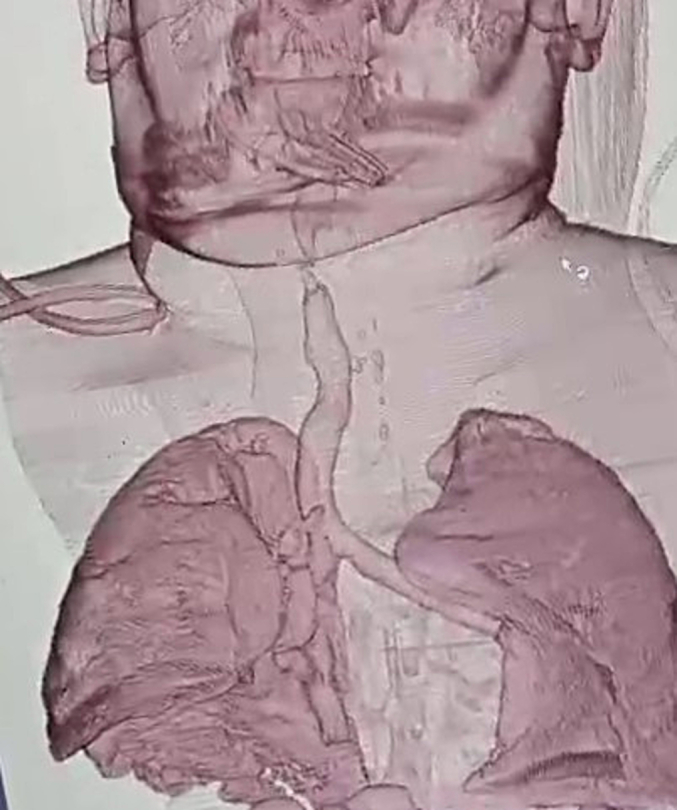
A 65-year-old male underwent a Mckeown oesophagectomy with a right thoracotomy for a mid-oesophageal carcinoma. During the latter stages of cervical dissection and oesophageal mobilization, a 2-cm tracheal injury was noted in the posterior membranous trachea. It was repaired with 2.0 prolene with interrupted sutures and local transposition muscle flap using prevertebral muscles. Post-operatively, he was ventilated in view of prolonged surgery and the probability of airway oedema with the double-lumen ET tube. A transient bubbling of the intercostal drain was managed conservatively and attributed to a secondary pneumothorax. He was extubated and made an uncomplicated recovery. At 2 years, he did not have any tracheal stenosis.
If diagnosed intraoperatively and for sizes >2 cm, tracheobronchial injuries should be repaired. Various techniques exist with differing evidence. Repair with non-absorbable sutures, use of synthetic grafts, innate tissue such as intercostal and pectoral muscle flaps, and pericardial and pleural flaps are all being used. Early extubation might be useful provided other criteria for extubation are met.
Tracheobronchial injuries during oesophagectomies present a surplus challenge to both the anaesthetist and the surgeon. Collective decision-making tailored to the patient and close monitoring during the postoperative phase would result in good outcomes.
气管支气管损伤是采用盲目解剖或胸腔镜进行食管切除术时罕见的并发症。新辅助放化疗被认为是一个危险因素,而双腔气管插管和直接手术损伤是其他相关病因。
一名65岁男性因中段食管癌接受了经右胸切口的麦克基翁食管切除术。在颈部解剖和食管游离的后期,发现后膜性气管有一处2厘米的损伤。用2.0号普罗伦线间断缝合,并使用椎前肌进行局部转位肌瓣修复。术后,鉴于手术时间延长以及双腔气管插管导致气道水肿的可能性,对其进行了通气。肋间引流管出现短暂气泡,经保守处理,归因于继发性气胸。他拔管后恢复顺利。2年后,他没有出现任何气管狭窄。
如果在术中诊断出气管支气管损伤且损伤大小>2厘米,应进行修复。存在各种技术,其证据各不相同。使用不可吸收缝线修复、使用合成移植物、使用肋间肌和胸肌瓣等固有组织以及心包瓣和胸膜瓣等都在被采用。如果满足其他拔管标准,早期拔管可能是有益的。
食管切除术中的气管支气管损伤给麻醉师和外科医生都带来了额外的挑战。根据患者情况进行集体决策并在术后阶段密切监测将取得良好的结果。