Graham Hamish R, Kamuntu Yewande, Miller Jasmine, Barrett Anna, Kunihira Blasio, Engol Santa, Kabunga Lorraine, Lam Felix, Olaro Charles, Ajilong Harriet, Kitutu Freddy Eric
Melbourne Children's Global Health, MCRI, University of Melbourne, Royal Children's Hospital, Parkville, Victoria, Australia.
Department of Paediatrics, University College Hospital, Ibadan, Nigeria.
PLOS Glob Public Health. 2022 Apr 22;2(4):e0000352. doi: 10.1371/journal.pgph.0000352. eCollection 2022.
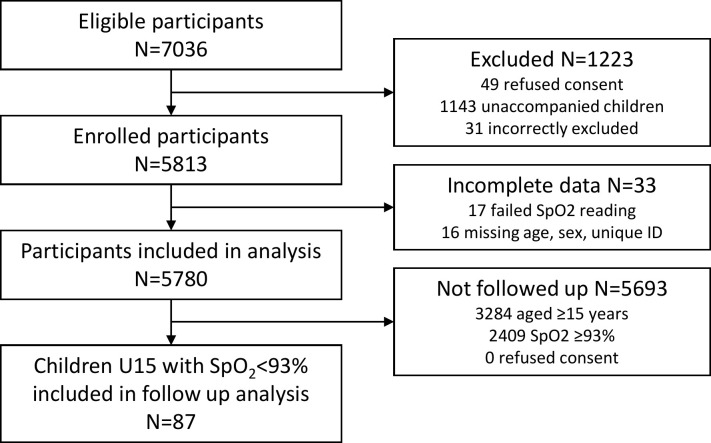
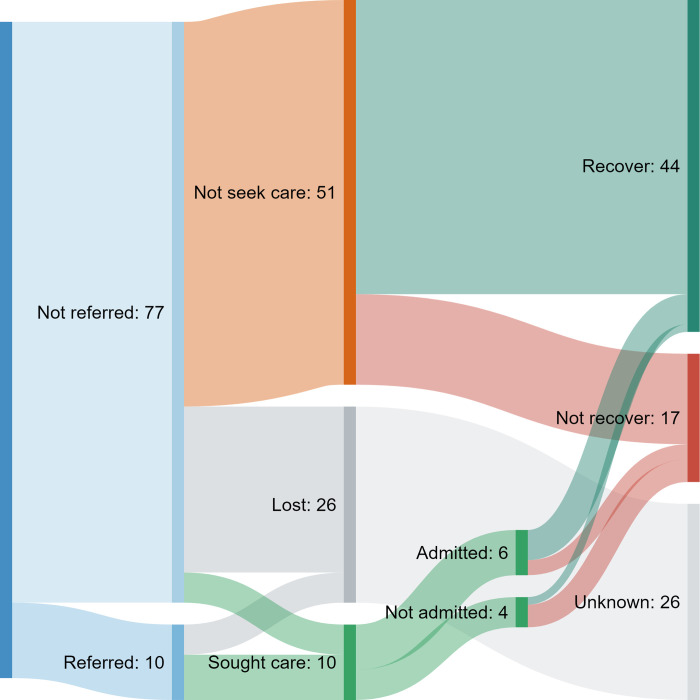
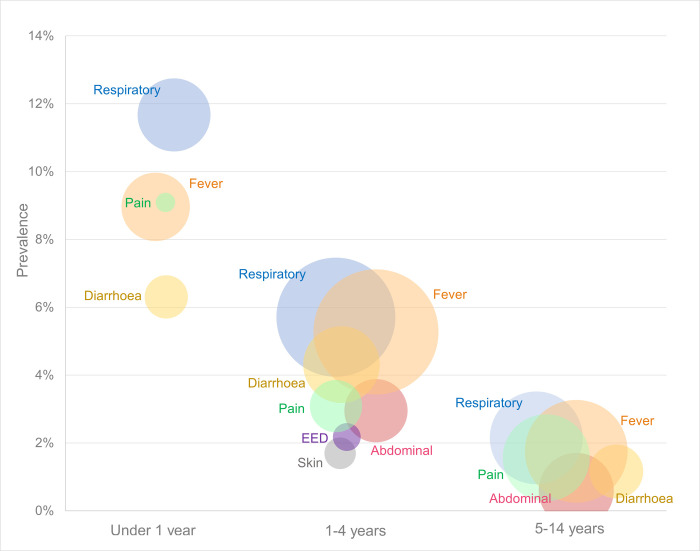
Hypoxaemia (low blood oxygen) is common among hospitalised patients, increasing the odds of death five-fold and requiring prompt detection and treatment. However, we know little about hypoxaemia prevalence in primary care and the role for pulse oximetry and oxygen therapy. This study assessed the prevalence and management of hypoxaemia at primary care facilities in Uganda. We conducted a cross sectional prevalence study and prospective cohort study of children with hypoxaemia in 30 primary care facilities in Uganda, Feb-Apr 2021. Clinical data collectors used handheld pulse oximeters to measure blood oxygen level (SpO2) of all acutely unwell children, adolescents, and adults. We followed up a cohort of children aged under 15 years with SpO2<93% by phone after 7 days to determine if the patient had attended another health facility, been admitted, or recovered. Primary outcome: proportion of children under 5 years of age with severe hypoxaemia (SpO2<90%). Secondary outcomes: severe (SpO2<90%) and moderate hypoxaemia (SpO2 90-93%) prevalence by age/sex/complaint; number of children with hypoxaemia referred, admitted and recovered. We included 1561 children U5, 935 children 5-14 years, and 3284 adolescents/adults 15+ years. Among children U5, the prevalence of severe hypoxaemia was 1.3% (95% CI 0.9 to 2.1); an additional 4.9% (3.9 to 6.1) had moderate hypoxaemia. Performing pulse oximetry according to World Health Organization guidelines exclusively on children with respiratory complaints would have missed 14% (3/21) of severe hypoxaemia and 11% (6/55) of moderate hypoxaemia. Hypoxaemia prevalence was low among children 5-14 years (0.3% severe, 1.1% moderate) and adolescents/adults 15+ years (0.1% severe, 0.5% moderate). A minority (12/27, 44%) of severely hypoxaemic patients were referred; 3 (12%) received oxygen. We followed 87 children aged under 15 years with SpO2<93%, with complete data for 61 (70%), finding low rates of referral (6/61, 10%), hospital attendance (10/61, 16%), and admission (6/61, 10%) with most (44/61, 72%) fully recovered at day 7. Barriers to referral included caregiver belief it was unnecessary (42/51, 82%), cost (8/51, 16%), and distance or lack of transport (3/51, 6%). Hypoxaemia is common among acutely unwell children under five years of age presenting to Ugandan primary care facilities. Routine pulse oximetry has potential to improve referral, management and clinical outcomes. Effectiveness, acceptability, and feasibility of pulse oximetry and oxygen therapy for primary care should be investigated in implementation trials, including economic analysis from health system and societal perspectives.
低氧血症(血氧含量低)在住院患者中很常见,会使死亡几率增加五倍,需要及时检测和治疗。然而,我们对初级保健中低氧血症的患病率以及脉搏血氧饱和度测定法和氧疗的作用了解甚少。本研究评估了乌干达初级保健机构中低氧血症的患病率及管理情况。2021年2月至4月,我们在乌干达30个初级保健机构对低氧血症儿童进行了一项横断面患病率研究和前瞻性队列研究。临床数据收集人员使用手持式脉搏血氧仪测量所有急性不适儿童、青少年及成人的血氧水平(SpO2)。我们在7天后通过电话随访了一组15岁以下、SpO2<93%的儿童,以确定患者是否去过其他医疗机构、是否入院或康复。主要结局:5岁以下儿童严重低氧血症(SpO2<90%)的比例。次要结局:按年龄/性别/主诉划分的严重(SpO2<90%)和中度低氧血症(SpO2 90 - 93%)的患病率;低氧血症儿童转诊、入院及康复的人数。我们纳入了1561名5岁以下儿童、935名5 - 14岁儿童以及3284名15岁及以上青少年/成人。在5岁以下儿童中,严重低氧血症的患病率为1.3%(95%置信区间0.9至2.1);另有4.9%(3.9至6.1)为中度低氧血症。仅按照世界卫生组织指南对有呼吸道症状的儿童进行脉搏血氧饱和度测定,会漏诊14%(3/21)的严重低氧血症病例和11%(6/55)的中度低氧血症病例。5 - 14岁儿童(严重0.3%,中度1.1%)及15岁及以上青少年/成人(严重0.1%,中度0.5%)中低氧血症患病率较低。少数(12/27,44%)严重低氧血症患者被转诊;3例(12%)接受了吸氧治疗。我们随访了87名15岁以下、SpO2<93%的儿童,61名(70%)有完整数据,发现转诊率(6/61,10%)、就诊率(10/61,16%)和入院率(6/61,10%)较低,大多数(44/61,72%)在第7天完全康复。转诊障碍包括照料者认为没必要(42/51,82%)、费用(8/51,16%)以及距离或交通不便(3/51,6%)。低氧血症在前往乌干达初级保健机构就诊的急性不适5岁以下儿童中很常见。常规脉搏血氧饱和度测定法有改善转诊、管理及临床结局的潜力。应在实施试验中研究脉搏血氧饱和度测定法和氧疗在初级保健中的有效性、可接受性及可行性,包括从卫生系统和社会角度进行经济分析。