Chen Sheng, He Tailin, Zhong Yiming, Chen Mingjue, Yao Qing, Chen Di, Shao Zengwu, Xiao Guozhi
Department of Orthopaedics, Union Hospital, Tongji Medical College, Huazhong University of Science and Technology, Wuhan 430022, China.
Department of Biochemistry, School of Medicine, Shenzhen Key Laboratory of Cell Microenvironment, Guangdong Provincial Key Laboratory of Cell Microenvironment and Disease Research, Southern University of Science and Technology, Shenzhen 518055, China.
Acta Pharm Sin B. 2023 Mar;13(3):998-1013. doi: 10.1016/j.apsb.2022.09.020. Epub 2022 Oct 3.
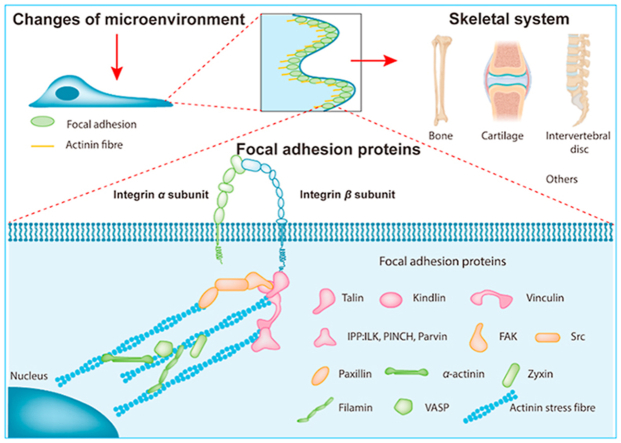
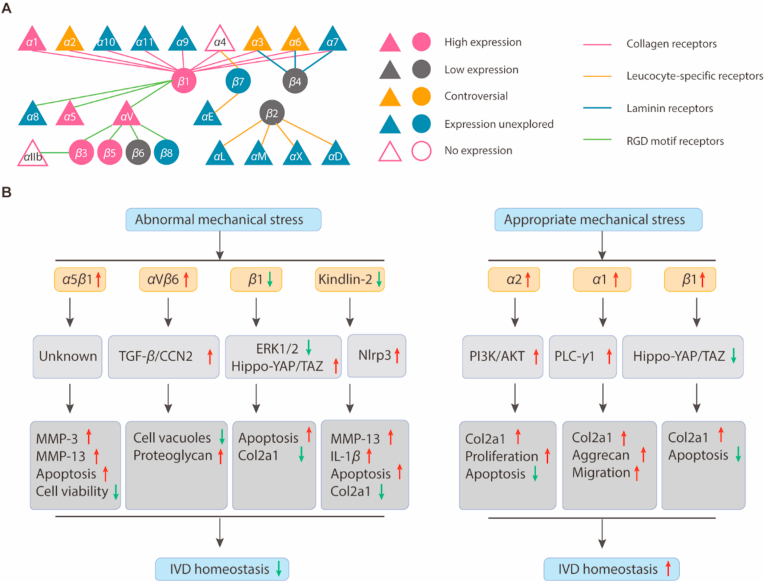
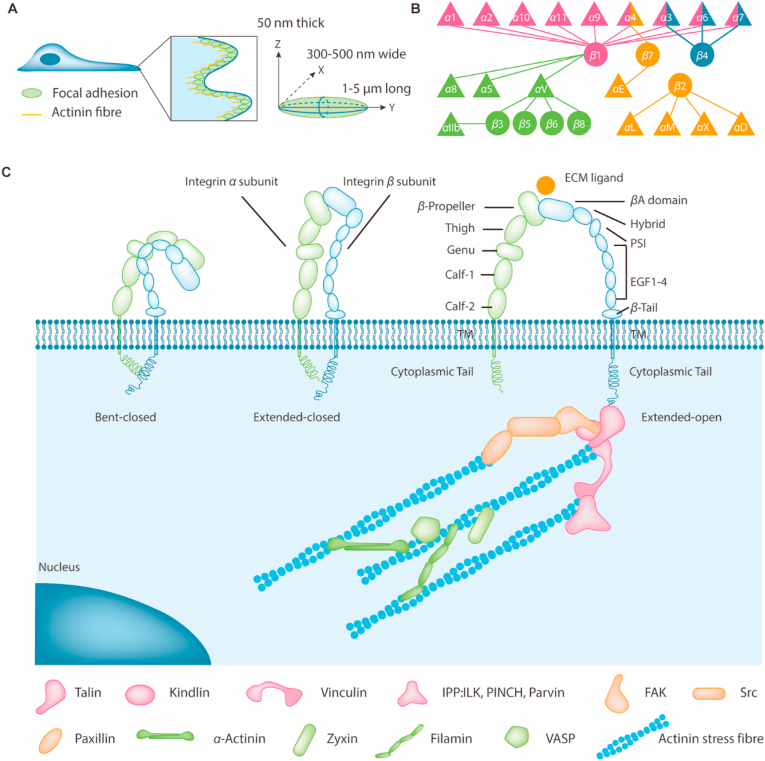
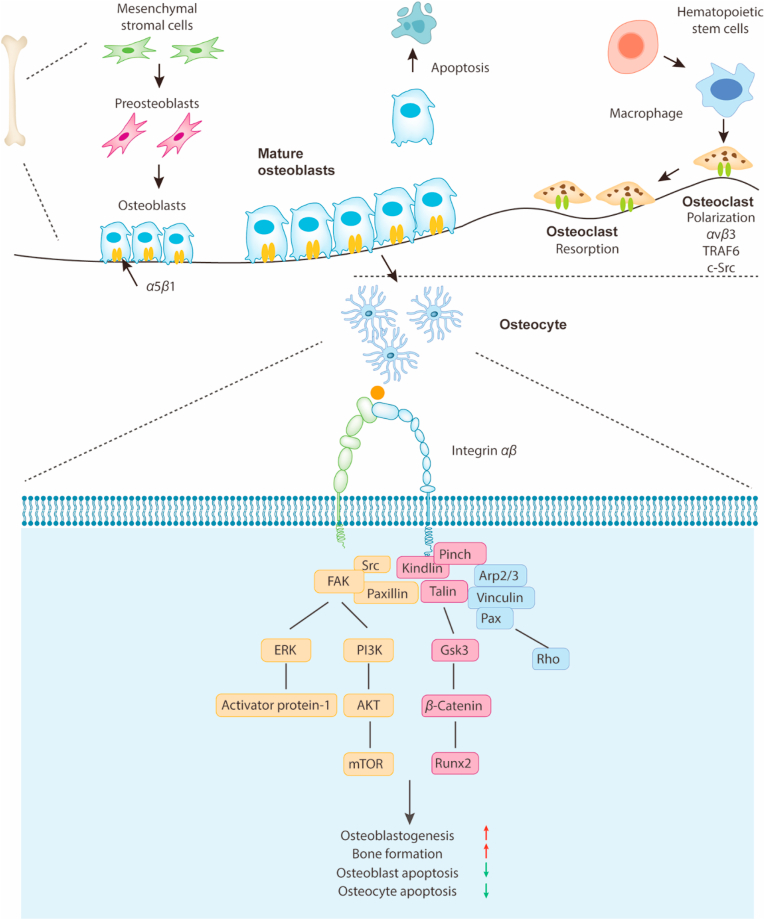
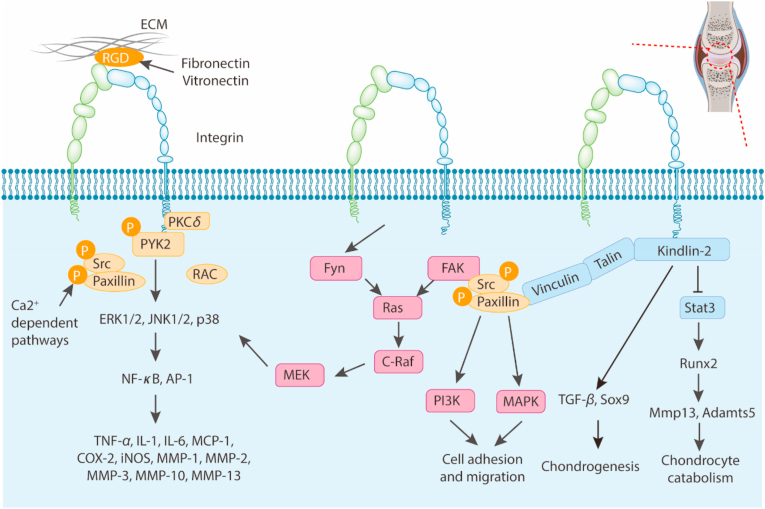
The skeletal system, which contains bones, joints, tendons, ligaments and other elements, plays a wide variety of roles in body shaping, support and movement, protection of internal organs, production of blood cells and regulation of calcium and phosphate metabolism. The prevalence of skeletal diseases and disorders, such as osteoporosis and bone fracture, osteoarthritis, rheumatoid arthritis, and intervertebral disc degeneration, increases with age, causing pain and loss of mobility and creating a huge social and economic burden globally. Focal adhesions (FAs) are macromolecular assemblies that are composed of the extracellular matrix (ECM), integrins, intracellular cytoskeleton and other proteins, including kindlin, talin, vinculin, paxillin, pinch, Src, focal adhesion kinase (FAK) and integrin-linked protein kinase (ILK) and other proteins. FA acts as a mechanical linkage connecting the ECM and cytoskeleton and plays a key role in mediating cell-environment communications and modulates important processes, such as cell attachment, spreading, migration, differentiation and mechanotransduction, in different cells in skeletal system by impacting distinct outside-in and inside-out signaling pathways. This review aims to integrate the up-to-date knowledge of the roles of FA proteins in the health and disease of skeletal system and focuses on the specific molecular mechanisms and underlying therapeutic targets for skeletal diseases.
骨骼系统由骨骼、关节、肌腱、韧带及其他成分组成,在身体塑形、支撑与运动、保护内脏器官、血细胞生成以及钙和磷代谢调节等方面发挥着多种作用。骨骼疾病的患病率,如骨质疏松症和骨折、骨关节炎、类风湿性关节炎以及椎间盘退变,会随着年龄的增长而上升,导致疼痛和行动能力丧失,并在全球造成巨大的社会和经济负担。粘着斑(FAs)是由细胞外基质(ECM)、整合素、细胞内细胞骨架和其他蛋白质组成的大分子集合体,这些蛋白质包括踝蛋白、桩蛋白、纽带蛋白、桩蛋白、小窝蛋白、Src、粘着斑激酶(FAK)和整合素连接蛋白激酶(ILK)等。粘着斑作为连接细胞外基质和细胞骨架的机械连接,在介导细胞与环境通讯中起关键作用,并通过影响不同的外向内和内向外交联信号通路,在骨骼系统的不同细胞中调节细胞附着、铺展、迁移、分化和机械转导等重要过程。这篇综述旨在整合粘着斑蛋白在骨骼系统健康与疾病中作用的最新知识,并聚焦于骨骼疾病的具体分子机制和潜在治疗靶点。