Kawabata Hayato, Konno Ayumu, Matsuzaki Yasunori, Hirai Hirokazu
Department of Neurophysiology & Neural Repair, Gunma University Graduate School of Medicine, Maebashi, Gunma 371-8511, Japan.
Viral Vector Core, Gunma University, Initiative for Advanced Research, Maebashi, Gunma 371-8511, Japan.
Mol Ther Methods Clin Dev. 2023 Mar 2;29:81-92. doi: 10.1016/j.omtm.2023.02.016. eCollection 2023 Jun 8.
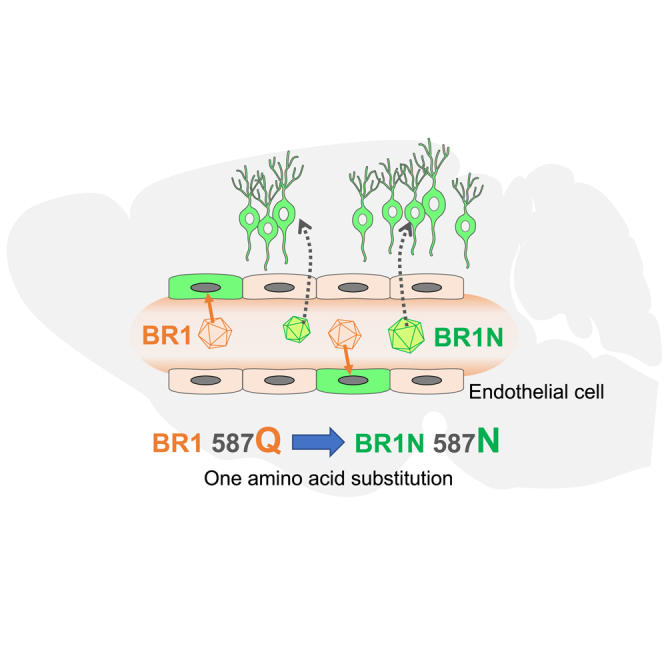
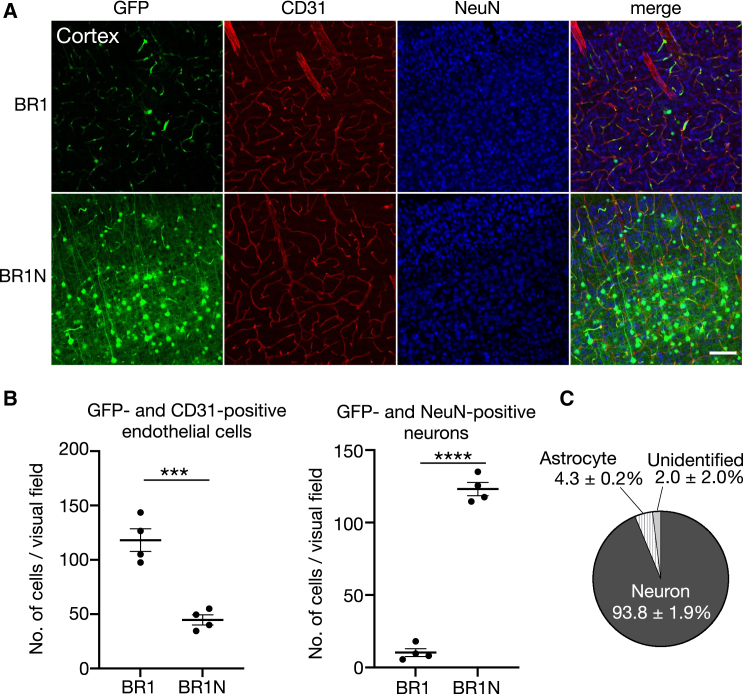
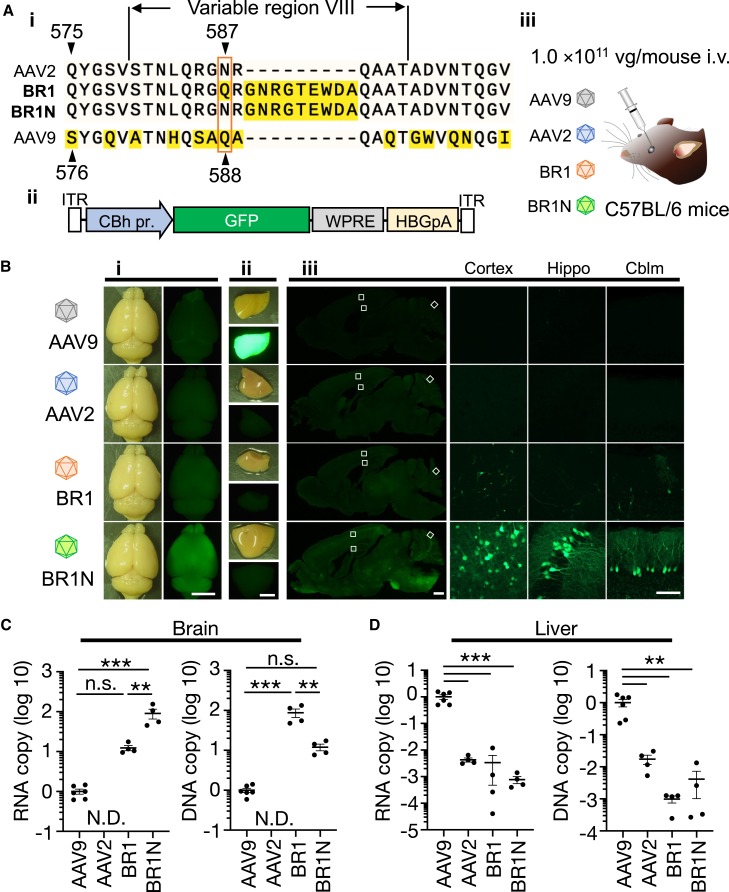
Upon systemic administration, adeno-associated virus serotype 9 (AAV9) and the capsid variant PHP.eB show distinct tropism for the central nervous system (CNS), whereas AAV2 and the capsid variant BR1 transduce brain microvascular endothelial cells (BMVECs) with little transcytosis. Here, we show that a single amino acid substitution (from Q to N) in the BR1 capsid at position 587 (designated BR1N) confers a significantly higher blood-brain barrier (BBB) penetration capacity to BR1. Intravenously infused BR1N showed significantly higher CNS tropism than BR1 and AAV9. BR1 and BR1N likely use the same receptor for entry into BMVECs; however, the single amino acid substitution has profound consequences on tropism. This suggests that receptor binding alone does not determine the final outcome and that further improvements of capsids within predetermined receptor usage are feasible.
全身给药后,9型腺相关病毒(AAV9)和衣壳变体PHP.eB对中枢神经系统(CNS)表现出不同的嗜性,而AAV2和衣壳变体BR1对脑微血管内皮细胞(BMVECs)的转导作用较弱且几乎没有转胞吞作用。在此,我们表明,BR1衣壳第587位的单个氨基酸取代(从Q到N,命名为BR1N)赋予BR1显著更高的血脑屏障(BBB)穿透能力。静脉注射的BR1N显示出比BR1和AAV9显著更高的CNS嗜性。BR1和BR1N可能使用相同的受体进入BMVECs;然而,单个氨基酸取代对嗜性有深远影响。这表明仅受体结合并不能决定最终结果,并且在预定受体使用范围内对衣壳进行进一步改进是可行的。