Zinboonyahgoon Nantthasorn, Luansritisakul Choopong
Department of Anesthesiology, Faculty of Medicine Siriraj Hospital, Mahidol University, Bangkok, Thailand.
Korean J Pain. 2023 Apr 1;36(2):253-267. doi: 10.3344/kjp.22392.
Cancer-induced bone pain (CIBP) is considered to have both nociceptive and neuropathic components. However, the prevalence, risk factors, and impact of the neuropathic components are yet poorly understood.
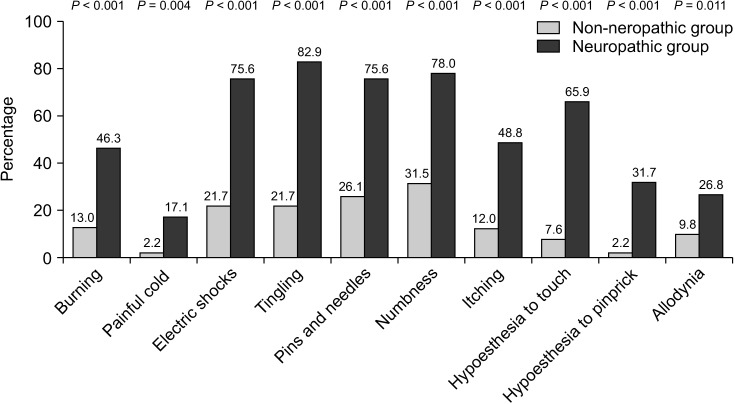
We estimate the prevalence of neuropathic pain (NP) features in patients with CIBP at a tertiary care pain clinic setting using the Douleur Neuropathique 4 questionnaire and evaluate their associated factors and their impact after 4 weeks of treatment using the Brief Pain Inventory questionnaire and the Edmonton Symptom Assessment System.
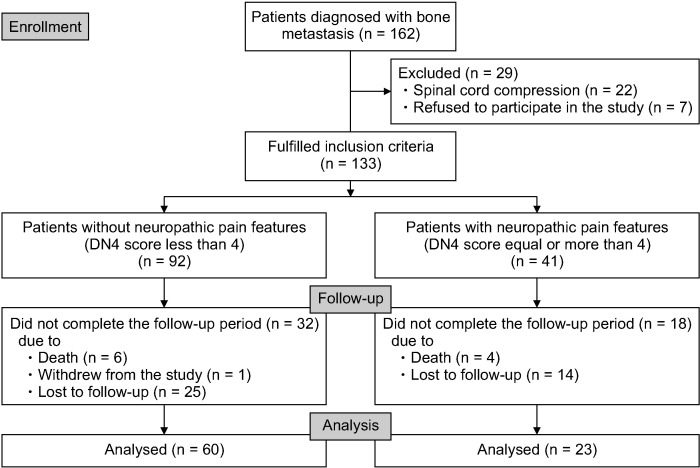
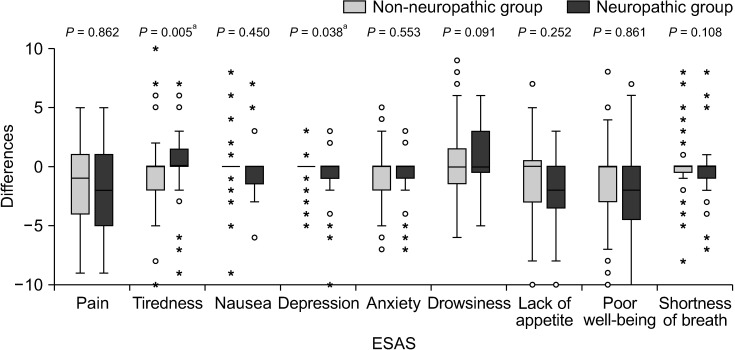
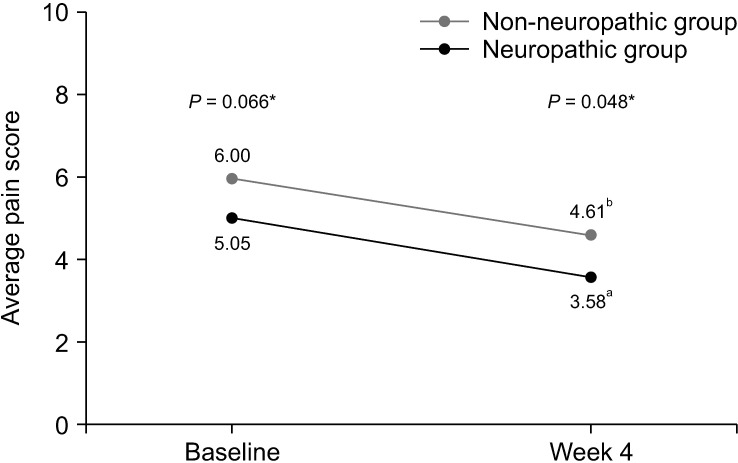
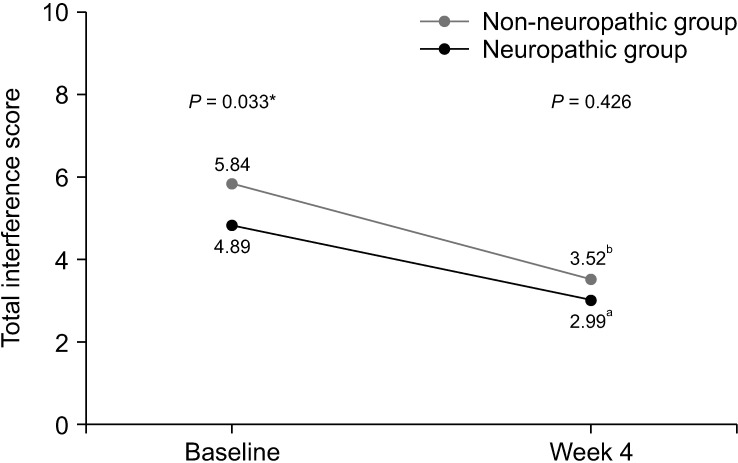
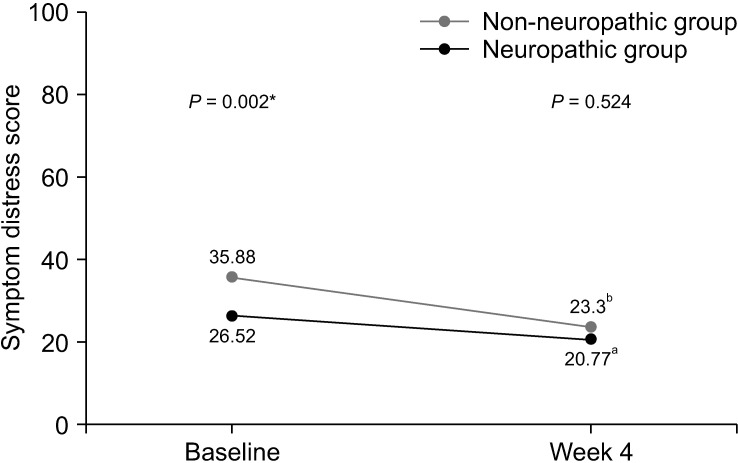
A total of 133 patients were recruited. The estimated prevalence of NP was 30.8% (95% confidence interval: 23.6%-39.1%). Initially, the patients with NP had significantly higher average pain scores (6.00 vs. 5.05, = 0.006), higher total interference scores (5.84 vs. 4.89, = 0.033), and symptom distress scores (35.88 vs. 26.52, = 0.002). After 4 weeks of treatment, patients in both groups reported significantly decreased pain intensity and improved quality of life. However, the patients with NP still reported significantly higher average pain (4.61 vs. 3.58, = 0.048), trending toward higher total interference scores (3.52 vs. 2.99, = 0.426), and symptom distress scores (23.30 vs. 20.77, = 0.524). From multivariate analysis, the independent risk factors for NP were younger age, pain in the extremities, and higher average pain scores.
NP are common in patients with CIBP. These conditions negatively affect pain intensity and the patient's quality of life before and after treatment.
癌症诱发的骨痛(CIBP)被认为同时具有伤害性和神经性成分。然而,神经性成分的患病率、危险因素及其影响仍知之甚少。
我们在一家三级护理疼痛诊所,使用神经病理性疼痛4问卷评估CIBP患者中神经病理性疼痛(NP)特征的患病率,并使用简明疼痛问卷和埃德蒙顿症状评估系统评估其相关因素以及治疗4周后的影响。
共招募了133名患者。NP的估计患病率为30.8%(95%置信区间:23.6%-39.1%)。最初,NP患者的平均疼痛评分显著更高(6.00对5.05,P = 0.006),总干扰评分更高(5.84对4.89,P = 0.033),症状困扰评分更高(35.88对26.52,P = 0.002)。治疗4周后,两组患者的疼痛强度均显著降低,生活质量得到改善。然而,NP患者的平均疼痛仍显著更高(4.61对3.58,P = 0.048),总干扰评分有升高趋势(3.52对2.99,P = 0.426),症状困扰评分也更高(23.30对20.77,P = 0.524)。多因素分析显示,NP的独立危险因素为年龄较小、四肢疼痛和平均疼痛评分较高。
NP在CIBP患者中很常见。这些情况对治疗前后的疼痛强度和患者生活质量均有负面影响。