School of Physical Training and Physical Therapy, Shenzhen University, Shenzhen 518060, Guangdong, China.
Center of Bioengineering, School of Medicine, Shenzhen University, Shenzhen 518060, Guangdong, China.
Med Sci (Basel). 2023 Feb 28;11(1):21. doi: 10.3390/medsci11010021.
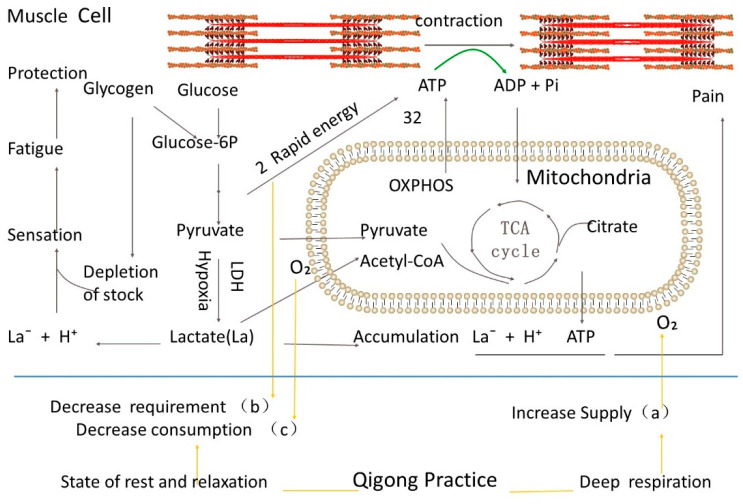
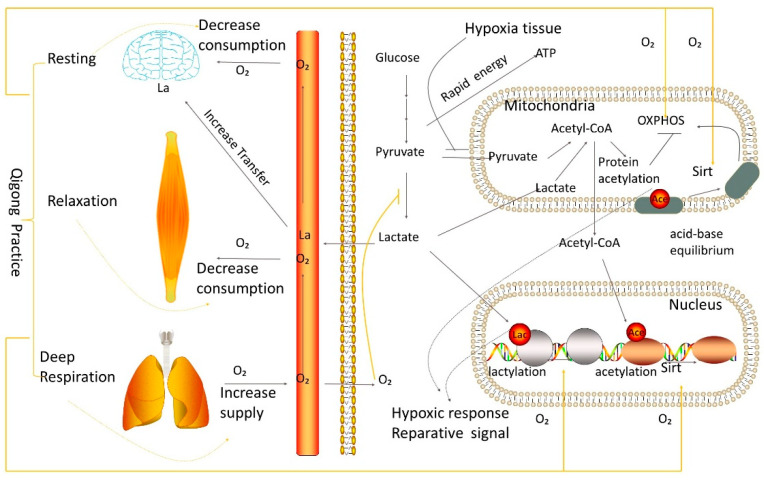
Qigong is a meditative movement with therapeutic effects and is commonly practiced in Eastern medicine. A growing body of evidence validates its health benefits, leading to mechanistic questions about how it works. We propose a novel mechanism by which the "acid" caused by hypoxia affects metabolism, and the way it is neutralized through Qigong practice involves the body's blood flow and vasculature modifications. Specifically, Qigong exercise generates an oxygen supply and acid-base balance against the hypoxic effects of underlying pathological conditions. We also propose that Qigong exercise mediated and focused on the local hypoxia environment of tissues might normalize the circulation of metabolic and inflammation accumulation in the tumor tissue and restore the normal metabolism of tissues and cells through calm, relaxation, and extreme Zen-style breathing that gravitates toward preemptive health and medicine. Thus, we propose the mechanisms of action related to Qigong, intending to unify Eastern and Western exercise theory.
气功是一种具有治疗效果的冥想运动,在东方医学中被广泛应用。越来越多的证据证实了它对健康的益处,这引发了关于其作用机制的问题。我们提出了一种新的机制,即缺氧引起的“酸”如何影响新陈代谢,以及通过气功练习来中和它的方式涉及到身体的血液流动和血管结构的改变。具体来说,气功运动产生了氧气供应和酸碱平衡,以对抗潜在病理条件下的缺氧影响。我们还提出,气功运动介导并集中于组织的局部缺氧环境,可能使肿瘤组织中代谢和炎症积累的循环正常化,并通过平静、放松和极度禅宗式的呼吸,使组织和细胞的正常新陈代谢恢复正常,这种呼吸方式倾向于预防保健和医学。因此,我们提出了与气功相关的作用机制,旨在统一东西方运动理论。