Institute of Biochemistry II, Jena University Hospital, Kastanienallee 1, 07747 Jena, Germany.
Center for Sepsis Control and Care, Jena University Hospital, Am Klinikum 1, 07747 Jena, Germany.
Open Biol. 2023 Mar;13(3):230014. doi: 10.1098/rsob.230014. Epub 2023 Mar 29.
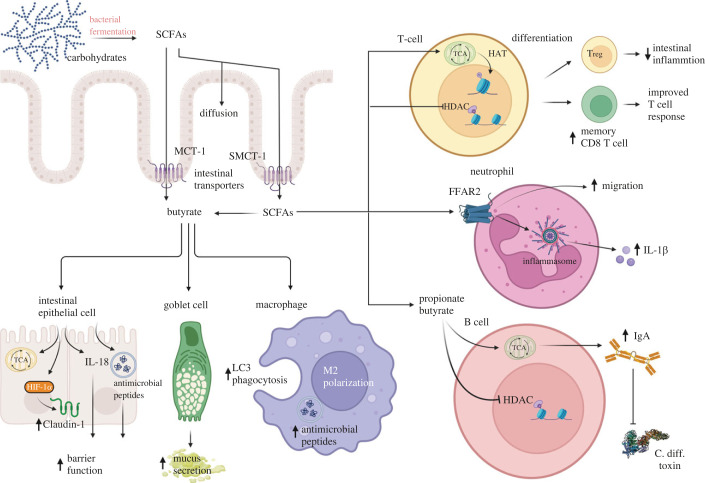
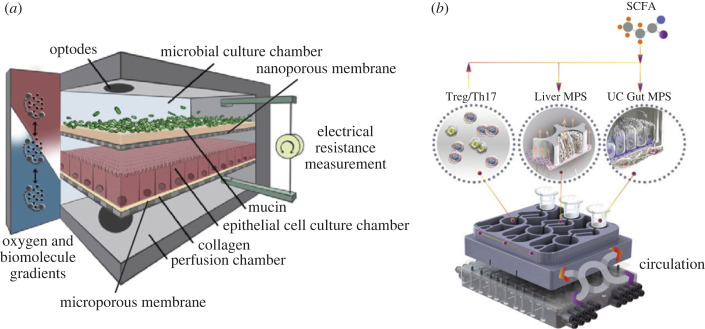
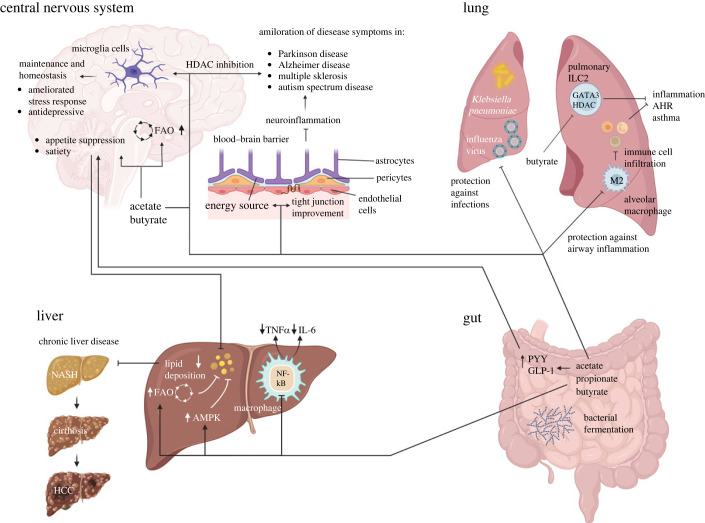
The human intestinal microbiome substantially affects human health and resistance to infections in its dynamic composition and varying release of microbial-derived metabolites. Short-chain fatty acids (SCFA) produced by commensal bacteria through fermentation of indigestible fibres are considered key regulators in orchestrating the host immune response to microbial colonization by regulating phagocytosis, chemokine and central signalling pathways of cell growth and apoptosis, thereby shaping the composition and functionality of the intestinal epithelial barrier. Although research of the last decades provided valuable insight into the pleiotropic functions of SCFAs and their capability to maintain human health, mechanistic details on how SCFAs act across different cell types and other organs are not fully understood. In this review, we provide an overview of the various functions of SCFAs in regulating cellular metabolism, emphasizing the orchestration of the immune response along the gut-brain, the gut-lung and the gut-liver axes. We discuss their potential pharmacological use in inflammatory diseases and infections and highlight new options of relevant human three-dimensional organ models to investigate and validate their biological functions in more detail.
人类肠道微生物组的动态组成和微生物衍生代谢物的不同释放对人类健康和抗感染能力有重大影响。通过发酵不可消化纤维,共生细菌产生的短链脂肪酸(SCFA)被认为是调节宿主对微生物定植的免疫反应的关键调节剂,通过调节吞噬作用、趋化因子和细胞生长和凋亡的中央信号通路,从而塑造肠道上皮屏障的组成和功能。尽管过去几十年的研究为 SCFA 的多效功能及其维持人类健康的能力提供了有价值的见解,但关于 SCFA 如何在不同细胞类型和其他器官中发挥作用的机制细节尚不完全清楚。在这篇综述中,我们概述了 SCFA 在调节细胞代谢方面的各种功能,强调了沿着肠道-大脑、肠道-肺和肠道-肝轴的免疫反应的协调。我们讨论了它们在炎症性疾病和感染中的潜在药理学用途,并强调了相关的人类三维器官模型的新选择,以更详细地研究和验证它们的生物学功能。