Liu Shenghua, Chen Haotian, Zheng Zongtai, He Yanyan, Yao Xudong
Department of Urology, Shanghai Tenth People's Hospital, Tongji University, Shanghai 200072, China.
Urologic Cancer Institute, School of Medicine, Tongji University, Shanghai 200072, China.
Bioengineering (Basel). 2023 Mar 2;10(3):318. doi: 10.3390/bioengineering10030318.
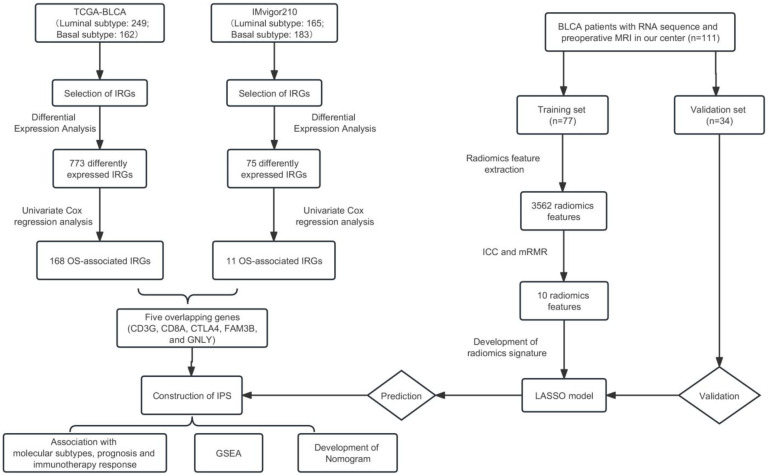
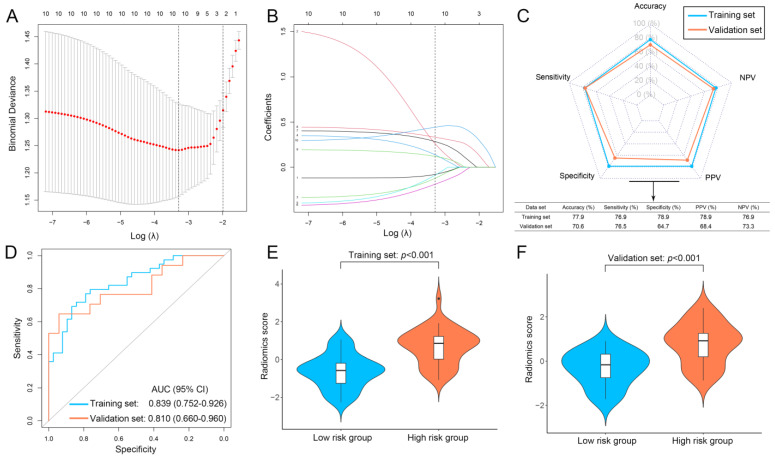
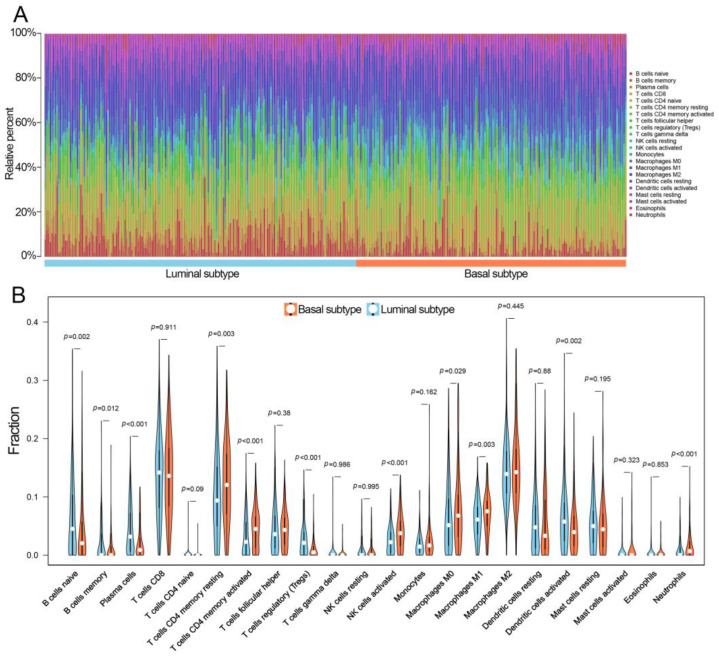
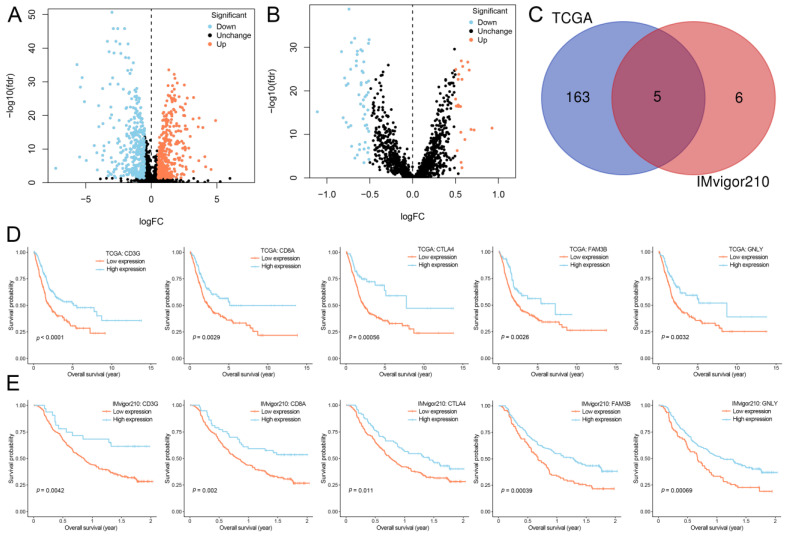
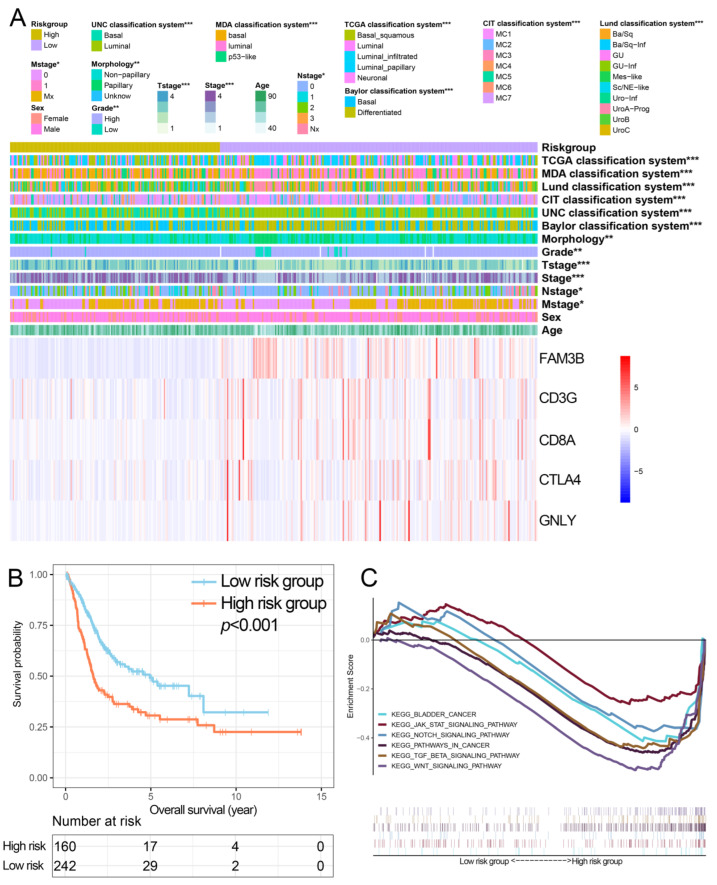
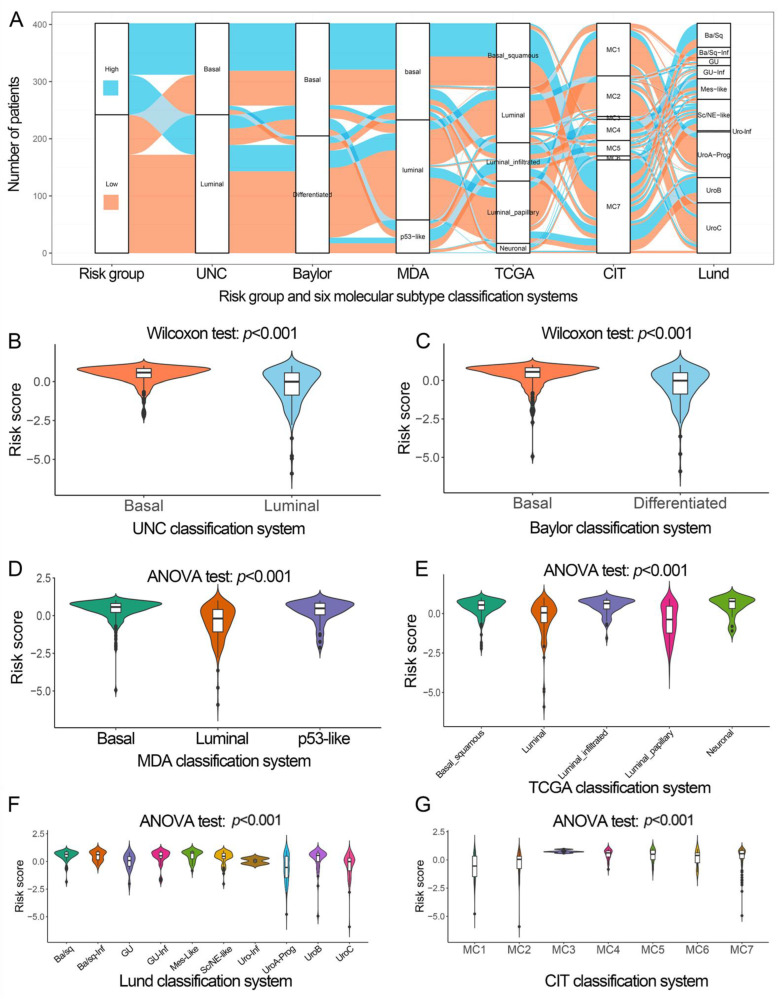
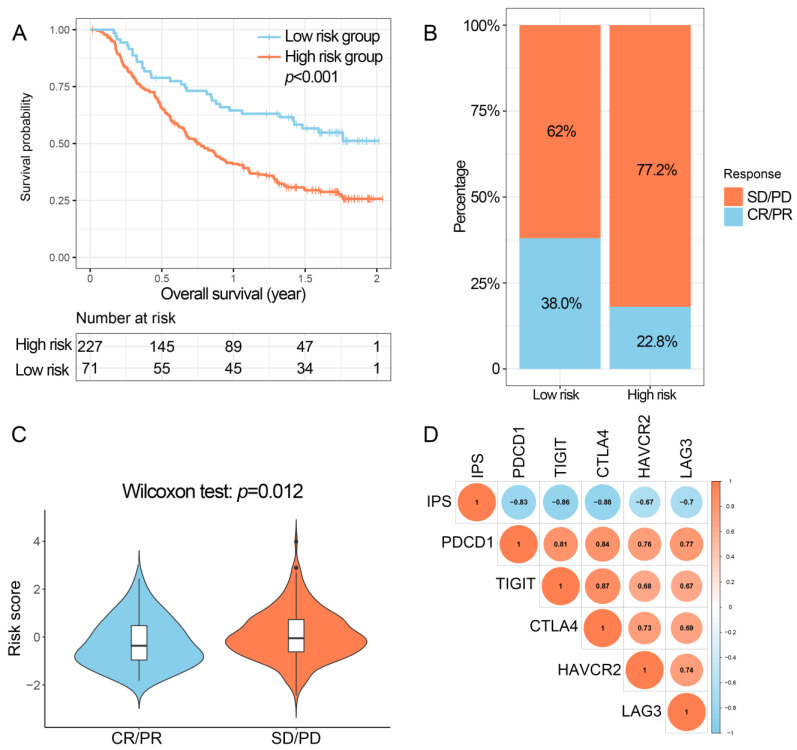
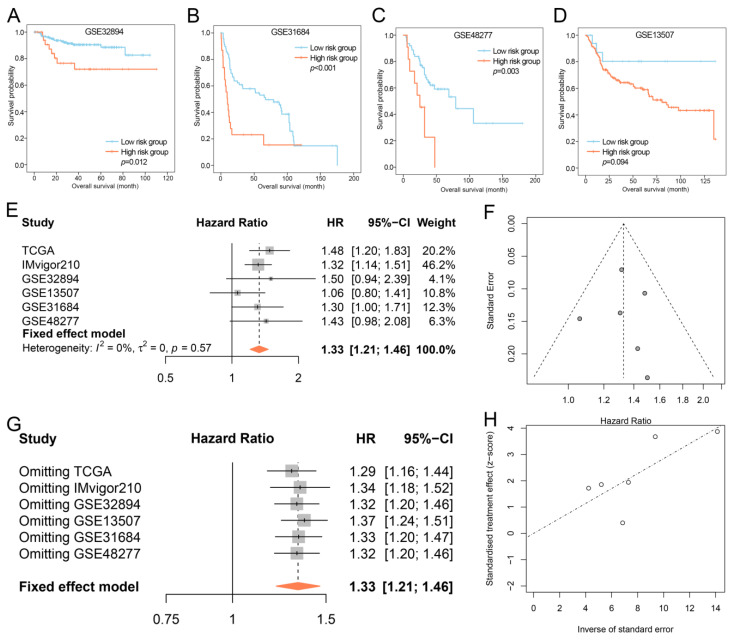
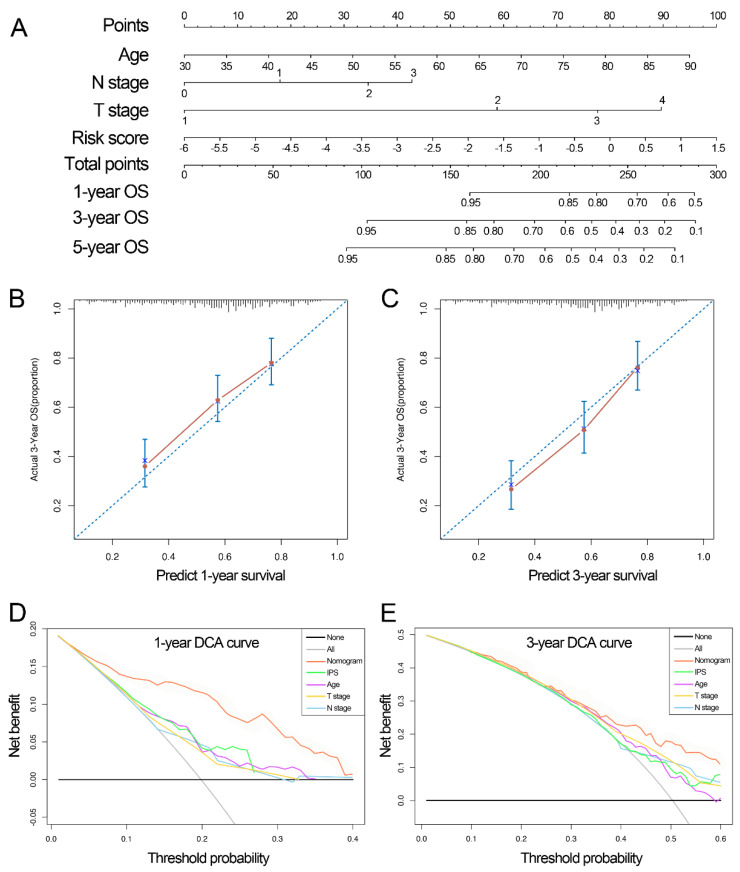
Bladder cancer (BLCA) is highly heterogeneous with distinct molecular subtypes. This research aimed to investigate the heterogeneity of different molecular subtypes from a tumor microenvironment perspective and develop a molecular-subtype-associated immune prognostic signature that can be recognized by MRI radiomics features. Individuals with BLCA in The Cancer Genome Atlas (TCGA) and IMvigor210 were classified into luminal and basal subtypes according to the UNC classification. The proportions of tumor-infiltrating immune cells (TIICs) were examined using The Cell Type Identification by Estimating Relative Subsets of RNA Transcripts algorithm. Immune-linked genes that were expressed differentially between luminal and basal subtypes and associated with prognosis were selected to develop the immune prognostic signature (IPS) and utilized for the classification of the selected individuals into low- and high-risk groups. Functional enrichment analysis (GSEA) was performed on the IPS. The data from RNA-sequencing and MRI images of 111 BLCA samples in our center were utilized to construct a least absolute shrinkage and selection operator (LASSO) model for the prediction of patients' IPSs. Half of the TIICs showed differential distributions between the luminal and basal subtypes. IPS was highly associated with molecular subtypes, critical immune checkpoint gene expression, prognoses, and immunotherapy response. The prognostic value of the IPS was further verified through several validation data sets (GSE32894, GSE31684, GSE13507, and GSE48277) and meta-analysis. GSEA revealed that some oncogenic pathways were co-enriched in the group at high risk. A novel performance of a LASSO model developed as per ten radiomics features was achieved in terms of IPS prediction in both the validation (area under the curve (AUC): 0.810) and the training (AUC: 0.839) sets. Dysregulation of TIICs contributed to the heterogeneity between the luminal and basal subtypes. The IPS can facilitate molecular subtyping, prognostic evaluation, and personalized immunotherapy. A LASSO model developed as per the MRI radiomics features can predict the IPSs of affected individuals.
膀胱癌(BLCA)具有高度异质性,存在不同的分子亚型。本研究旨在从肿瘤微环境角度探讨不同分子亚型的异质性,并开发一种可通过MRI放射组学特征识别的与分子亚型相关的免疫预后特征。根据UNC分类,将癌症基因组图谱(TCGA)和IMvigor210中的BLCA个体分为管腔型和基底型亚型。使用通过估计RNA转录本相对子集进行细胞类型鉴定算法检查肿瘤浸润免疫细胞(TIIC)的比例。选择在管腔型和基底型亚型之间差异表达且与预后相关的免疫相关基因来开发免疫预后特征(IPS),并用于将选定个体分为低风险和高风险组。对IPS进行功能富集分析(GSEA)。利用我们中心111例BLCA样本的RNA测序和MRI图像数据构建最小绝对收缩和选择算子(LASSO)模型,以预测患者的IPS。一半的TIIC在管腔型和基底型亚型之间表现出差异分布。IPS与分子亚型、关键免疫检查点基因表达、预后和免疫治疗反应高度相关。通过几个验证数据集(GSE32894、GSE31684、GSE13507和GSE48277)和荟萃分析进一步验证了IPS的预后价值。GSEA显示一些致癌途径在高风险组中共同富集。根据十个放射组学特征开发的LASSO模型在验证集(曲线下面积(AUC):0.810)和训练集(AUC:0.839)的IPS预测方面都取得了新的性能。TIIC的失调导致管腔型和基底型亚型之间的异质性。IPS有助于分子分型、预后评估和个性化免疫治疗。根据MRI放射组学特征开发的LASSO模型可以预测受影响个体的IPS。