INSERM U1296 Unit "Radiation: Defense, Health, Environment", Centre Léon-Bérard, 69008 Lyon, France.
Division Défense NRBC, Institut de Recherche Biomédicale des Armées, 91220 Brétigny-sur-Orge, France.
Biomolecules. 2023 Mar 13;13(3):524. doi: 10.3390/biom13030524.
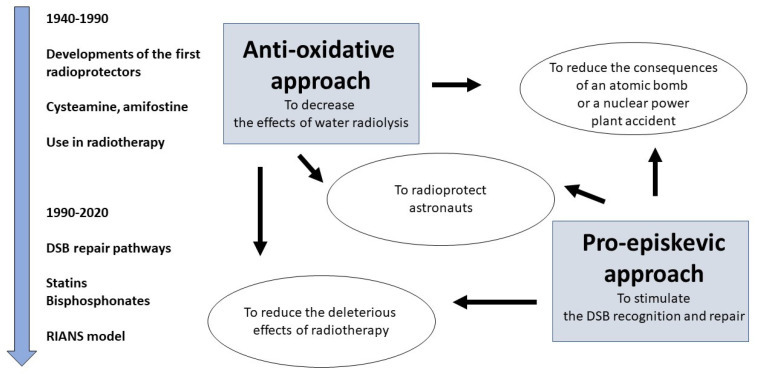
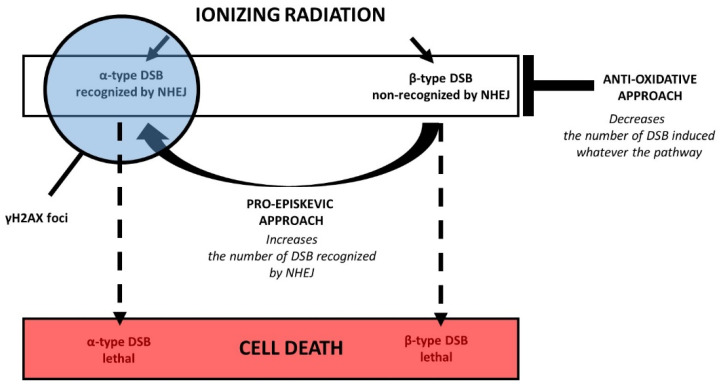
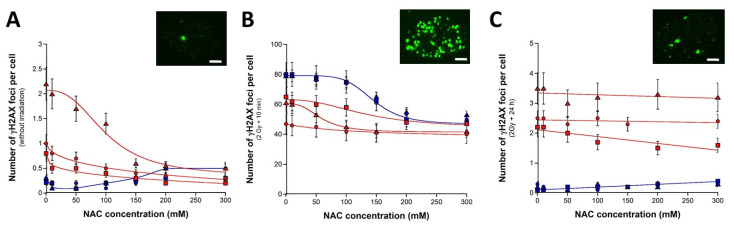
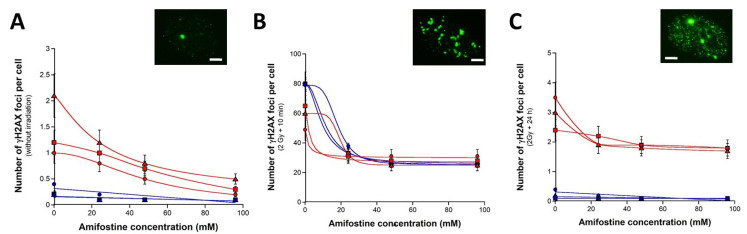
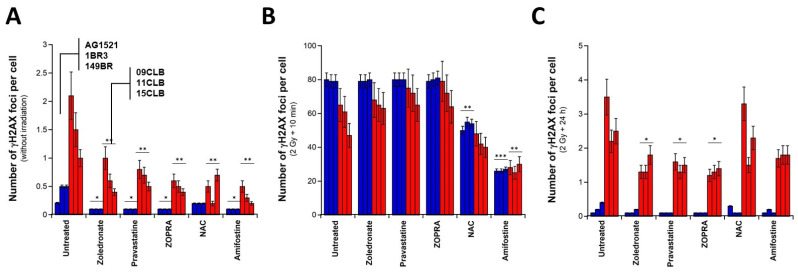
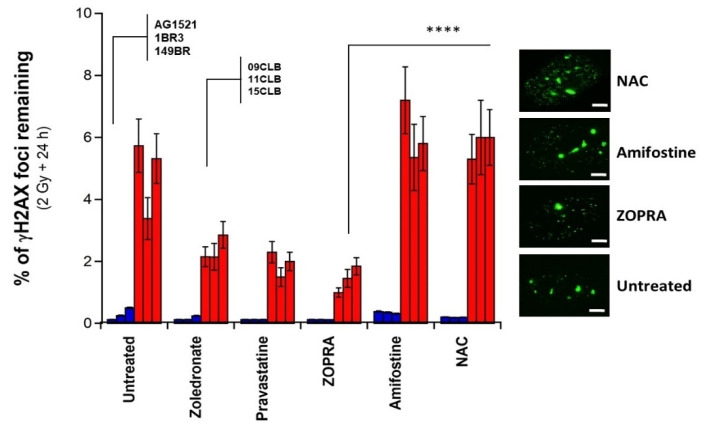
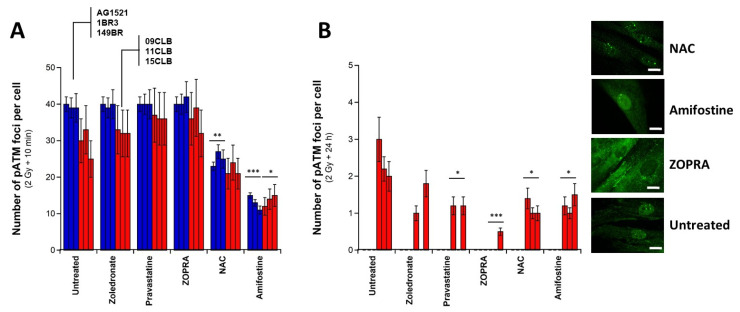
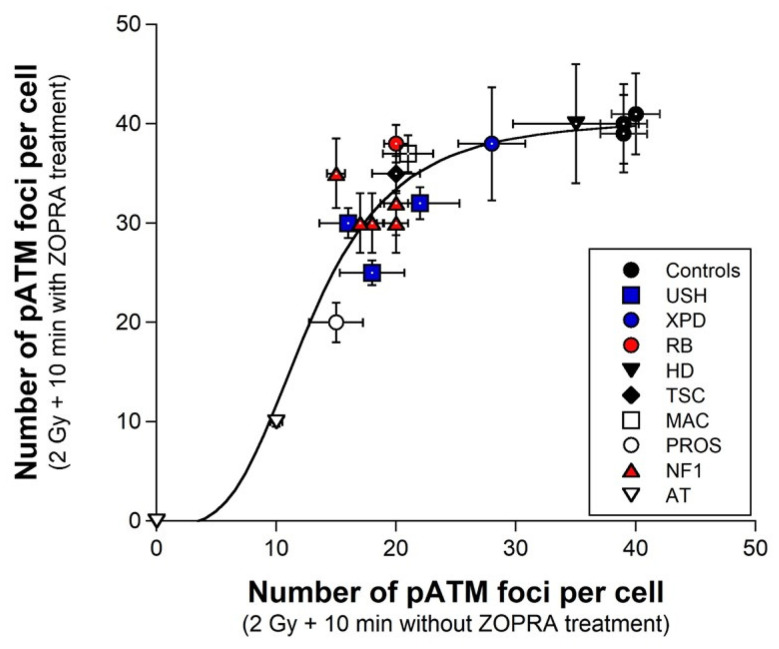
The radiation protection strategy with chemical agents has long been based on an antioxidative approach consisting in reducing the number of radical oxygen and nitrogen species responsible for the formation of the radiation-induced (RI) DNA damage, notably the DNA double-strand breaks (DSB), whose subset participates in the RI lethal effect as unrepairable damage. Conversely, a DSB repair-stimulating strategy that may be called the "pro-episkevic" approach (from the ancient Greek , meaning repair) can be proposed. The pro-episkevic approach directly derives from a mechanistic model based on the RI nucleoshuttling of the ATM protein (RIANS) and contributes to increase the number of DSB managed by NHEJ, the most predominant DSB repair and signaling pathway in mammalians. Here, three radioresistant and three radiosensitive human fibroblast cell lines were pretreated with antioxidative agents (N-acetylcysteine or amifostine) or to two pro-episkevic agents (zoledronate or pravastatin or both (ZOPRA)) before X-ray irradiation. The fate of the RI DSB was analyzed by using γH2AX and pATM immunofluorescence. While amifostine pretreatment appeared to be the most efficient antioxidative process, ZOPRA shows the most powerful radiation protection, suggesting that the pro-episkevic strategy may be an alternative to the antioxidative one. Additional investigations are needed to develop some new drugs that may elicit both antioxidative and pro-episkevic properties and to quantify the radiation protection action of both types of drugs applied concomitantly.
化学防护剂的辐射防护策略长期以来一直基于抗氧化方法,该方法旨在减少负责形成辐射诱导(RI)DNA 损伤的活性氧和氮物种的数量,尤其是 DNA 双链断裂(DSB),其亚组作为不可修复的损伤参与 RI 致死效应。相反,可以提出一种称为“促修复酶”(来自古希腊语,意为修复)的 DSB 修复刺激策略。该促修复酶方法直接源自基于 ATM 蛋白(RIANS)的 RI 核穿梭的机制模型,并有助于增加由 NHEJ 管理的 DSB 的数量,NHEJ 是哺乳动物中最主要的 DSB 修复和信号通路。在此,用抗氧化剂(N-乙酰半胱氨酸或氨磷汀)或两种促修复酶药物(唑来膦酸或普伐他汀或两者(ZOPRA))预处理三种耐辐射和三种辐射敏感的人成纤维细胞系,然后进行 X 射线照射。通过γH2AX 和 pATM 免疫荧光分析 RI DSB 的命运。虽然氨磷汀预处理似乎是最有效的抗氧化过程,但 ZOPRA 显示出最强的辐射防护作用,这表明促修复酶策略可能是抗氧化策略的替代方法。需要进一步研究来开发一些新的药物,这些药物可能同时具有抗氧化和促修复酶特性,并量化两种类型药物的辐射防护作用。