Li Anlong, He Yonglin, Yang Chun, Lu Nan, Bao Jiajia, Gao Sijia, Hosyanto Felycia Fernanda, He Xintong, Fu Huichao, Yan Huajian, Ding Ningyu, Xu Lei
Department of Pathogenic Biology, College of Basic Medicine, Chongqing Medical University, Chongqing 400016, China.
Department of Clinical Medicine, Chongqing Medical University, Chongqing 400016, China.
Microorganisms. 2023 Mar 16;11(3):768. doi: 10.3390/microorganisms11030768.
() is the causative agent of tuberculosis. As an important component of host immunity, macrophages are not only the first line of defense against but also the parasitic site of in the host. Glucocorticoids can cause immunosuppression, which is considered to be one of the major risk factors for active tuberculosis, but the mechanism is unclear.
To study the effect of methylprednisolone on the proliferation of mycobacteria in macrophages and try to find key molecules of this phenomenon.
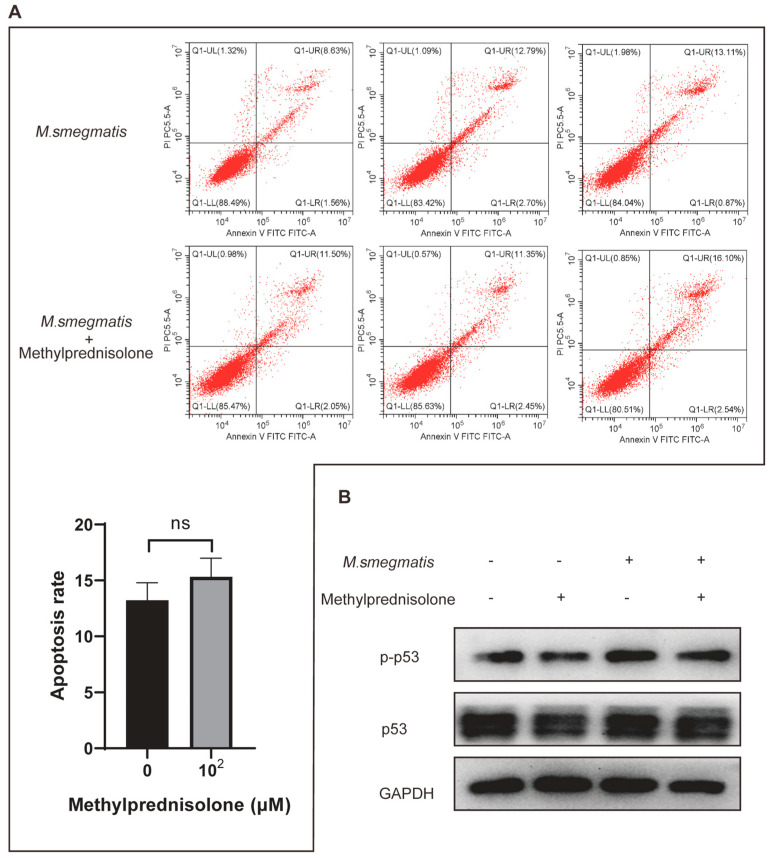
The macrophage line RAW264.7 infected by was treated with methylprednisolone, and the intracellular bacterial CFU, Reactive Oxygen Species (ROS), cytokine secretion, autophagy, and apoptosis were measured. After the cells were treated with NF-κB inhibitor BAY 11-7082 and DUSP1 inhibitor BCI, respectively, the intracellular bacterial CFU, ROS, IL-6, and TNF-α secretion were detected.
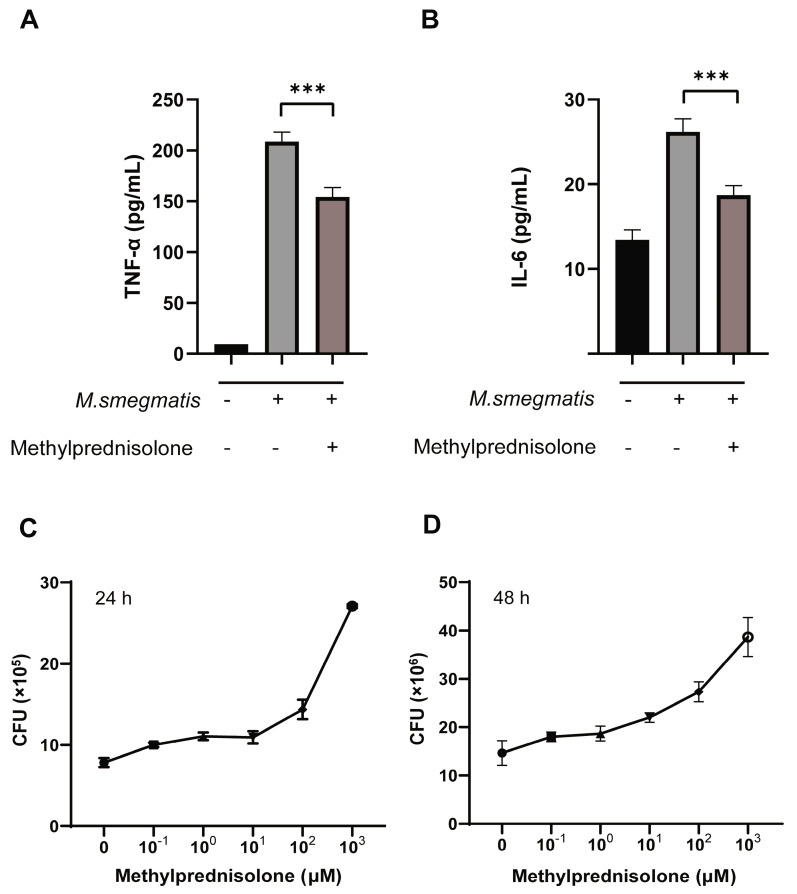
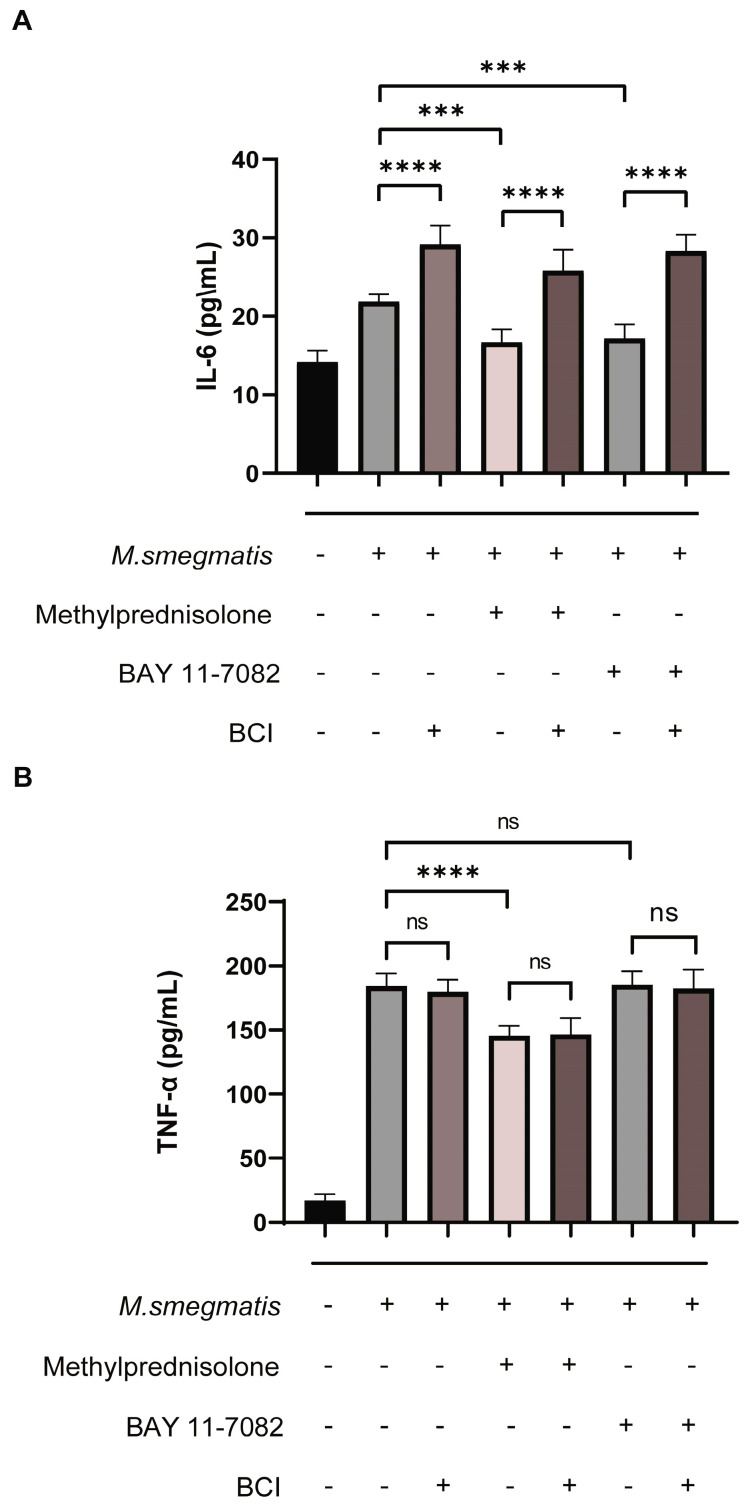
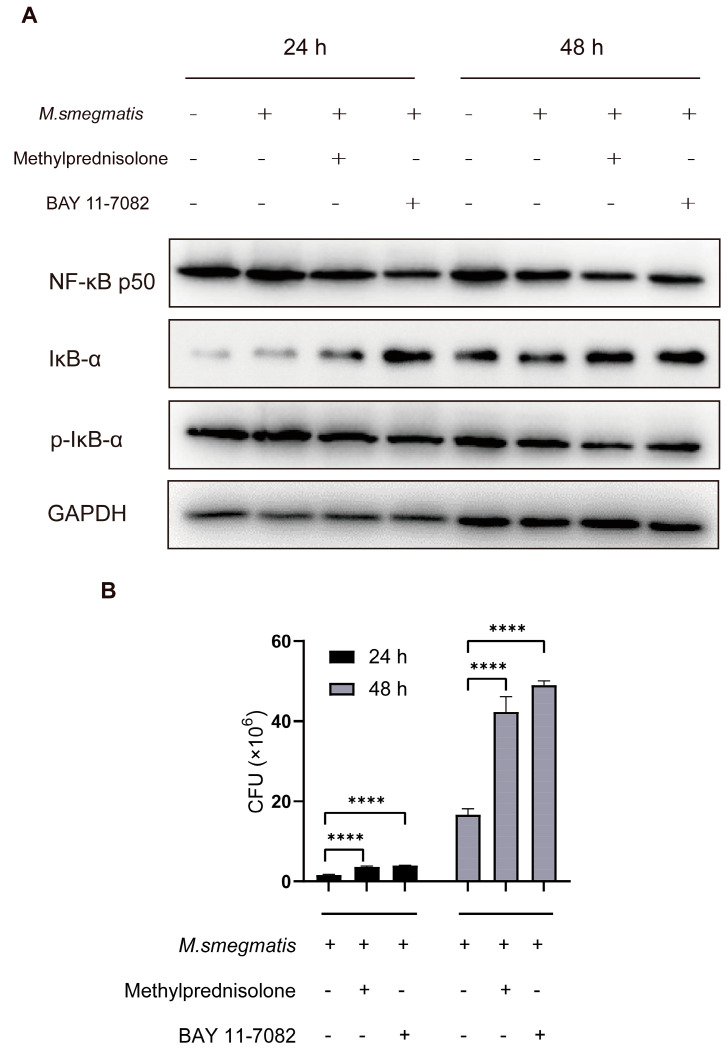
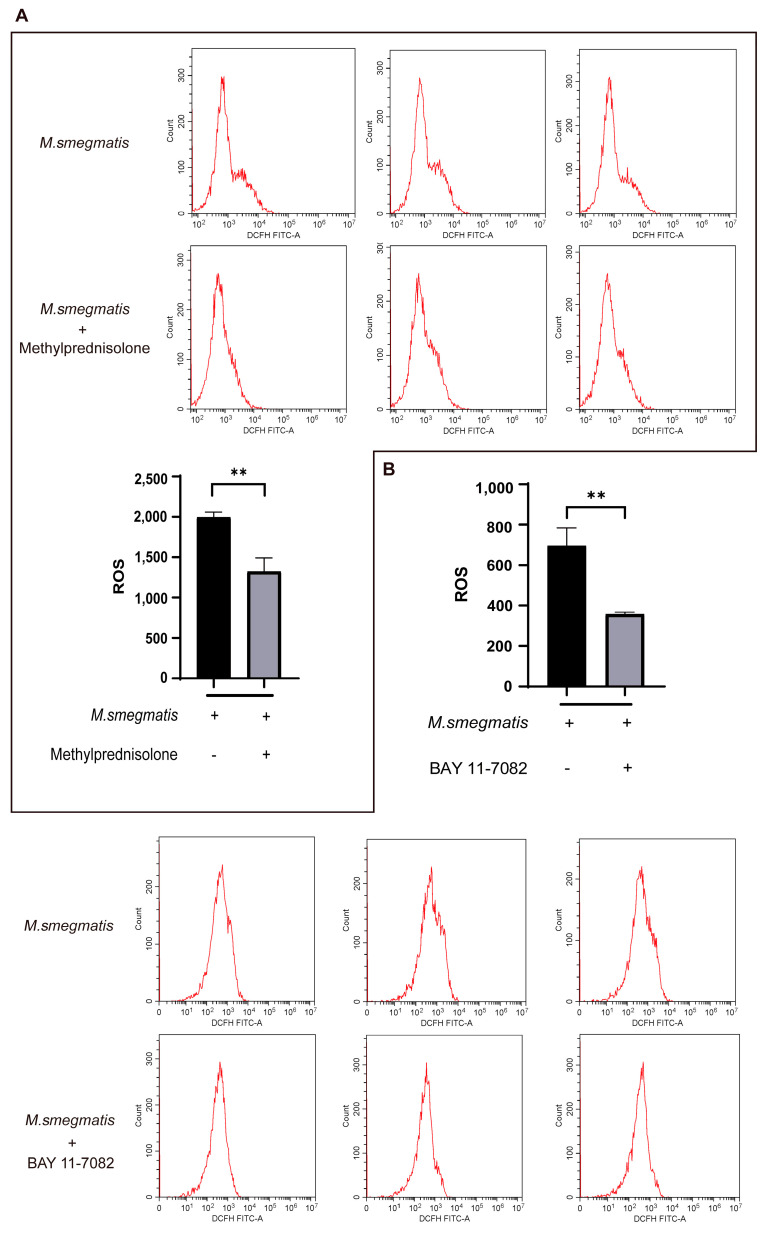
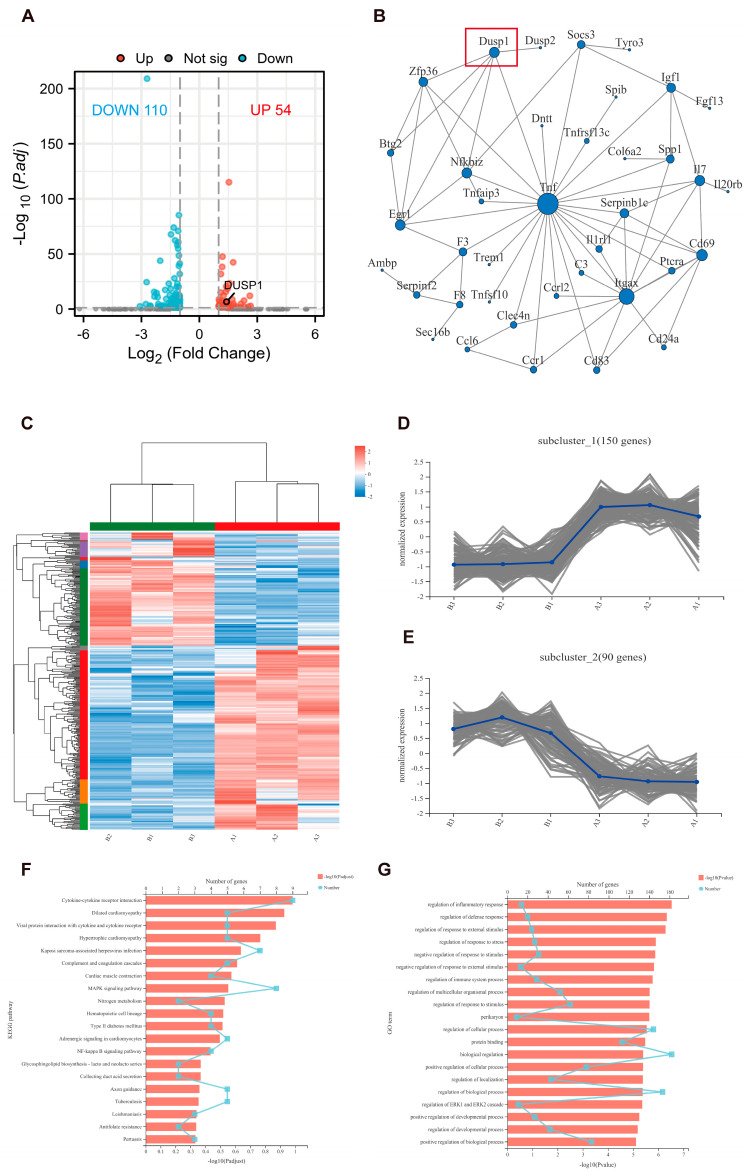
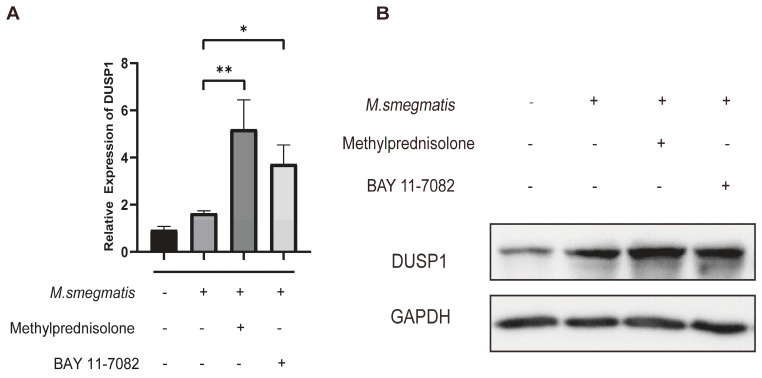
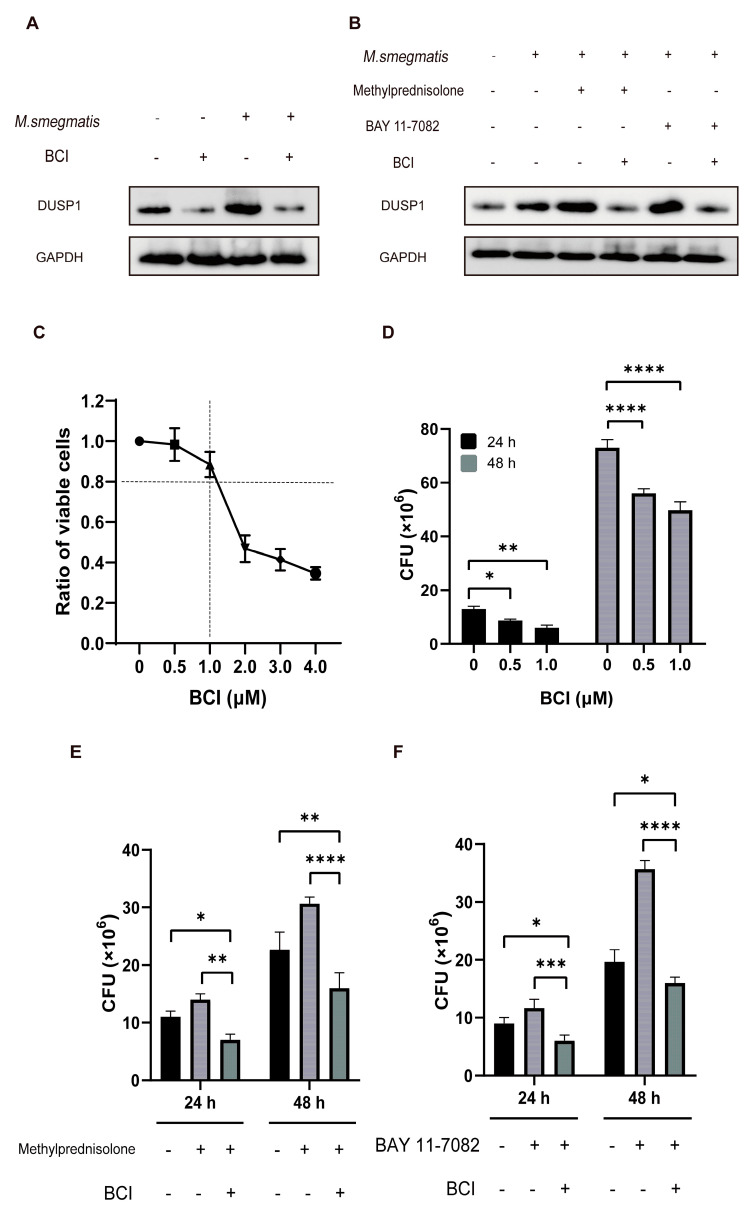
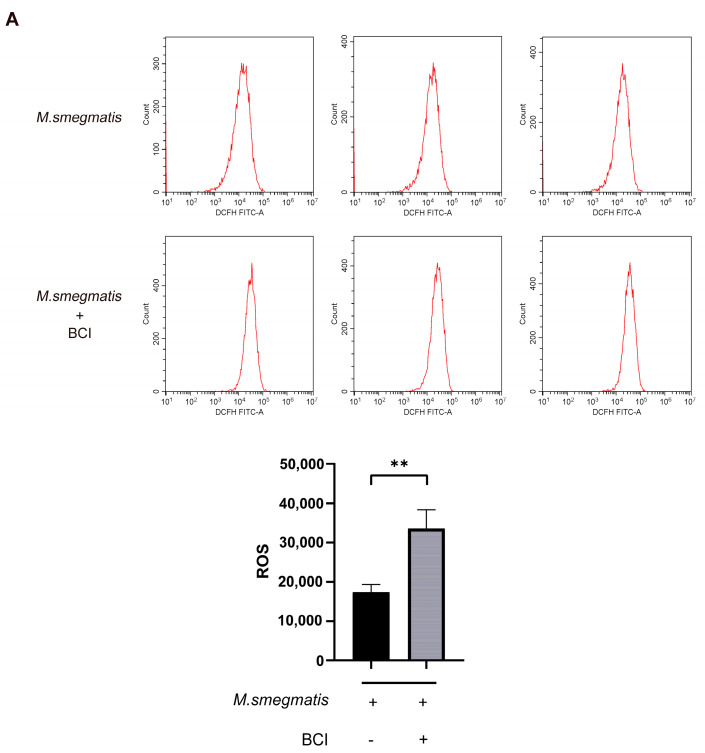
After treatment with methylprednisolone, the CFU of intracellular bacteria increased, the level of ROS decreased, and the secretion of IL-6 and TNF-α decreased in infected macrophages. After BAY 11-7082 treatment, the CFU of in macrophages increased, and the level of ROS production and the secretion of IL-6 by macrophages decreased. Transcriptome high-throughput sequencing and bioinformatics analysis suggested that DUSP1 was the key molecule in the above phenomenon. Western blot analysis confirmed that the expression level of DUSP1 was increased in the infected macrophages treated with methylprednisolone and BAY 11-7082, respectively. After BCI treatment, the level of ROS produced by infected macrophages increased, and the secretion of IL-6 increased. After the treatment of BCI combined with methylprednisolone or BAY 11-7082, the level of ROS produced and the secretion of IL-6 by macrophages were increased.
methylprednisolone promotes the proliferation of mycobacteria in macrophages by suppressing cellular ROS production and IL-6 secretion through down-regulating NF-κB and up-regulating DUSP1 expression. BCI, an inhibitor of DUSP1, can reduce the level of DUSP1 in the infected macrophages and inhibit the proliferation of intracellular mycobacteria by promoting cellular ROS production and IL-6 secretion. Therefore, BCI may become a new molecule for host-directed therapy of tuberculosis, as well as a new strategy for the prevention of tuberculosis when treated with glucocorticoids.
()是结核病的病原体。巨噬细胞作为宿主免疫的重要组成部分,不仅是抵御(病原体)的第一道防线,也是(病原体)在宿主体内的寄生部位。糖皮质激素可导致免疫抑制,这被认为是活动性结核病的主要危险因素之一,但其机制尚不清楚。
研究甲基强的松龙对巨噬细胞内分枝杆菌增殖的影响,并试图找出这一现象的关键分子。
用甲基强的松龙处理感染(病原体)的巨噬细胞系RAW264.7,检测细胞内细菌菌落形成单位(CFU)、活性氧(ROS)、细胞因子分泌、自噬和凋亡情况。分别用NF-κB抑制剂BAY 11-7082和双特异性磷酸酶1(DUSP1)抑制剂BCI处理细胞后,检测细胞内细菌CFU、ROS、白细胞介素-6(IL-6)和肿瘤坏死因子-α(TNF-α)的分泌情况。
用甲基强的松龙处理后,感染的巨噬细胞内细菌CFU增加,ROS水平降低,IL-6和TNF-α分泌减少。用BAY 11-7082处理后,巨噬细胞内(病原体)的CFU增加,巨噬细胞产生ROS的水平和IL-6的分泌减少。转录组高通量测序和生物信息学分析表明,DUSP1是上述现象中的关键分子。蛋白质免疫印迹分析证实,在用甲基强的松龙和BAY 11-7082处理的感染巨噬细胞中,DUSP1的表达水平分别升高。用BCI处理后,感染的巨噬细胞产生的ROS水平增加,IL-6的分泌增加。用BCI联合甲基强的松龙或BAY 11-7082处理后,巨噬细胞产生ROS的水平和IL-6的分泌增加。
甲基强的松龙通过下调NF-κB并上调DUSP1表达,抑制细胞ROS产生和IL-6分泌,从而促进巨噬细胞内分枝杆菌的增殖。DUSP1抑制剂BCI可降低感染巨噬细胞中DUSP1的水平,并通过促进细胞ROS产生和IL-6分泌来抑制细胞内分枝杆菌的增殖。因此,BCI可能成为结核病宿主导向治疗的新分子,以及糖皮质激素治疗结核病时预防结核病的新策略。