Srivastava Mitul, Mittal Lovika, Sarmadhikari Debapriyo, Singh Vijay Kumar, Fais Antonella, Kumar Amit, Asthana Shailendra
Computational Biophysics and CADD Group, Computational and Mathematical Biology Center, Translational Health Science and Technology Institute, NCR Biotech Science Cluster, Faridabad 121001, India.
Centre for Biological Sciences (Bioinformatics), Central University of South Bihar, Gaya Panchanpur Road, Bihar 824236, India.
Pharmaceuticals (Basel). 2023 Mar 1;16(3):376. doi: 10.3390/ph16030376.
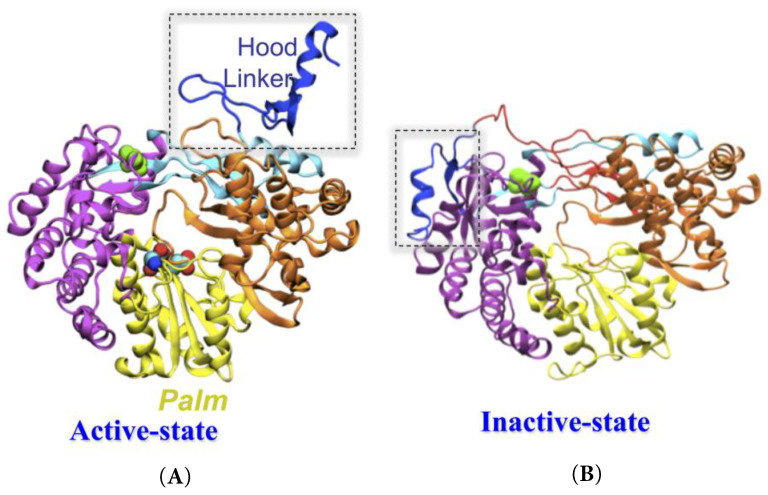
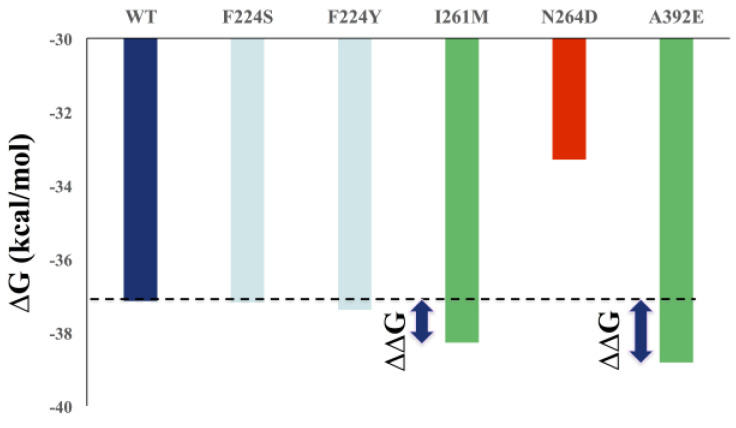
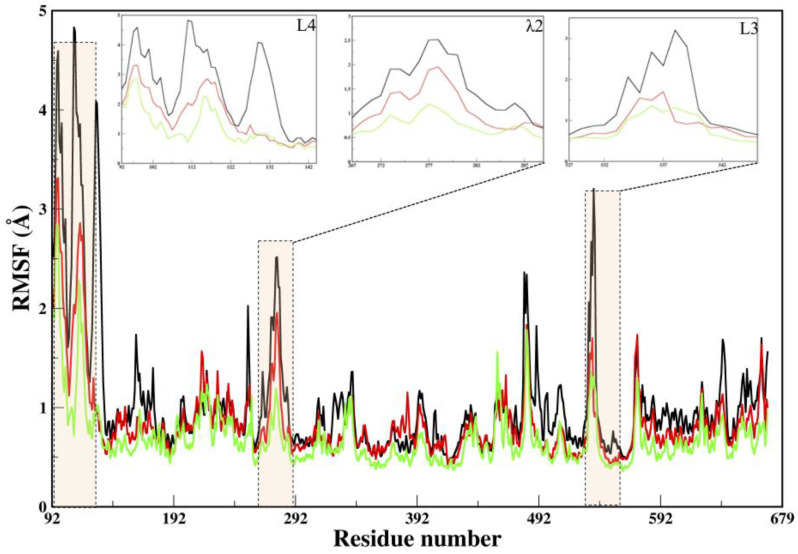
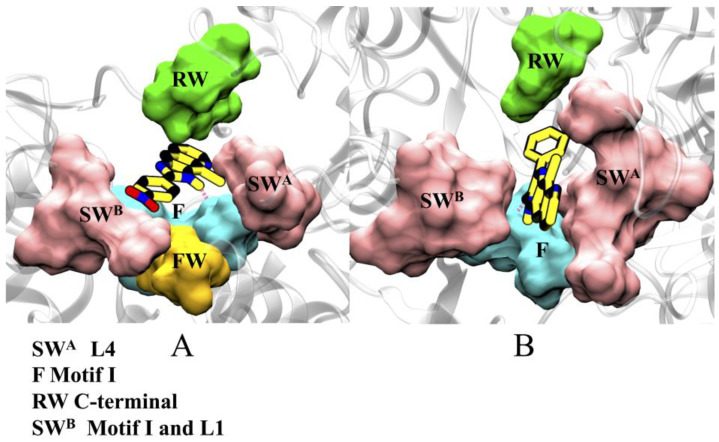
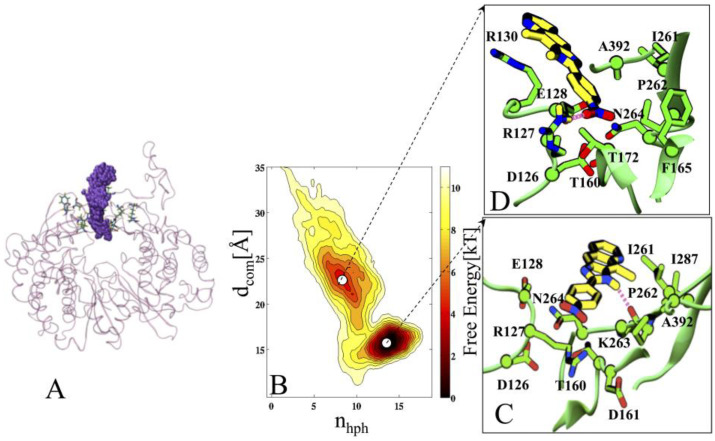
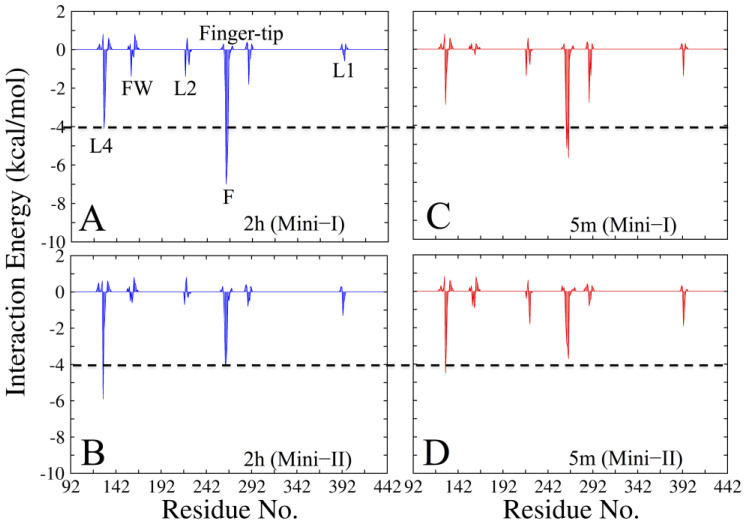
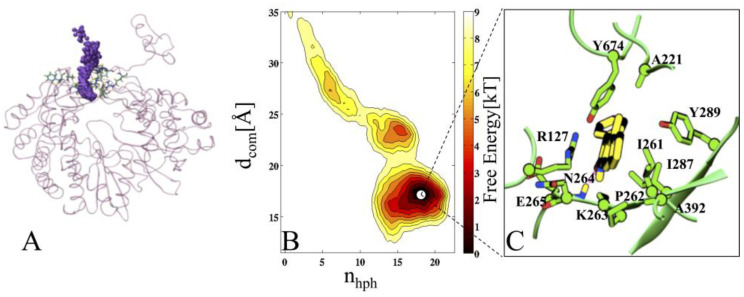
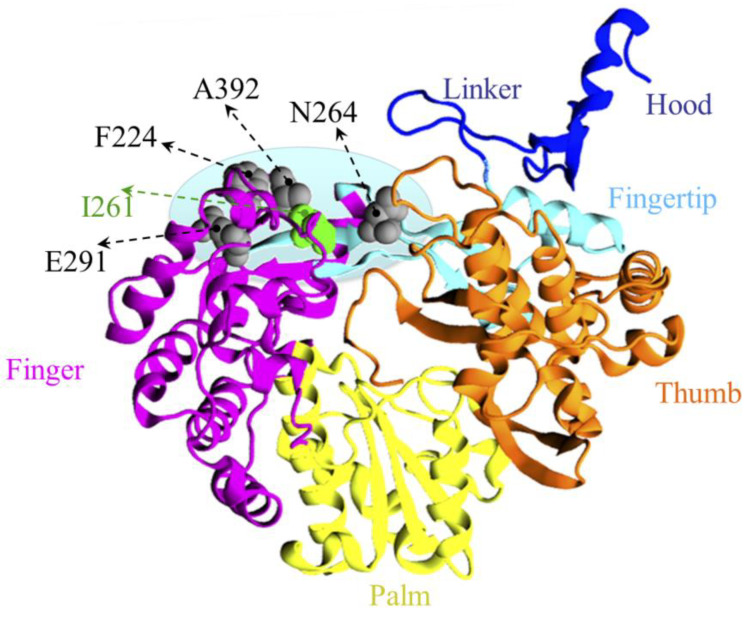
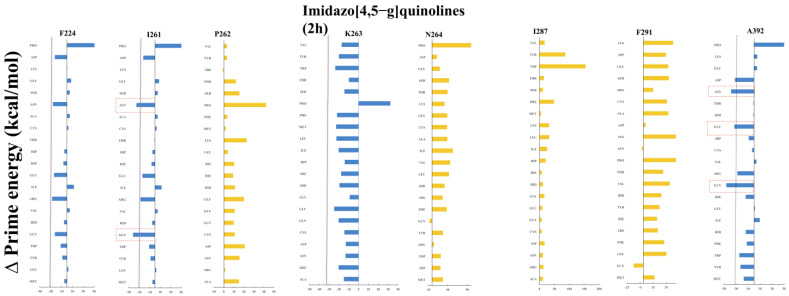
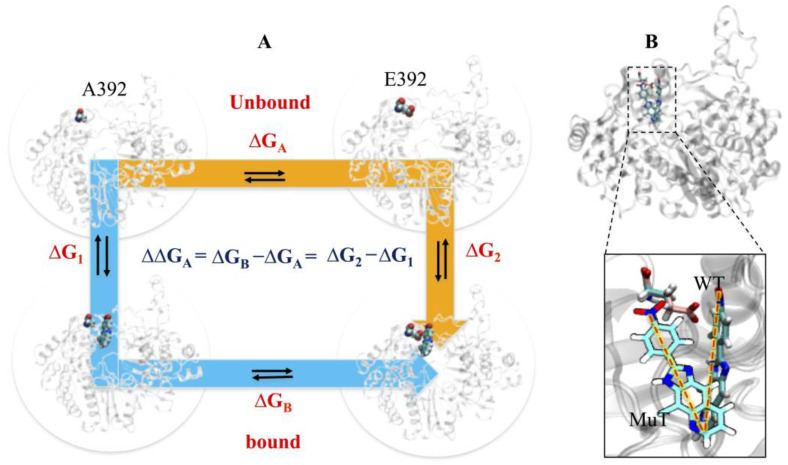
The development of potent non-nucleoside inhibitors (NNIs) could be an alternate strategy to combating infectious bovine viral diarrhea virus (BVDV), other than the traditional vaccination. RNA-dependent RNA polymerase (RdRp) is an essential enzyme for viral replication; therefore, it is one of the primary targets for countermeasures against infectious diseases. The reported NNIs, belonging to the classes of quinolines (2h: imidazo[4,5-g]quinolines and 5m: pyrido[2,3-g] quinoxalines), displayed activity in cell-based and enzyme-based assays. Nevertheless, the RdRp binding site and microscopic mechanistic action are still elusive, and can be explored at a molecular level. Here, we employed a varied computational arsenal, including conventional and accelerated methods, to identify quinoline compounds' most likely binding sites. Our study revealed A392 and I261 as the mutations that can render RdRp resistant against quinoline compounds. In particular, for ligand 2h, mutation of A392E is the most probable mutation. The loop L1 and linker of the fingertip is recognized as a pivotal structural determinant for the stability and escape of quinoline compounds. Overall, this work demonstrates that the quinoline inhibitors bind at the template entrance channel, which is governed by conformational dynamics of interactions with loops and linker residues, and reveals structural and mechanistic insights into inhibition phenomena, for the discovery of improved antivirals.
开发强效非核苷抑制剂(NNIs)可能是对抗传染性牛病毒性腹泻病毒(BVDV)的一种替代策略,而非传统的疫苗接种。RNA依赖性RNA聚合酶(RdRp)是病毒复制所必需的酶;因此,它是对抗传染病对策的主要靶点之一。已报道的NNIs属于喹啉类(2h:咪唑并[4,5-g]喹啉和5m:吡啶并[2,3-g]喹喔啉),在基于细胞和基于酶的试验中显示出活性。然而,RdRp结合位点和微观作用机制仍然不清楚,可在分子水平上进行探索。在这里,我们采用了多种计算方法,包括传统方法和加速方法,来确定喹啉化合物最可能的结合位点。我们的研究揭示A392和I261是可使RdRp对喹啉化合物产生抗性的突变。特别是对于配体2h,A392E突变是最可能的突变。指尖的环L1和连接子被认为是喹啉化合物稳定性和逃逸的关键结构决定因素。总体而言,这项工作表明喹啉抑制剂在模板进入通道处结合,该通道由与环和连接子残基相互作用的构象动力学控制,并揭示了抑制现象的结构和机制见解,以用于发现改进的抗病毒药物。