Agostinucci Kevin, Grant Marianne K O, Melaku Wongel, Nair Chandini, Zordoky Beshay N
Department of Experimental and Clinical Pharmacology, College of Pharmacy, University of Minnesota, Minneapolis, MN 55455, USA.
Pharmaceuticals (Basel). 2023 Mar 4;16(3):391. doi: 10.3390/ph16030391.
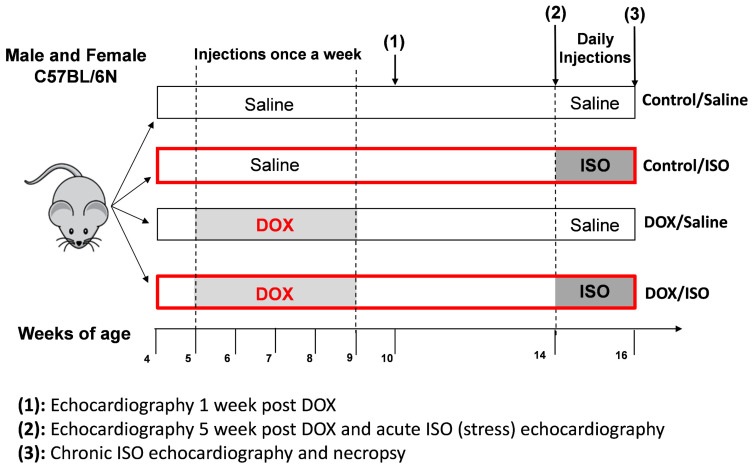
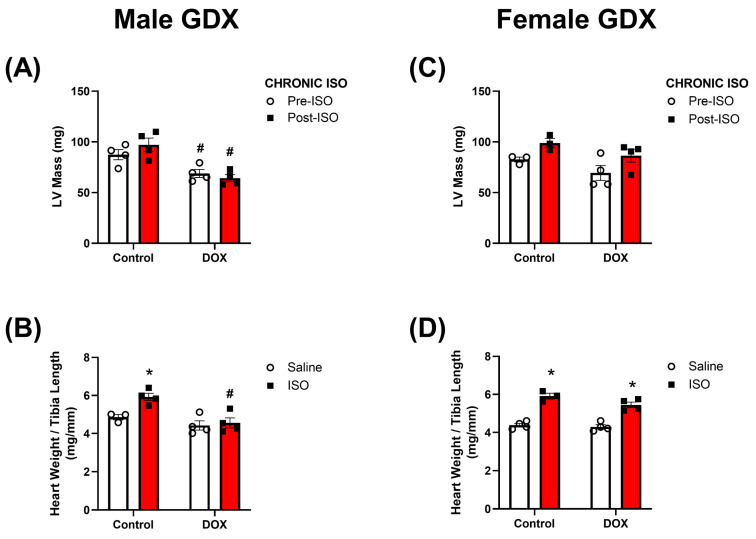
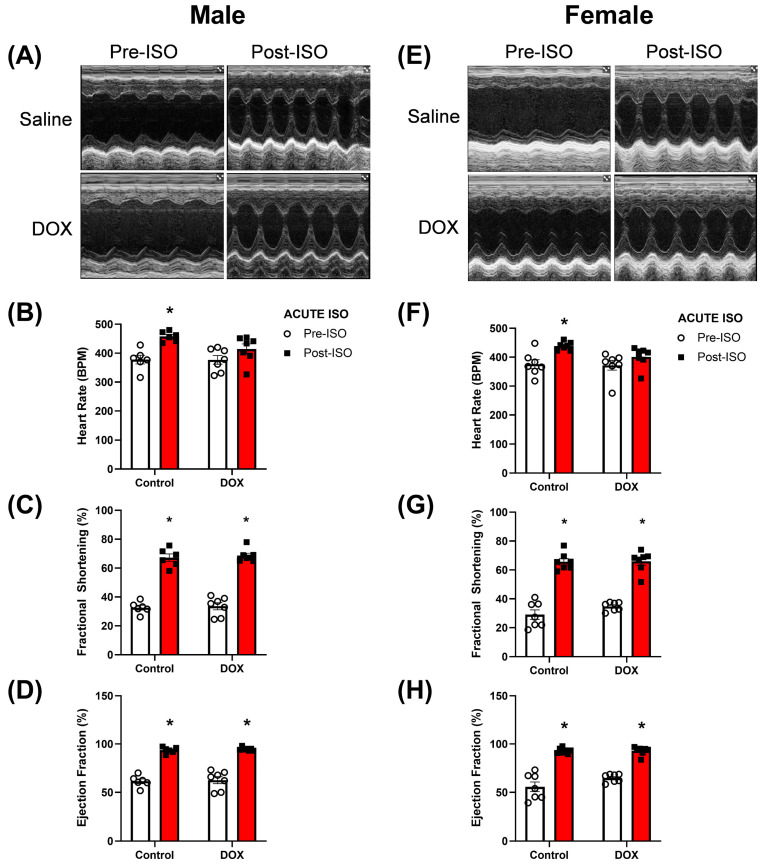
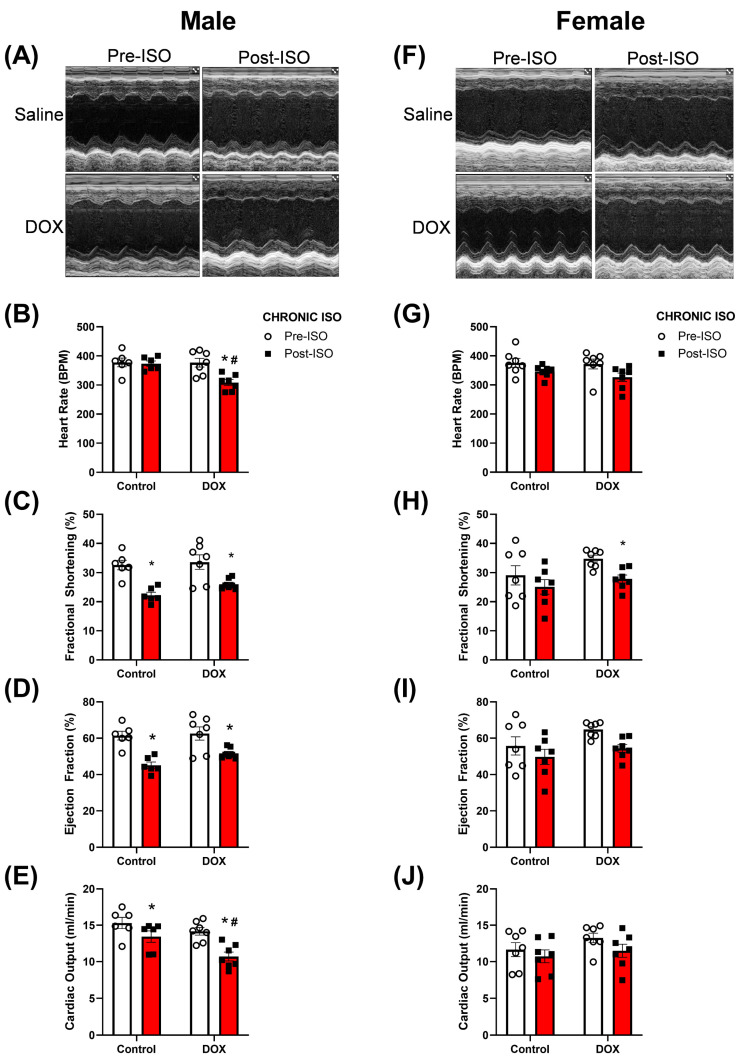
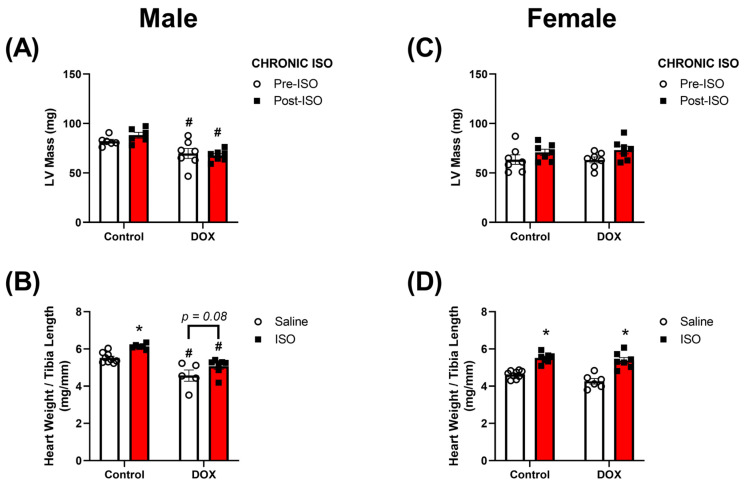
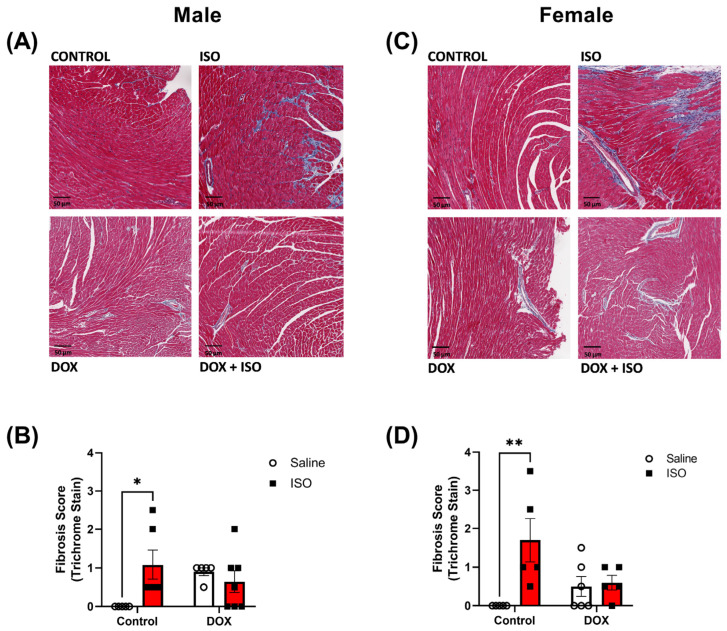
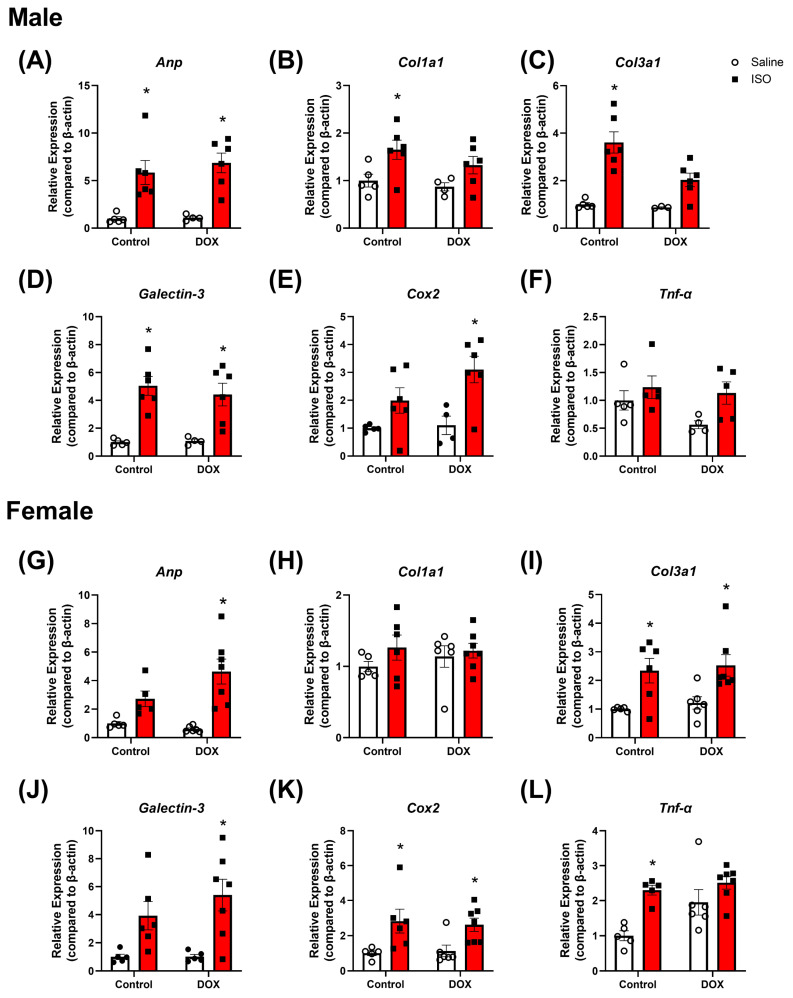
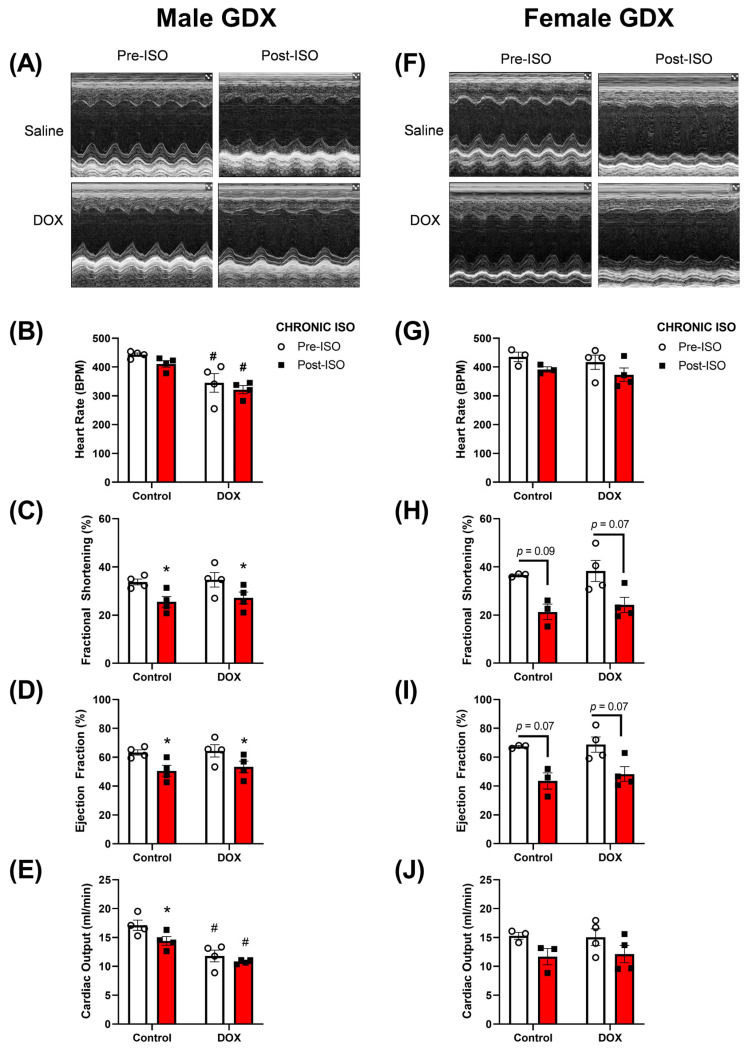
Sex is a salient risk factor in the development of doxorubicin-induced cardiotoxicity. Sex differences in the heart's ability to respond to hypertrophic stimuli in doxorubicin-exposed animals have not been reported. We identified the sexual dimorphic effects of isoproterenol in mice pre-exposed to doxorubicin. Male and female intact or gonadectomized C57BL/6N mice underwent five weekly intraperitoneal injections of 4 mg/kg doxorubicin followed by a five-week recovery period. Fourteen days of subcutaneous isoproterenol injections (10 mg/kg/day) were administered after the recovery period. Echocardiography was used to assess heart function one and five weeks after the last doxorubicin injection and on the fourteenth day of isoproterenol treatment. Thereafter, mice were euthanized, and the hearts were weighed and processed for histopathology and gene expression analysis. Doxorubicin did not produce overt cardiac dysfunction in male or female mice before starting isoproterenol treatment. The chronotropic response to a single isoproterenol injection was blunted by doxorubicin, but the inotropic response was maintained in both males and females. Pre-exposure to doxorubicin caused cardiac atrophy in both control and isoproterenol-treated male mice but not in female mice. Counterintuitively, pre-exposure to doxorubicin abrogated isoproterenol-induced cardiac fibrosis. However, there were no sex differences in the expression of markers of pathological hypertrophy, fibrosis, or inflammation. Gonadectomy did not reverse the sexually dimorphic effects of doxorubicin. Additionally, pre-exposure to doxorubicin abrogated the hypertrophic response to isoproterenol in castrated male mice but not in ovariectomized female mice. Therefore, pre-exposure to doxorubicin caused male-specific cardiac atrophy that persisted after isoproterenol treatment, which could not be prevented by gonadectomy.
性别是阿霉素诱导的心脏毒性发生发展中的一个显著风险因素。在接触阿霉素的动物中,心脏对肥厚刺激的反应能力的性别差异尚未见报道。我们确定了预先接触阿霉素的小鼠中异丙肾上腺素的性别二态性效应。完整或去势的雄性和雌性C57BL/6N小鼠每周腹腔注射5次4mg/kg阿霉素,随后有5周的恢复期。恢复期后进行14天的皮下异丙肾上腺素注射(10mg/kg/天)。在最后一次阿霉素注射后1周和5周以及异丙肾上腺素治疗的第14天,使用超声心动图评估心脏功能。此后,对小鼠实施安乐死,称量心脏重量并进行组织病理学和基因表达分析。在开始异丙肾上腺素治疗前,阿霉素未在雄性或雌性小鼠中产生明显的心脏功能障碍。阿霉素减弱了对单次异丙肾上腺素注射的变时反应,但正性肌力反应在雄性和雌性小鼠中均得以维持。预先接触阿霉素在对照和异丙肾上腺素治疗的雄性小鼠中均导致心脏萎缩,但在雌性小鼠中未出现。与直觉相反,预先接触阿霉素消除了异丙肾上腺素诱导的心脏纤维化。然而,在病理性肥大、纤维化或炎症标志物的表达上没有性别差异。去势并未逆转阿霉素的性别二态性效应。此外,预先接触阿霉素消除了去势雄性小鼠对异丙肾上腺素的肥厚反应,但未消除去卵巢雌性小鼠的该反应。因此,预先接触阿霉素导致了雄性特异性的心脏萎缩,在异丙肾上腺素治疗后持续存在,去势无法预防这种萎缩。