• 文献检索
  • 文档翻译
  • 深度研究
  • 学术资讯
  • Suppr Zotero 插件Zotero 插件
  • 邀请有礼
  • 套餐&价格
  • 历史记录
应用&插件
Suppr Zotero 插件Zotero 插件浏览器插件Mac 客户端Windows 客户端微信小程序
定价
高级版会员购买积分包购买API积分包
服务
文献检索文档翻译深度研究API 文档MCP 服务
关于我们
关于 Suppr公司介绍联系我们用户协议隐私条款
关注我们

Suppr 超能文献

核心技术专利:CN118964589B侵权必究
粤ICP备2023148730 号-1Suppr @ 2026

文献检索

告别复杂PubMed语法,用中文像聊天一样搜索,搜遍4000万医学文献。AI智能推荐,让科研检索更轻松。

立即免费搜索

文件翻译

保留排版,准确专业,支持PDF/Word/PPT等文件格式,支持 12+语言互译。

免费翻译文档

深度研究

AI帮你快速写综述,25分钟生成高质量综述,智能提取关键信息,辅助科研写作。

立即免费体验

肥胖人群皮下脂肪组织的基础基因表达可预测饮食诱导的体重减轻。

Baseline gene expression in subcutaneous adipose tissue predicts diet-induced weight loss in individuals with obesity.

机构信息

Obesity Research Unit, Research Program for Clinical and Molecular Metabolism, Faculty of Medicine, University of Helsinki, Helsinki, Finland.

Helsinki Institute for Information Technology HIIT, Department of Computer Science, Aalto University, Espoo, Finland.

出版信息

PeerJ. 2023 Mar 24;11:e15100. doi: 10.7717/peerj.15100. eCollection 2023.

DOI:10.7717/peerj.15100
PMID:36992941
原文链接:https://pmc.ncbi.nlm.nih.gov/articles/PMC10042157/
Abstract

BACKGROUND

Weight loss effectively reduces cardiometabolic health risks among people with overweight and obesity, but inter-individual variability in weight loss maintenance is large. Here we studied whether baseline gene expression in subcutaneous adipose tissue predicts diet-induced weight loss success.

METHODS

Within the 8-month multicenter dietary intervention study DiOGenes, we classified a low weight-losers (low-WL) group and a high-WL group based on median weight loss percentage (9.9%) from 281 individuals. Using RNA sequencing, we identified the significantly differentially expressed genes between high-WL and low-WL at baseline and their enriched pathways. We used this information together with support vector machines with linear kernel to build classifier models that predict the weight loss classes.

RESULTS

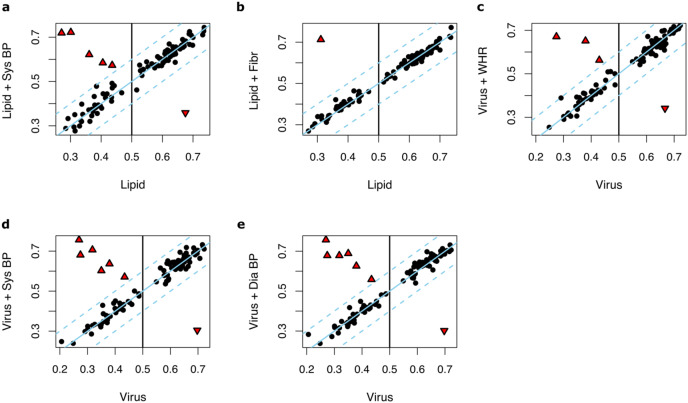
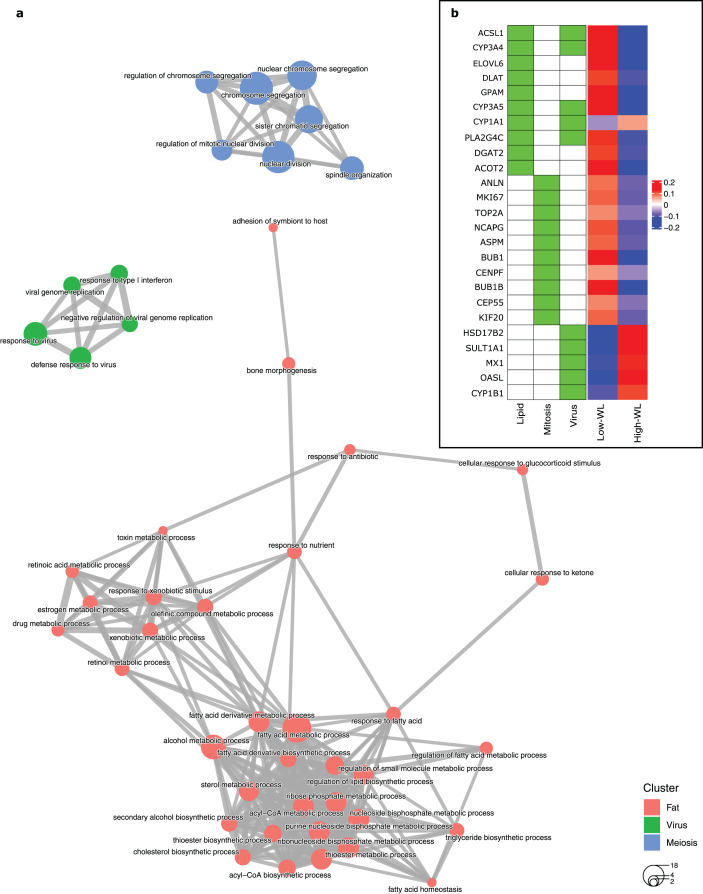
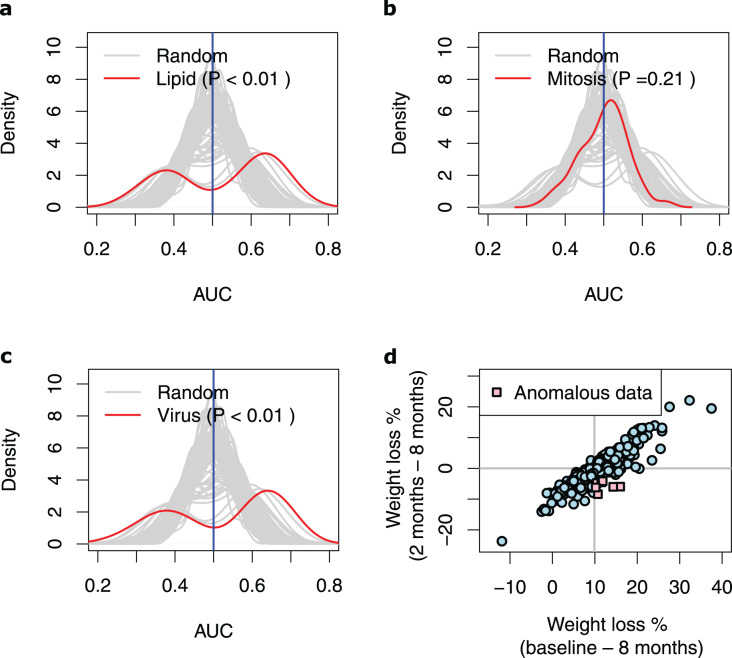
Prediction models based on a selection of genes that are associated with the discovered pathways 'lipid metabolism' (max AUC = 0.74, 95% CI [0.62-0.86]) and 'response to virus' (max AUC = 0.72, 95% CI [0.61-0.83]) predicted the weight-loss classes high-WL/low-WL significantly better than models based on randomly selected genes ( < 0.01). The performance of the models based on 'response to virus' genes is highly dependent on those genes that are also associated with lipid metabolism. Incorporation of baseline clinical factors into these models did not noticeably enhance the model performance in most of the runs. This study demonstrates that baseline adipose tissue gene expression data, together with supervised machine learning, facilitates the characterization of the determinants of successful weight loss.

摘要

背景

减肥可有效降低超重和肥胖人群的心血管代谢健康风险,但个体间减肥维持的差异较大。本研究旨在探讨皮下脂肪组织的基线基因表达是否可预测饮食诱导的减肥效果。

方法

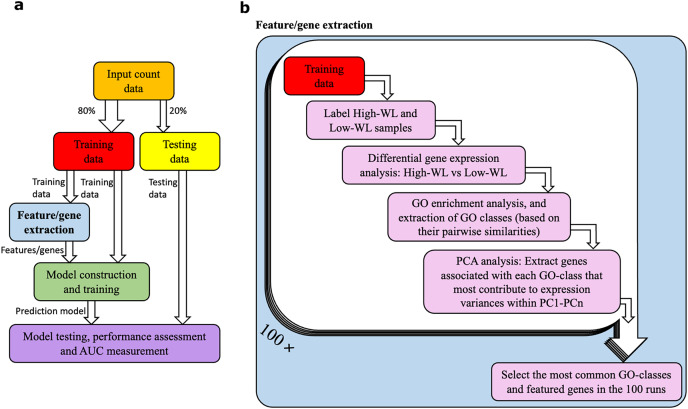
在为期 8 个月的多中心饮食干预研究 DiOGenes 中,我们根据 281 名个体的体重减轻中位数百分比(9.9%),将低体重减轻者(low-WL)组和高体重减轻者(high-WL)组进行分类。使用 RNA 测序,我们在基线时鉴定出 high-WL 和 low-WL 之间显著差异表达的基因及其富集途径。我们利用这些信息以及带有线性核的支持向量机,构建了可预测体重减轻类别的分类器模型。

结果

基于与发现的“脂质代谢”(最大 AUC = 0.74,95%CI [0.62-0.86])和“病毒反应”(最大 AUC = 0.72,95%CI [0.61-0.83])途径相关的基因选择构建的预测模型可显著更好地预测体重减轻类别的 high-WL/low-WL(<0.01)。基于“病毒反应”基因的模型的性能高度依赖于与脂质代谢相关的基因。将基线临床因素纳入这些模型并不会在大多数情况下明显提高模型性能。本研究表明,基线脂肪组织基因表达数据与有监督的机器学习相结合,可促进对成功减肥决定因素的特征描述。
https://cdn.ncbi.nlm.nih.gov/pmc/blobs/48fc/10042157/11bc4e1dfdf3/peerj-11-15100-g004.jpg
https://cdn.ncbi.nlm.nih.gov/pmc/blobs/48fc/10042157/fa45bbb1262b/peerj-11-15100-g001.jpg
https://cdn.ncbi.nlm.nih.gov/pmc/blobs/48fc/10042157/c520e7cba07e/peerj-11-15100-g002.jpg
https://cdn.ncbi.nlm.nih.gov/pmc/blobs/48fc/10042157/54c8a4621b66/peerj-11-15100-g003.jpg
https://cdn.ncbi.nlm.nih.gov/pmc/blobs/48fc/10042157/11bc4e1dfdf3/peerj-11-15100-g004.jpg
https://cdn.ncbi.nlm.nih.gov/pmc/blobs/48fc/10042157/fa45bbb1262b/peerj-11-15100-g001.jpg
https://cdn.ncbi.nlm.nih.gov/pmc/blobs/48fc/10042157/c520e7cba07e/peerj-11-15100-g002.jpg
https://cdn.ncbi.nlm.nih.gov/pmc/blobs/48fc/10042157/54c8a4621b66/peerj-11-15100-g003.jpg
https://cdn.ncbi.nlm.nih.gov/pmc/blobs/48fc/10042157/11bc4e1dfdf3/peerj-11-15100-g004.jpg

相似文献

1
Baseline gene expression in subcutaneous adipose tissue predicts diet-induced weight loss in individuals with obesity.肥胖人群皮下脂肪组织的基础基因表达可预测饮食诱导的体重减轻。
PeerJ. 2023 Mar 24;11:e15100. doi: 10.7717/peerj.15100. eCollection 2023.
2
Adipose tissue gene expression is differentially regulated with different rates of weight loss in overweight and obese humans.在超重和肥胖人群中,脂肪组织基因表达会随着不同的体重减轻速率受到不同程度的调控。
Int J Obes (Lond). 2017 Feb;41(2):309-316. doi: 10.1038/ijo.2016.201. Epub 2016 Nov 14.
3
Transcriptome profiling from adipose tissue during a low-calorie diet reveals predictors of weight and glycemic outcomes in obese, nondiabetic subjects.低热量饮食期间脂肪组织的转录组谱分析揭示了肥胖非糖尿病患者体重和血糖结局的预测因子。
Am J Clin Nutr. 2017 Sep;106(3):736-746. doi: 10.3945/ajcn.117.156216. Epub 2017 Aug 9.
4
Adipose tissue mitochondrial capacity associates with long-term weight loss success.脂肪组织线粒体容量与长期减肥成功相关。
Int J Obes (Lond). 2018 Apr;42(4):817-825. doi: 10.1038/ijo.2017.299. Epub 2017 Dec 5.
5
A role for leukocyte integrins and extracellular matrix remodeling of adipose tissue in the risk of weight regain after weight loss.白细胞整合素和脂肪组织的细胞外基质重塑在体重减轻后体重反弹风险中的作用。
Am J Clin Nutr. 2017 May;105(5):1054-1062. doi: 10.3945/ajcn.116.148874. Epub 2017 Mar 15.
6
A distinct adipose tissue gene expression response to caloric restriction predicts 6-mo weight maintenance in obese subjects.热量限制引起的脂肪组织基因表达的明显变化可预测肥胖受试者 6 个月的体重维持。
Am J Clin Nutr. 2011 Dec;94(6):1399-409. doi: 10.3945/ajcn.110.006858. Epub 2011 Oct 26.
7
Diet-induced weight loss decreases adipose tissue oxygen tension with parallel changes in adipose tissue phenotype and insulin sensitivity in overweight humans.饮食诱导的体重减轻会降低超重人群脂肪组织的氧张力,并伴有脂肪组织表型和胰岛素敏感性的平行变化。
Int J Obes (Lond). 2017 May;41(5):722-728. doi: 10.1038/ijo.2017.38. Epub 2017 Feb 9.
8
Key Genes of Lipid Metabolism and WNT-Signaling Are Downregulated in Subcutaneous Adipose Tissue with Moderate Weight Loss.中度体重减轻时,皮下脂肪组织中脂质代谢和 WNT 信号的关键基因下调。
Nutrients. 2019 Mar 16;11(3):639. doi: 10.3390/nu11030639.
9
Subcutaneous adipose tissue gene expression and DNA methylation respond to both short- and long-term weight loss.皮下脂肪组织的基因表达和 DNA 甲基化既对短期减肥又对长期减肥有反应。
Int J Obes (Lond). 2018 Mar;42(3):412-423. doi: 10.1038/ijo.2017.245. Epub 2017 Oct 5.
10
Effects of a Hypocaloric, Nutritionally Complete, Higher Protein Meal Plan on Regional Body Fat and Cardiometabolic Biomarkers in Older Adults with Obesity.低热量、营养全面、高蛋白膳食计划对肥胖老年人体脂分布和心脏代谢生物标志物的影响。
Ann Nutr Metab. 2019;74(2):149-155. doi: 10.1159/000497066. Epub 2019 Feb 12.

引用本文的文献

1
Association of Lifestyle-Induced Weight Loss With Gene Expression in Subcutaneous Adipose Tissue in Metabolic Syndrome.生活方式诱导的体重减轻与代谢综合征患者皮下脂肪组织基因表达的关联
J Diabetes. 2025 Apr;17(4):e70083. doi: 10.1111/1753-0407.70083.
2
A systematic review of evidence that environmental contaminant exposure impedes weight loss and glycemic control during calorie-restricted diets in humans.关于环境污染物暴露阻碍人类在热量限制饮食期间体重减轻和血糖控制的证据的系统综述。
Obes Rev. 2025 May;26(5):e13886. doi: 10.1111/obr.13886. Epub 2024 Dec 23.

本文引用的文献

1
A systematic literature review on obesity: Understanding the causes & consequences of obesity and reviewing various machine learning approaches used to predict obesity.关于肥胖的系统文献综述:了解肥胖的成因与后果,并回顾用于预测肥胖的各种机器学习方法。
Comput Biol Med. 2021 Sep;136:104754. doi: 10.1016/j.compbiomed.2021.104754. Epub 2021 Aug 16.
2
Role of fatty acid elongase Elovl6 in the regulation of energy metabolism and pathophysiological significance in diabetes.脂肪酸延长酶Elovl6在能量代谢调节中的作用及在糖尿病中的病理生理意义
Diabetol Int. 2020 Dec 15;12(1):68-73. doi: 10.1007/s13340-020-00481-3. eCollection 2021 Jan.
3
DNA methylation signature in blood mirrors successful weight-loss during lifestyle interventions: the CENTRAL trial.
生活方式干预成功减肥过程中血液的 DNA 甲基化特征:CENTRAL 试验。
Genome Med. 2020 Nov 16;12(1):97. doi: 10.1186/s13073-020-00794-7.
4
: batch effect adjustment for RNA-seq count data.RNA测序计数数据的批次效应调整
NAR Genom Bioinform. 2020 Sep;2(3):lqaa078. doi: 10.1093/nargab/lqaa078. Epub 2020 Sep 21.
5
Integrative phenotyping of glycemic responders upon clinical weight loss using multi-omics.采用多组学技术对临床减肥后血糖反应者进行综合表型分析。
Sci Rep. 2020 Jun 8;10(1):9236. doi: 10.1038/s41598-020-65936-8.
6
Subcutaneous Adipose Tissue and Systemic Inflammation Are Associated With Peripheral but Not Hepatic Insulin Resistance in Humans.皮下脂肪组织和全身炎症与人类外周胰岛素抵抗有关,但与肝胰岛素抵抗无关。
Diabetes. 2019 Dec;68(12):2247-2258. doi: 10.2337/db19-0560. Epub 2019 Sep 6.
7
Weight loss at your fingertips: personalized nutrition with fasting glucose and insulin using a novel statistical approach.指尖上的减肥:使用新型统计方法,通过空腹血糖和胰岛素进行个性化营养。
Eur J Clin Nutr. 2019 Nov;73(11):1529-1535. doi: 10.1038/s41430-019-0423-z. Epub 2019 Apr 9.
8
Mechanisms of weight regain after weight loss - the role of adipose tissue.减肥后体重反弹的机制 - 脂肪组织的作用。
Nat Rev Endocrinol. 2019 May;15(5):274-287. doi: 10.1038/s41574-018-0148-4.
9
Determinants of weight loss maintenance: a systematic review.体重维持的决定因素:系统评价。
Obes Rev. 2019 Feb;20(2):171-211. doi: 10.1111/obr.12772. Epub 2018 Oct 16.
10
Transcriptome profiling from adipose tissue during a low-calorie diet reveals predictors of weight and glycemic outcomes in obese, nondiabetic subjects.低热量饮食期间脂肪组织的转录组谱分析揭示了肥胖非糖尿病患者体重和血糖结局的预测因子。
Am J Clin Nutr. 2017 Sep;106(3):736-746. doi: 10.3945/ajcn.117.156216. Epub 2017 Aug 9.