Medical Research Centre and Division of Gastroenterology and Hepatology, Cantonal Hospital St Gallen, St Gallen, Switzerland; Institute of Immunobiology, Medical Research Centre, Cantonal Hospital St Gallen, St Gallen, Switzerland.
Department of Biomedicine, University of Basel, Basel, Switzerland.
Cell Mol Gastroenterol Hepatol. 2023;16(1):17-37. doi: 10.1016/j.jcmgh.2023.03.007. Epub 2023 Mar 31.
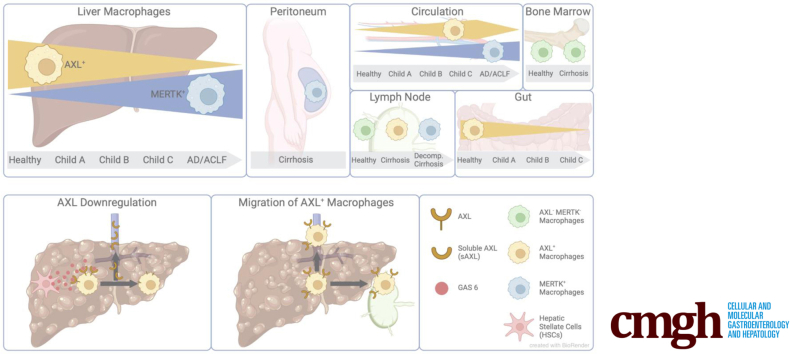
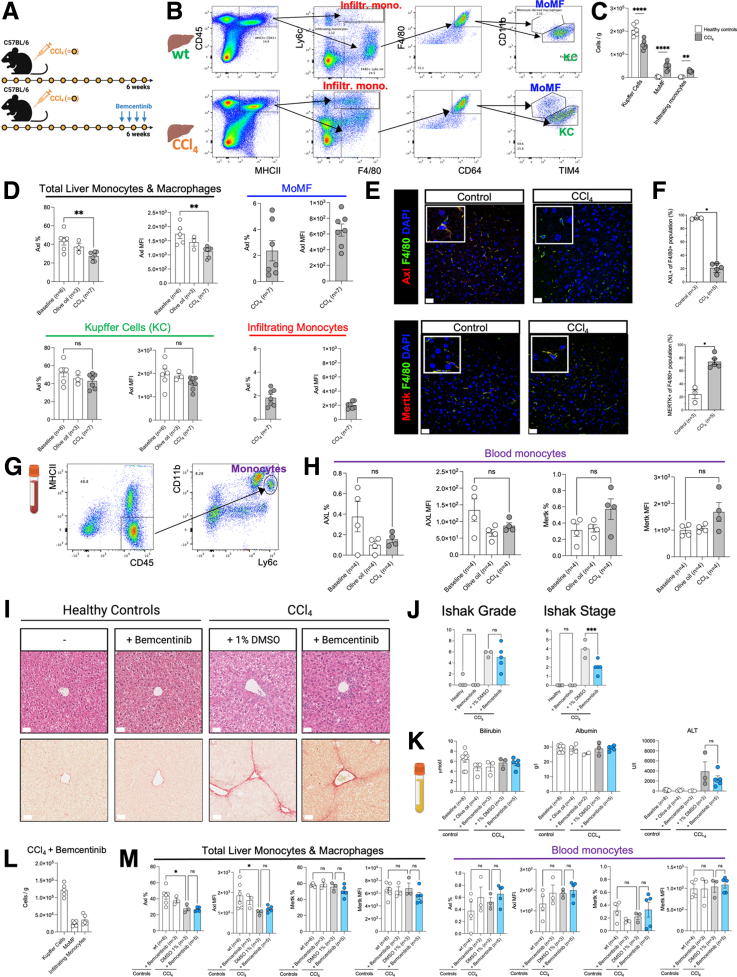
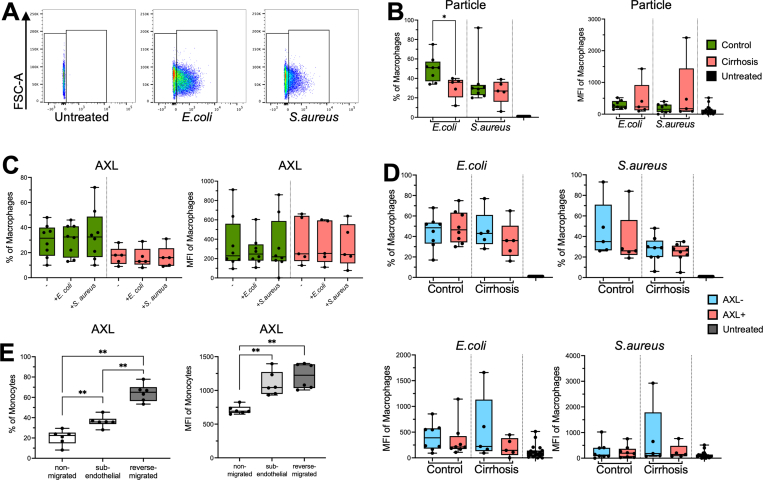
BACKGROUND & AIMS: AXL and MERTK expression on circulating monocytes modulated immune responses in patients with cirrhosis (CD14HLA-DRAXL) and acute-on-chronic liver failure (CD14MERTK). AXL expression involved enhanced efferocytosis, sustained phagocytosis, but reduced tumor necrosis factor-α/interleukin-6 production and T-cell activation, suggesting a homeostatic function. Axl was expressed on murine airway in tissues contacting the external environment, but not interstitial lung- and tissue-resident synovial lining macrophages. Here, we assessed AXL expression on tissue macrophages in patients with cirrhosis.
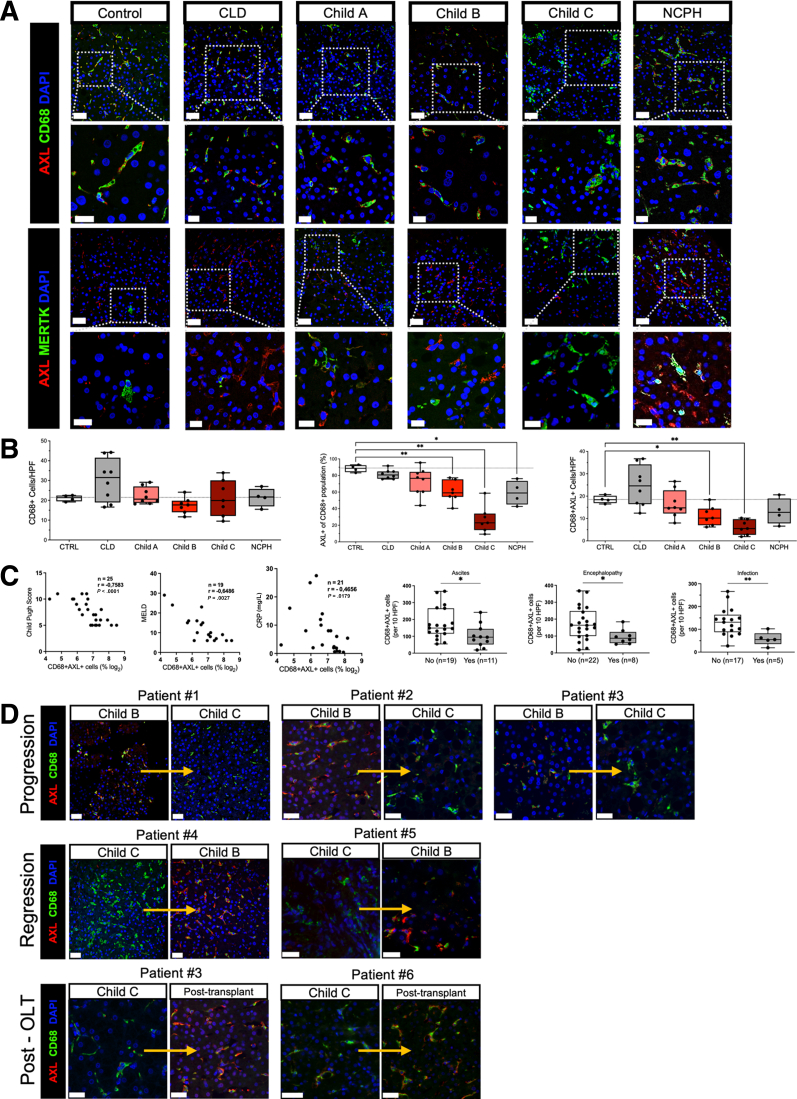
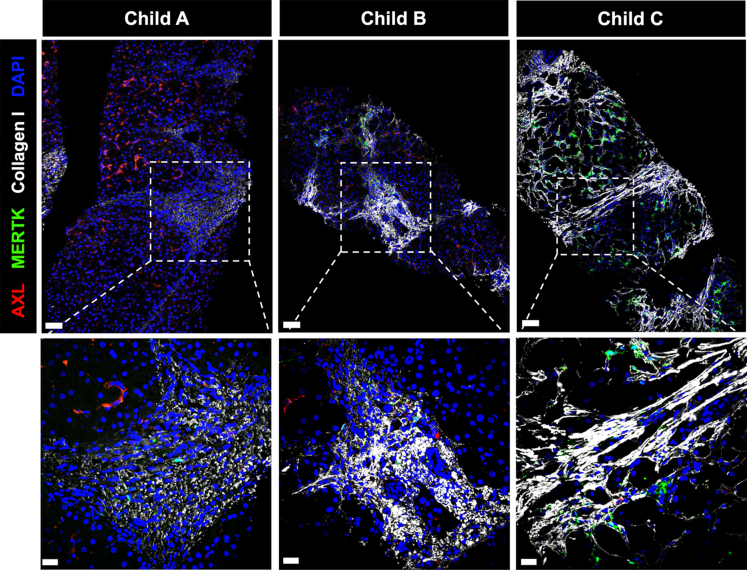
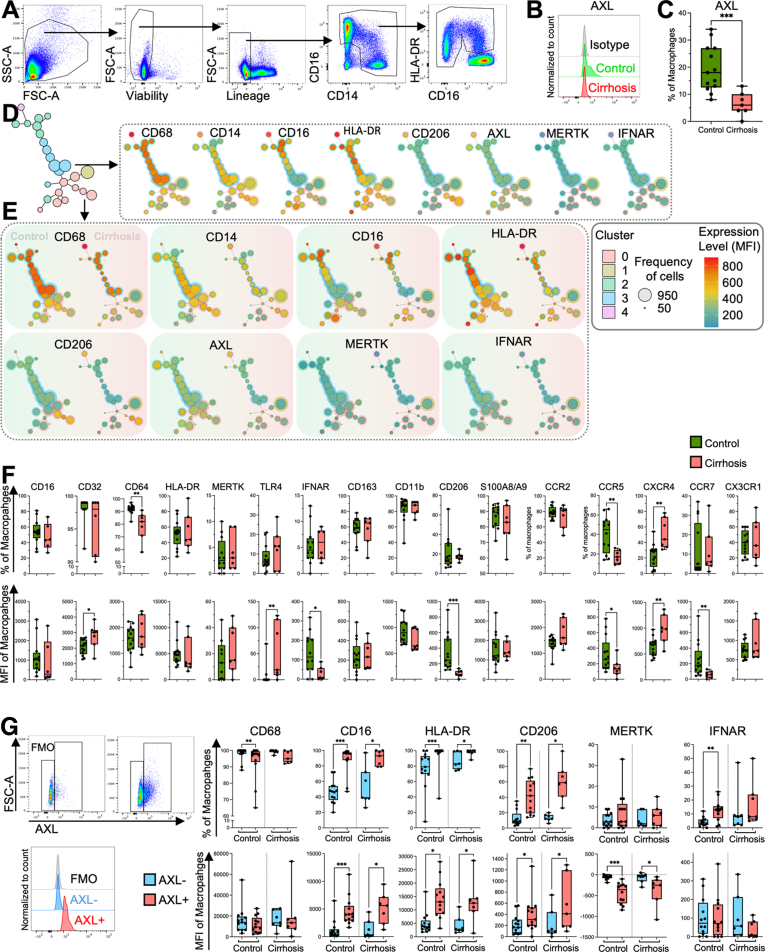
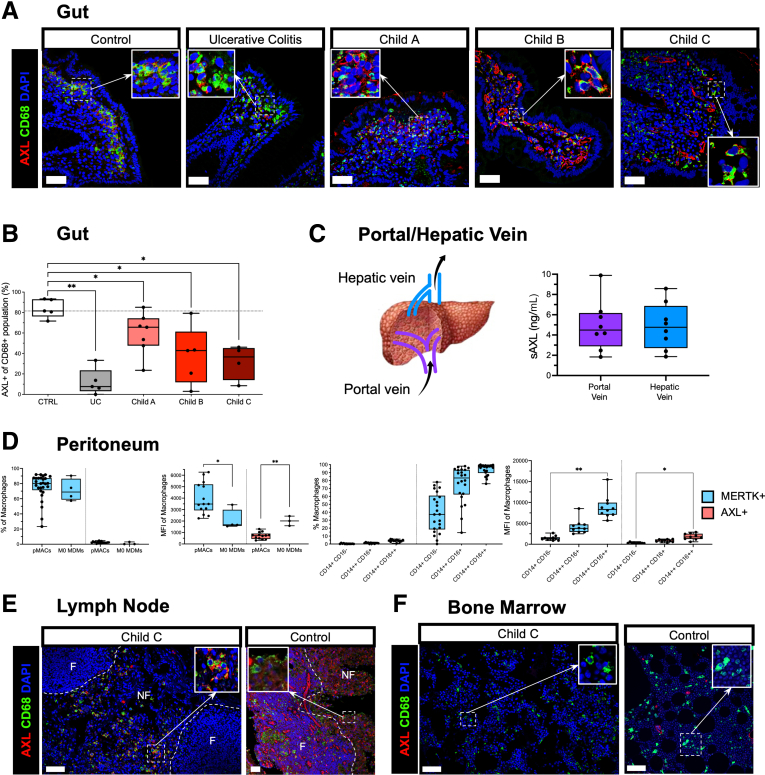
Using multiplexed immunofluorescence we compared AXL expression in liver biopsies in cirrhosis (n = 22), chronic liver disease (n = 8), non-cirrhotic portal hypertension (n = 4), and healthy controls (n = 4). Phenotype and function of isolated primary human liver macrophages were characterized by flow cytometry (cirrhosis, n = 11; control, n = 14) ex vivo. Also, AXL expression was assessed on peritoneal (n = 29) and gut macrophages (n = 16) from cirrhotic patients. Regulation of AXL expression was analyzed in vitro and ex vivo using primary hepatic stellate cells (HSCs), LX-2 cells, and GAS6 in co-culture experiments.
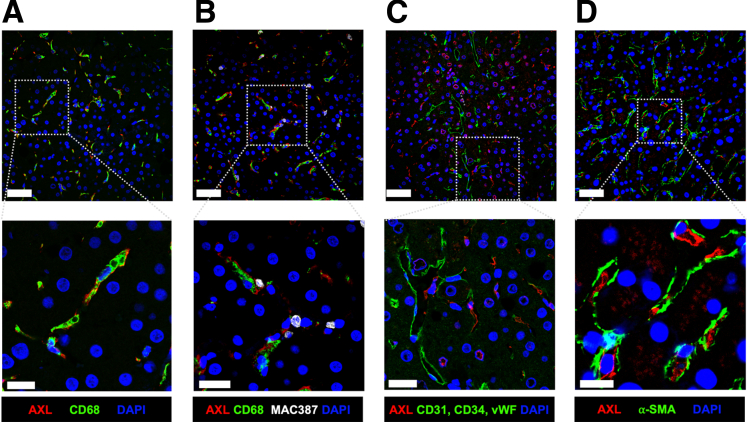
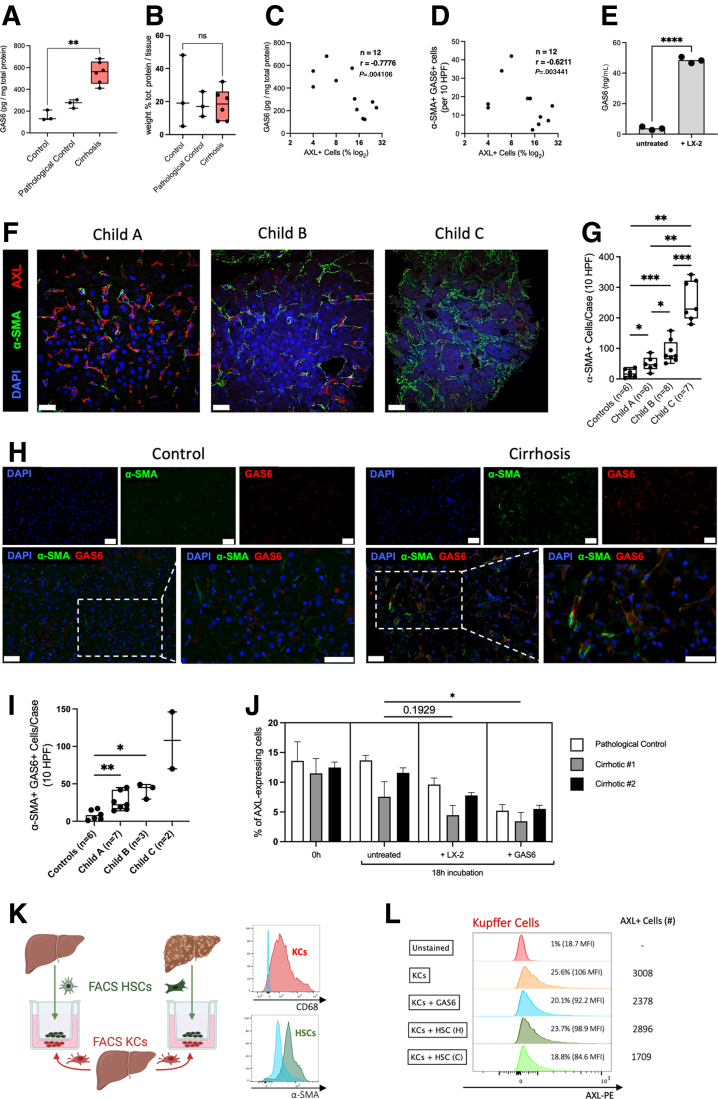
AXL was expressed on resident (CD68) but not tissue-infiltrating (MAC387) liver macrophages, hepatocytes, HSCs, or sinusoidal endothelial cells. Prevalence of hepatic CD68AXL cells significantly decreased with cirrhosis progression: (healthy, 90.2%; Child-Pugh A, 76.1%; Child-Pugh B, 64.5%; and Child-Pugh C, 18.7%; all P < .05) and negatively correlated with Model for End-Stage Liver Disease and C-reactive protein (all P < .05). AXL-expressing hepatic macrophages were CD68HLA-DRCD16CD206. AXL expression also decreased on gut and peritoneal macrophages from cirrhotic patients but increased in regional lymph nodes. GAS6, enriched in the cirrhotic liver, appeared to be secreted by HSCs and down-regulate AXL in vitro.
Decreased AXL expression on resident liver macrophages in advanced cirrhosis, potentially in response to activated HSC-secreted GAS6, suggests a role for AXL in the regulation of hepatic immune homeostasis.
循环单核细胞上的 AXL 和 MERTK 表达可调节肝硬化(CD14HLA-DRAXL)和慢加急性肝衰竭(CD14MERTK)患者的免疫反应。AXL 表达涉及增强的胞饮作用、持续的吞噬作用,但减少肿瘤坏死因子-α/白细胞介素-6 的产生和 T 细胞激活,提示具有稳态功能。AXL 在接触外部环境的组织中的小鼠气道上表达,但不在间质性肺和组织驻留的滑膜衬里巨噬细胞上表达。在这里,我们评估了肝硬化患者组织巨噬细胞上的 AXL 表达。
使用多重免疫荧光法,我们比较了 22 例肝硬化、8 例慢性肝病、4 例非肝硬化性门静脉高压和 4 例健康对照组肝活检组织中 AXL 的表达。通过流式细胞术(肝硬化,n=11;对照组,n=14)对分离的原代人肝巨噬细胞的表型和功能进行了体外特征描述。还评估了来自肝硬化患者的腹腔(n=29)和肠道巨噬细胞(n=16)中的 AXL 表达。使用原代肝星状细胞(HSCs)、LX-2 细胞和 GAS6 在共培养实验中分析了 AXL 表达的调节。
AXL 表达于驻留(CD68)而非组织浸润(MAC387)的肝巨噬细胞、肝细胞、HSCs 或窦内皮细胞上。随着肝硬化的进展,肝 CD68AXL 细胞的发生率显著降低:(健康,90.2%;Child-Pugh A,76.1%;Child-Pugh B,64.5%;Child-Pugh C,18.7%;均 P<.05),并与终末期肝病模型和 C 反应蛋白呈负相关(均 P<.05)。表达 AXL 的肝巨噬细胞为 CD68HLA-DRCD16CD206。来自肝硬化患者的肠道和腹腔巨噬细胞上的 AXL 表达也减少,但在区域淋巴结中增加。富含肝硬化肝脏的 GAS6 似乎由 HSC 分泌,并在体外下调 AXL。
在晚期肝硬化中,驻留肝巨噬细胞上 AXL 表达减少,可能是对激活的 HSC 分泌的 GAS6 的反应,提示 AXL 在调节肝脏免疫稳态中起作用。