Reuland Carolyn, Shi Galen, Deatras Mark, Ang Mellinor, Evangelista Paula Pilar G, Shilkofski Nicole
Johns Hopkins University School of Medicine, Baltimore, MD, United States.
Philippine Children's Medical Center Department of Pediatric Critical Care, Quezon, Philippines.
Front Pediatr. 2023 Mar 15;11:1127752. doi: 10.3389/fped.2023.1127752. eCollection 2023.
Globally, pediatric hospitals have implemented Pediatric Early Warning Scores (PEWS) to standardize escalation of care and improve detection of clinical deterioration in pediatric patients. This study aims to utilize qualitative methodology to understand barriers and facilitators of PEWS implementation at Philippine Children's Medical Center (PCMC), a tertiary care hospital in Manila, Philippines.
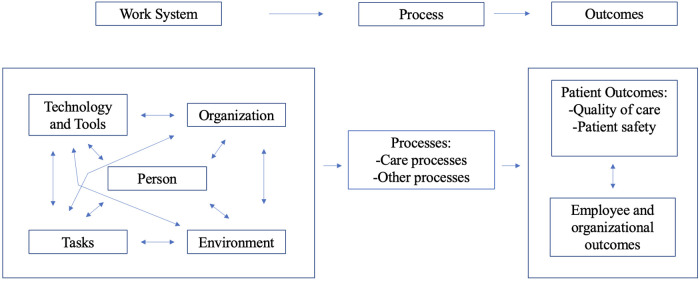
Semi-structured interviews querying current processes for clinical monitoring, Pediatric Intensive Care Unit (PICU) transfer, and clinician attitudes towards PEWS implementation were audio recorded. In-person hospital observations served to triangulate interview findings. The Systems Engineering Initiative for Patient Safety (SEIPS) framework guided content coding of interviews to characterize work systems, processes, and outcomes related to patient monitoring and care escalation. Thematic coding was performed using Dedoose software. This model allowed identification of barriers and facilitators to PEWS implementation.
Barriers within PCMC workflow included: limited bed capacity, delay in referral, patient overflow, limited monitoring equipment, and high patient to staff ratio. Facilitators of PEWS implementation included support for PEWS adaptation and existence of systems for vital sign monitoring. Observations by study personnel confirmed validity of themes.
Utilizing qualitative methodology to understand barriers and facilitators to PEWS in specific contexts can guide implementation at resource-limited hospitals.
在全球范围内,儿科医院已实施儿科早期预警评分(PEWS),以规范护理升级并改善对儿科患者临床病情恶化的检测。本研究旨在运用定性方法,了解菲律宾马尼拉一家三级护理医院——菲律宾儿童医学中心(PCMC)实施PEWS的障碍和促进因素。
对当前临床监测流程、儿科重症监护病房(PICU)转诊以及临床医生对PEWS实施态度的半结构化访谈进行了录音。实地医院观察用于对访谈结果进行三角验证。患者安全系统工程倡议(SEIPS)框架指导访谈内容编码,以描述与患者监测和护理升级相关的工作系统、流程和结果。使用Dedoose软件进行主题编码。该模型有助于识别PEWS实施的障碍和促进因素。
PCMC工作流程中的障碍包括:床位有限、转诊延迟、患者溢出、监测设备有限以及患者与工作人员比例过高。PEWS实施的促进因素包括对PEWS调整的支持以及生命体征监测系统的存在。研究人员的观察证实了这些主题的有效性。
运用定性方法了解特定背景下PEWS的障碍和促进因素,可为资源有限医院的实施提供指导。