Vercellino Fabiana, Valerio Massimo, Dusio Maria Pia, Spano Alice, D'Alfonso Sandra
Child Neuropsychiatry Unit, SS Antonio e Biagio e Cesare Arrigo Hospital, Alessandria, ITA.
Pediatric Intensive Care Unit, SS Antonio e Biagio e Cesare Arrigo Hospital, Alessandria, ITA.
Cureus. 2023 Mar 1;15(3):e35655. doi: 10.7759/cureus.35655. eCollection 2023 Mar.
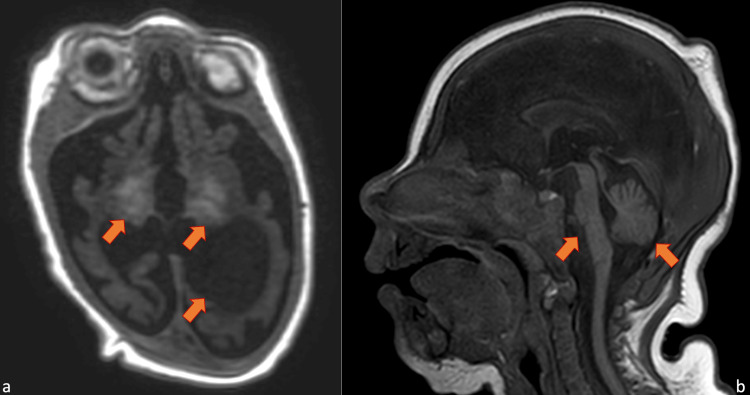
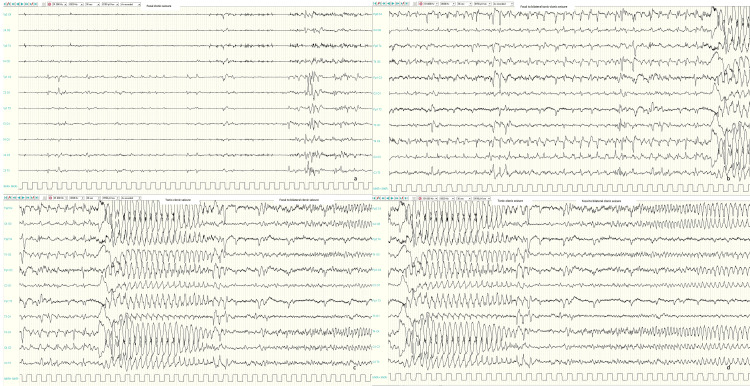
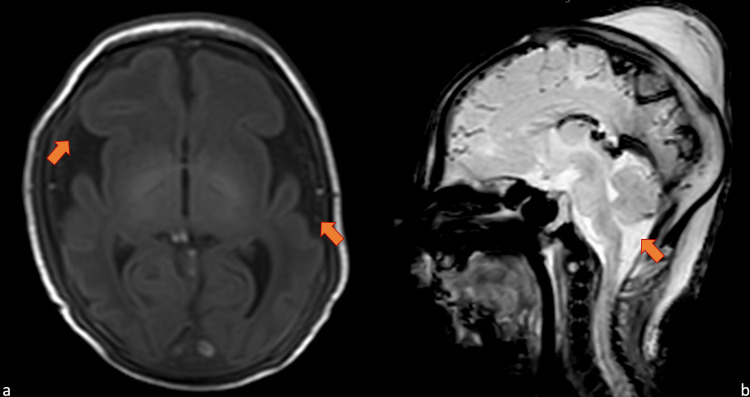
Biallelic mutations in the BRAT1 gene have been reported in cases with Lethal neonatal rigidity and multifocal seizure syndrome (RMFSL), since 2012. Clinical features include progressive encephalopathy, dysmorphic features, microcephaly, hypertonia, developmental delay, refractory epilepsy, episodic apnea, and bradycardia. More recently, biallelic BRAT1 mutations have been associated with a milder phenotype in patients with migrating focal seizures in the absence of rigidity or with nonprogressive congenital ataxia with or without epilepsy (NEDCAS). It has been proposed that the loss of function caused by BRAT1 mutations may decrease cell proliferation and migration and cause neuronal atrophy through impairment of mitochondrial homeostasis. We here report a female infant with a phenotype, electroencephalogram (EEG), and brain magnetic resonance imaging (MRI) consistent with RMFSL, whose diagnosis was indirectly formulated three years after death upon the identification in both parents of a known pathogenetic variant in the BRAT1 gene. Our report emphasizes the remarkable potential of novel genetic technologies for the diagnosis of past unsolved clinical cases.
自2012年以来,已有报道称BRAT1基因双等位基因突变与致死性新生儿强直和多灶性癫痫综合征(RMFSL)有关。临床特征包括进行性脑病、畸形特征、小头畸形、肌张力亢进、发育迟缓、难治性癫痫、发作性呼吸暂停和心动过缓。最近,双等位基因BRAT1突变与无强直的游走性局灶性癫痫患者或有或无癫痫的非进行性先天性共济失调(NEDCAS)患者的较轻表型有关。有人提出,BRAT1突变导致的功能丧失可能会减少细胞增殖和迁移,并通过破坏线粒体稳态导致神经元萎缩。我们在此报告一名女婴,其表型、脑电图(EEG)和脑磁共振成像(MRI)与RMFSL一致,在其死亡三年后,通过在父母双方中鉴定出BRAT1基因中已知的致病变异,间接做出了诊断。我们的报告强调了新型基因技术在诊断过去未解决的临床病例方面的巨大潜力。