Key Laboratory of Neuropsychiatric Drug Research of Zhejiang Province, School of Pharmacy, Hangzhou Medical College, Hangzhou, Zhejiang, China.
Front Cell Infect Microbiol. 2023 Mar 15;13:1128807. doi: 10.3389/fcimb.2023.1128807. eCollection 2023.
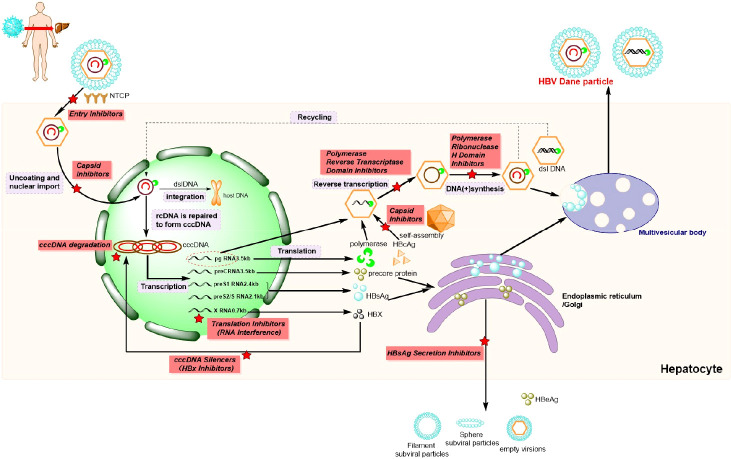
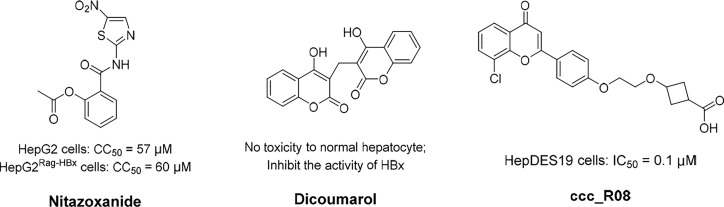
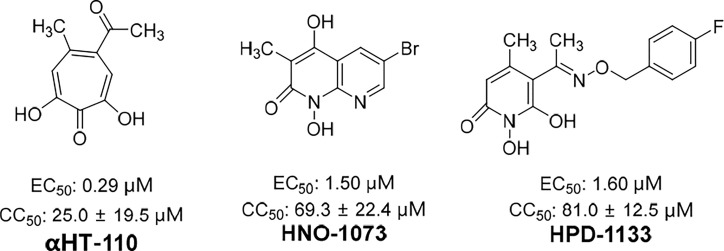
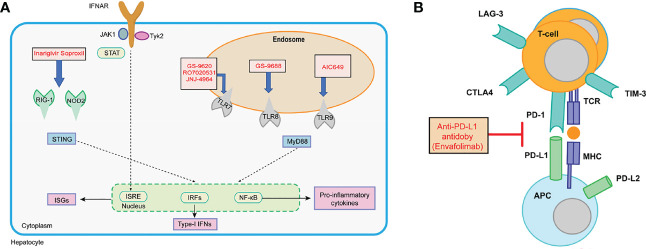
Hepatitis B virus infections have always been associated with high levels of mortality. In 2019, hepatitis B virus (HBV)-related diseases resulted in approximately 555,000 deaths globally. In view of its high lethality, the treatment of HBV infections has always presented a huge challenge. The World Health Organization (WHO) came up with ambitious targets for the elimination of hepatitis B as a major public health threat by 2030. To accomplish this goal, one of the WHO's strategies is to develop curative treatments for HBV infections. Current treatments in a clinical setting included 1 year of pegylated interferon alpha (PEG-IFNα) and long-term nucleoside analogues (NAs). Although both treatments have demonstrated outstanding antiviral effects, it has been difficult to develop a cure for HBV. The reason for this is that covalently closed circular DNA (cccDNA), integrated HBV DNA, the high viral burden, and the impaired host immune responses all hinder the development of a cure for HBV. To overcome these problems, there are clinical trials on a number of antiviral molecules being carried out, all -showing promising results so far. In this review, we summarize the functions and mechanisms of action of various synthetic molecules, natural products, traditional Chinese herbal medicines, as clustered regularly interspaced short palindromic repeats and their associated proteins (CRISPR/Cas)-based systems, zinc finger nucleases (ZFNs), and transcription activator-like effector nucleases (TALENs), all of which could destroy the stability of the HBV life cycle. In addition, we discuss the functions of immune modulators, which can enhance or activate the host immune system, as well some representative natural products with anti-HBV effects.
乙型肝炎病毒感染一直与高死亡率相关。2019 年,全球因乙型肝炎病毒(HBV)相关疾病导致的死亡人数约为 55.5 万。鉴于其高致死率,HBV 感染的治疗一直是一个巨大的挑战。世界卫生组织(WHO)制定了雄心勃勃的目标,即在 2030 年前消除乙型肝炎作为主要公共卫生威胁。为实现这一目标,WHO 的策略之一是开发针对 HBV 感染的治愈性治疗方法。目前临床应用的治疗方法包括 1 年聚乙二醇干扰素α(PEG-IFNα)和长期核苷类似物(NAs)。尽管这两种治疗方法均显示出出色的抗病毒效果,但很难开发出针对 HBV 的治愈方法。其原因在于共价闭合环状 DNA(cccDNA)、整合的 HBV DNA、高病毒载量和受损的宿主免疫反应都阻碍了针对 HBV 的治愈方法的开发。为了克服这些问题,目前正在进行许多抗病毒分子的临床试验,迄今为止,这些试验都显示出了有希望的结果。在这篇综述中,我们总结了各种合成分子、天然产物、中药、成簇规律间隔短回文重复及其相关蛋白(CRISPR/Cas)系统、锌指核酸酶(ZFNs)和转录激活因子样效应物核酸酶(TALENs)的功能和作用机制,这些方法都可以破坏 HBV 生命周期的稳定性。此外,我们还讨论了免疫调节剂的功能,这些调节剂可以增强或激活宿主的免疫系统,以及一些具有抗 HBV 作用的代表性天然产物。