State Key Laboratory of Pathogen and Biosecurity, Beijing Institute of Biotechnology, No. 20, Dongda Street, Fengtai District, Beijing, 100071, People's Republic of China.
Department of Infectious Diseases, Sir Run Run Shaw Hospital, Zhejiang University School of Medicine, Hangzhou, People's Republic of China.
BMC Genomics. 2023 Apr 4;24(1):168. doi: 10.1186/s12864-023-09269-6.
Surface polysaccharides (SPs), such as lipopolysaccharide (O antigen) and capsular polysaccharide (K antigen), play a key role in the pathogenicity of Escherichia coli (E. coli). Gene cluster for polysaccharide antigen biosynthesis encodes various glycosyltransferases (GTs), which drive the process of SP synthesis and determine the serotype.
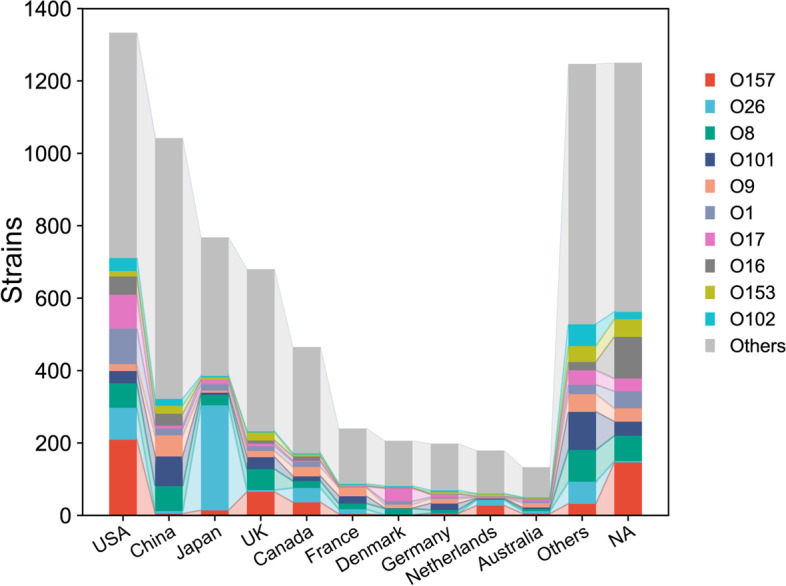
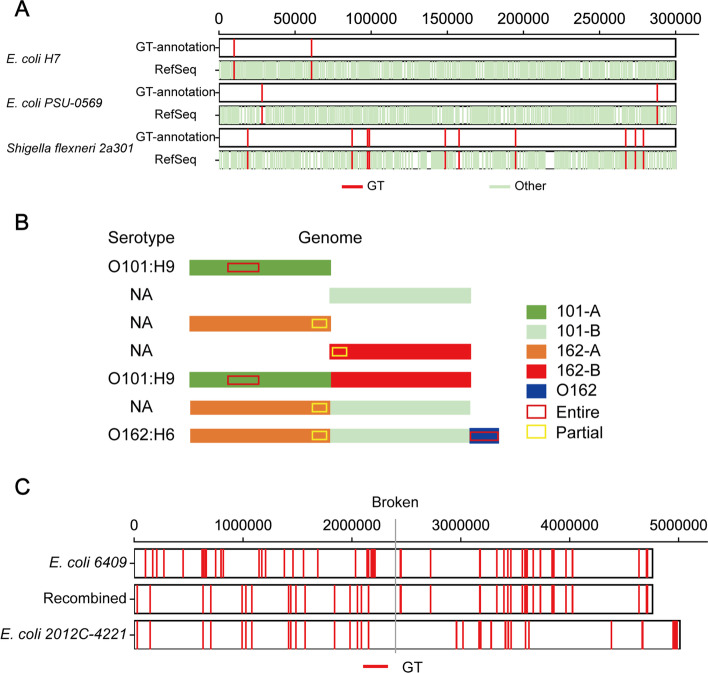
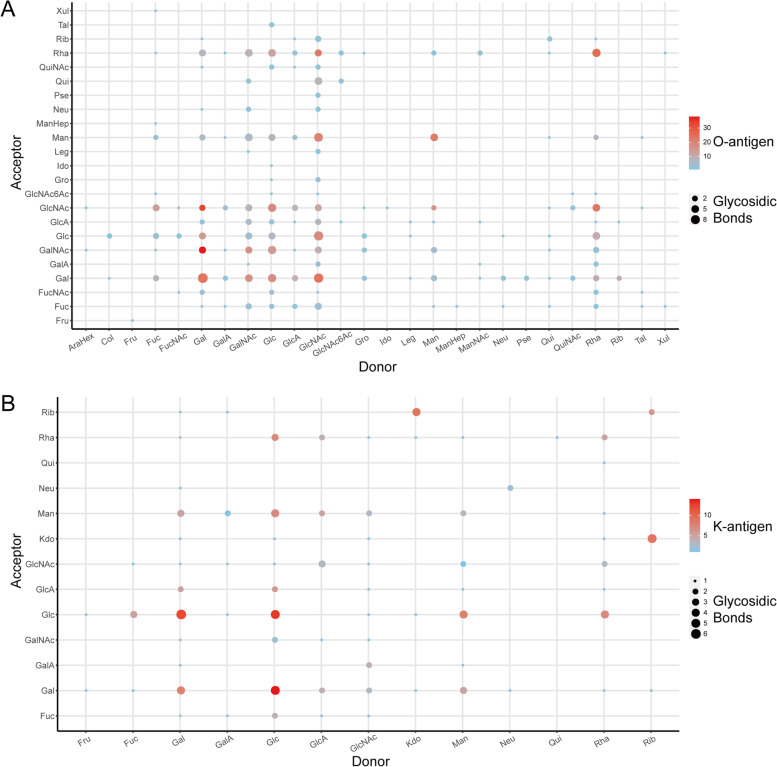
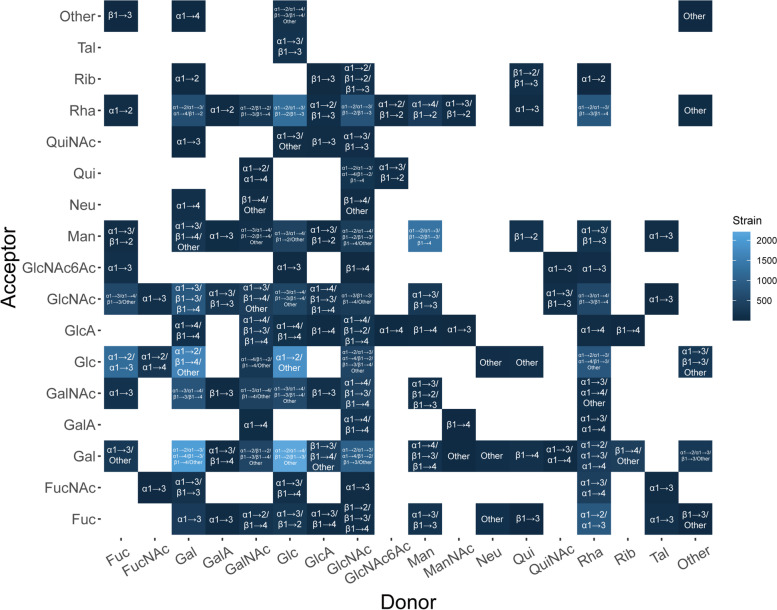
In this study, a total of 7,741 E. coli genomic sequences were chosen for systemic data mining. The monosaccharides in both O and K antigens were dominated by D-hexopyranose, and the SPs in 70-80% of the strains consisted of only the five most common hexoses (or some of them). The linkages between the two monosaccharides were mostly α-1,3 (23.15%) and β-1,3 (20.49%) bonds. Uridine diphosphate activated more than 50% of monosaccharides for glycosyltransferase reactions. These results suggest that the most common pathways could be integrated into chassis cells to promote glycan biosynthesis. We constructed a database (EcoSP, http://ecosp.dmicrobe.cn/ ) for browse this information, such as monosaccharide synthesis pathways. It can also be used for serotype analysis and GT annotation of known or novel E. coli sequences, thus facilitating the diagnosis and typing.
Summarizing and analyzing the properties of these polysaccharide antigens and GTs are of great significance for designing glycan-based vaccines and the synthetic glycobiology.
表面多糖(SPs),如脂多糖(O 抗原)和荚膜多糖(K 抗原),在大肠杆菌(E. coli)的致病性中起着关键作用。多糖抗原生物合成基因簇编码各种糖基转移酶(GTs),这些酶驱动 SP 合成过程,并决定血清型。
在本研究中,总共选择了 7741 个大肠杆菌基因组序列进行系统数据挖掘。O 和 K 抗原中的单糖主要由 D-己吡喃糖组成,70-80%的菌株的 SP 仅由五种最常见的己糖(或其中一些)组成。两种单糖之间的连接大多为α-1,3(23.15%)和β-1,3(20.49%)键。尿苷二磷酸激活了超过 50%的单糖用于糖基转移酶反应。这些结果表明,最常见的途径可以整合到底盘细胞中,以促进糖生物合成。我们构建了一个数据库(EcoSP,http://ecosp.dmicrobe.cn/),用于浏览这些信息,如单糖合成途径。它还可以用于已知或新型大肠杆菌序列的血清型分析和 GT 注释,从而有助于诊断和分型。
总结和分析这些多糖抗原和 GT 的性质对于设计基于聚糖的疫苗和合成糖生物学具有重要意义。