Graduate School of Medical Science and Engineering, Korea Advanced Institute of Science and Technology (KAIST), Daejeon, South Korea.
Department of Biological Sciences, Korea Advanced Institute of Science and Technology (KAIST), Daejeon, South Korea.
J Immunother Cancer. 2023 Apr;11(4). doi: 10.1136/jitc-2022-005519.
The incorporation of co-stimulatory signaling domains into second-generation chimeric antigen receptors (CARs) significantly enhances the proliferation and persistence of CAR-T cells in vivo, leading to successful clinical outcomes.
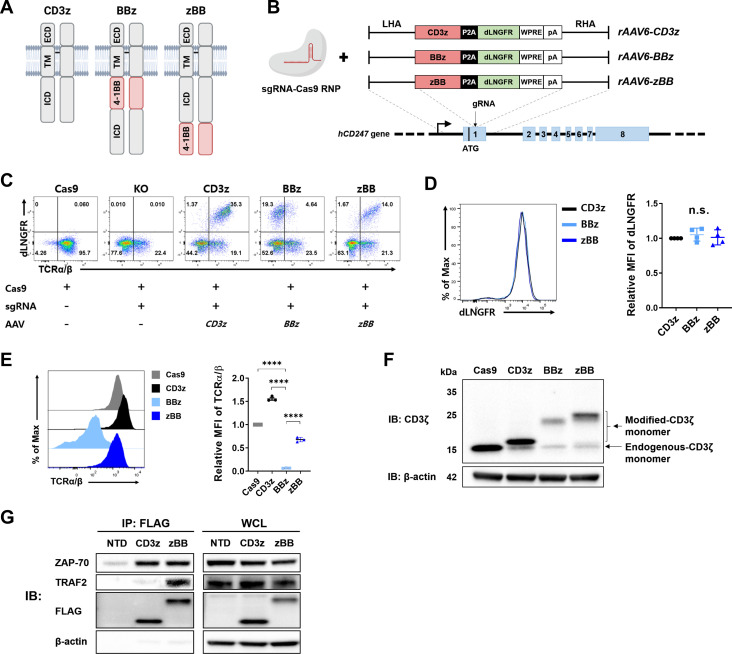
To achieve such functional enhancement in transgenic T-cell receptor-engineered T-cell (TCR-T) therapy, we designed a second-generation TCR-T cell in which CD3ζ genes modified to contain the intracellular domain (ICD) of the 4-1BB receptor were selectively inserted into the locus.
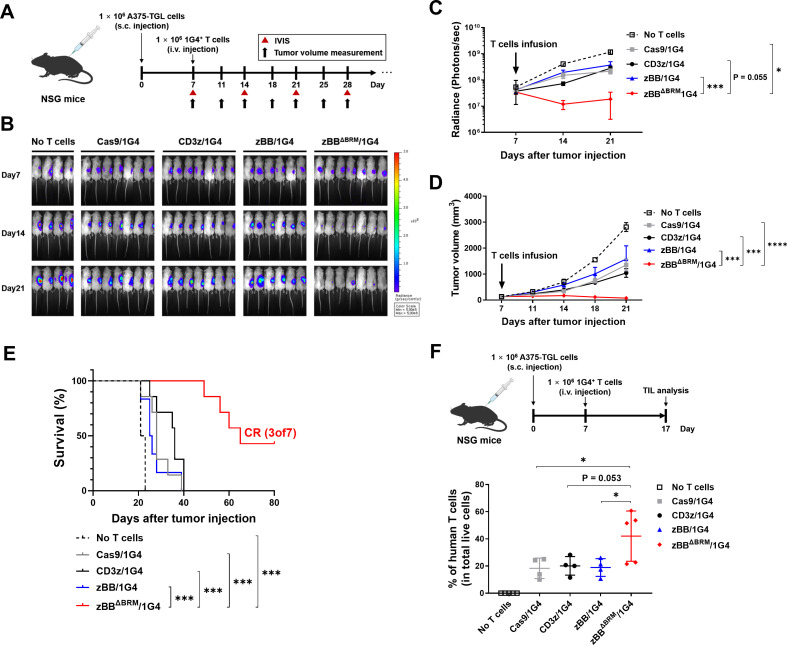
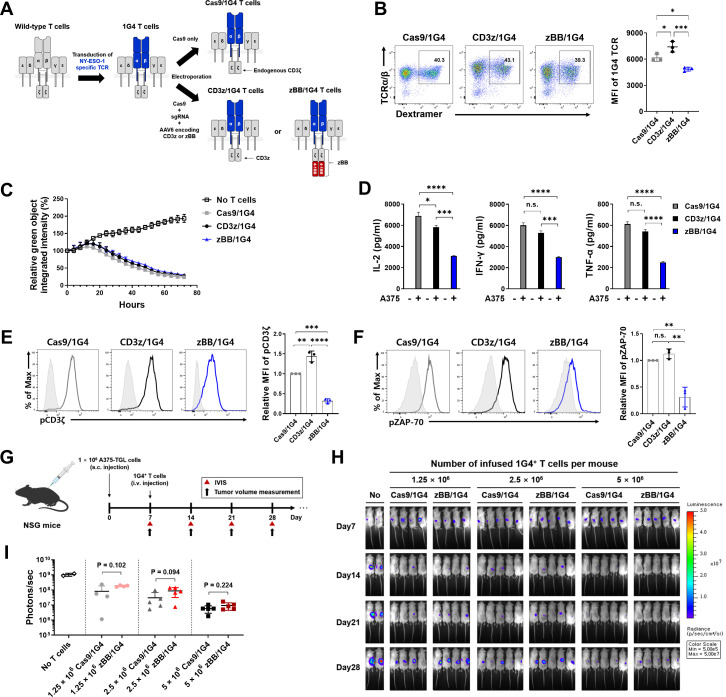
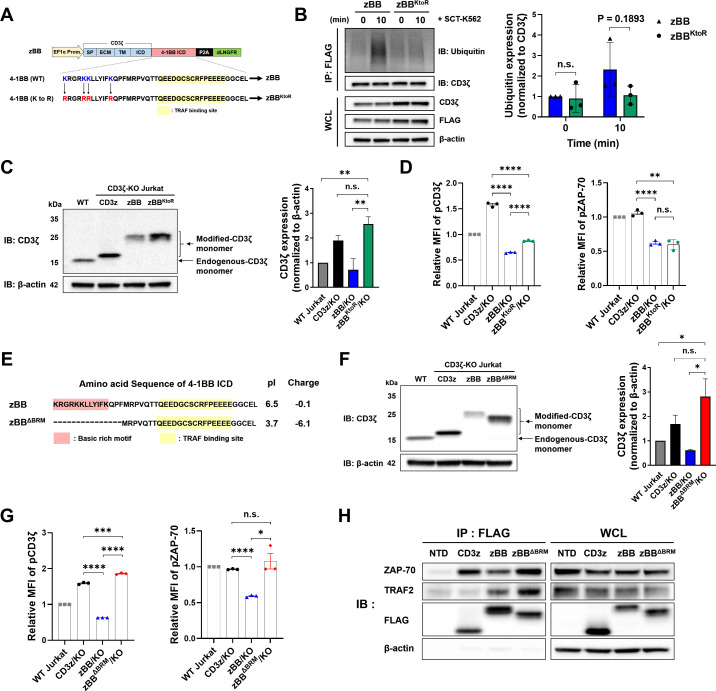
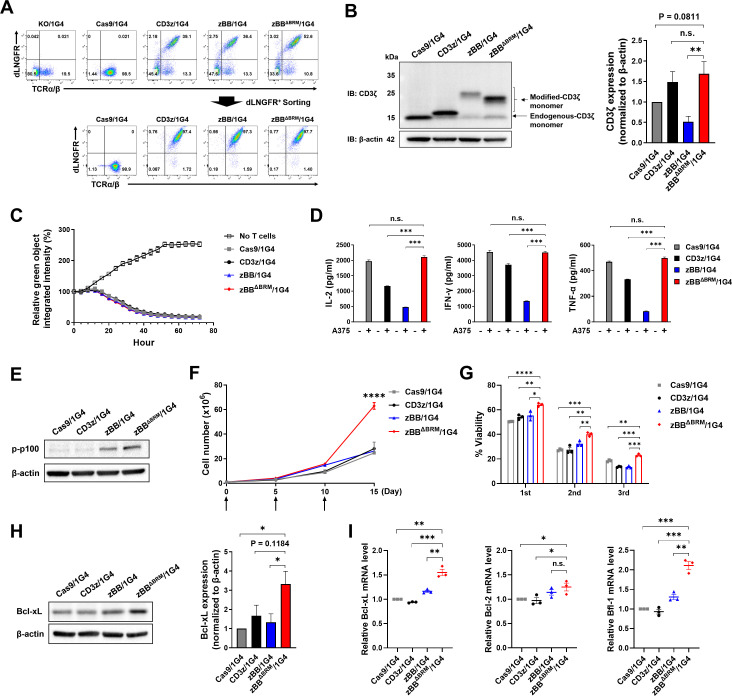
This modification enabled the simultaneous recruitment of key adaptor molecules for signals 1 and 2 on TCR engagement. However, the addition of full-length 4-1BB ICD unexpectedly impaired the expression and signaling of TCRs, leading to suboptimal antitumor activity of the resulting TCR-T cells in vivo. We found that the basic-rich motif (BRM) in the 4-1BB ICD was responsible for the undesirable outcomes, and that fusion of minimal tumor necrosis factor receptor-associated factor (TRAF)-binding motifs at the C-terminus of CD3ζ (zBB) was sufficient to recruit TRAF2, the key adaptor molecule in 4-1BB signaling, while retaining the expression and proximal signaling of the transgenic TCR. Consequently, TCR-T cells expressing zBB exhibited improved persistence and expansion in vitro and in vivo, resulting in superior antitumor activity in a mouse xenograft model.
Our findings offer a promising strategy for improving the intracellular signaling of TCR-T cells and their application in treating solid tumors.
将共刺激信号结构域整合到第二代嵌合抗原受体(CAR)中,可显著增强 CAR-T 细胞在体内的增殖和持久性,从而获得成功的临床结果。
为了在转基因 T 细胞受体工程化 T 细胞(TCR-T)治疗中实现这种功能增强,我们设计了一种第二代 TCR-T 细胞,其中 CD3ζ 基因经修饰后包含 4-1BB 受体的细胞内结构域(ICD),并选择性插入到 TCR 基因座。
这种修饰能够同时募集 TCR 结合时信号 1 和信号 2 的关键衔接分子。然而,全长 4-1BB ICD 的加入出人意料地损害了 TCR 的表达和信号转导,导致体内产生的 TCR-T 细胞的抗肿瘤活性不佳。我们发现 4-1BB ICD 中的碱性富含基序(BRM)是导致不良结果的原因,并且 CD3ζ (zBB) C 末端融合最小的肿瘤坏死因子受体相关因子(TRAF)结合基序足以募集 4-1BB 信号中的关键衔接分子 TRAF2,同时保留转基因 TCR 的表达和近端信号转导。因此,表达 zBB 的 TCR-T 细胞在体外和体内表现出更好的持久性和扩增性,从而在小鼠异种移植模型中表现出更好的抗肿瘤活性。
我们的研究结果为改善 TCR-T 细胞的细胞内信号转导及其在治疗实体瘤中的应用提供了一种有前景的策略。