CAMS Key Laboratory of Translational Research on Lung Cancer, State Key Laboratory of Molecular Oncology, Department of Medical Oncology, National Cancer Center/National Clinical Research Center for Cancer/Cancer Hospital, Chinese Academy of Medical Sciences and Peking Union Medical College, Beijing, P.R. China.
Department of Pathology, National Cancer Center/National Clinical Research Center for Cancer/Cancer Hospital, Chinese Academy of Medical Sciences and Peking Union Medical College, Beijing, P.R. China.
Cancer Res Commun. 2023 Apr 4;3(4):532-539. doi: 10.1158/2767-9764.CRC-22-0438. eCollection 2023 Apr.
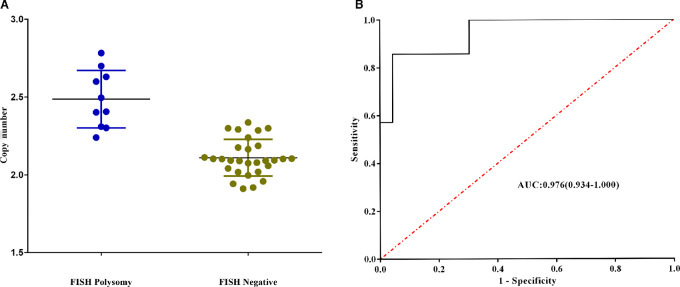
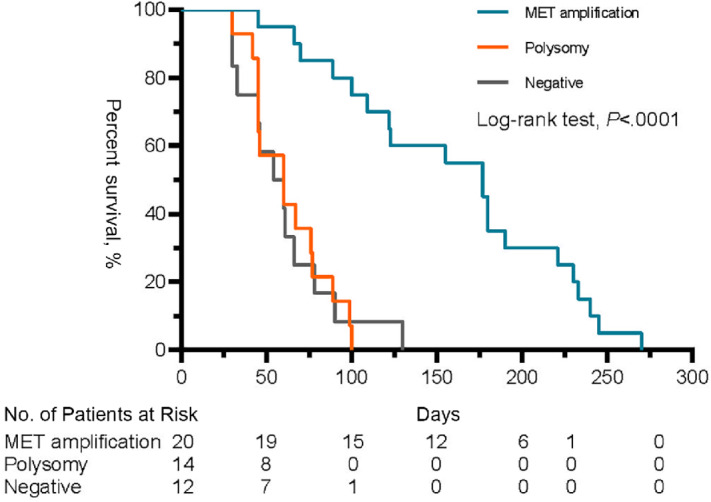
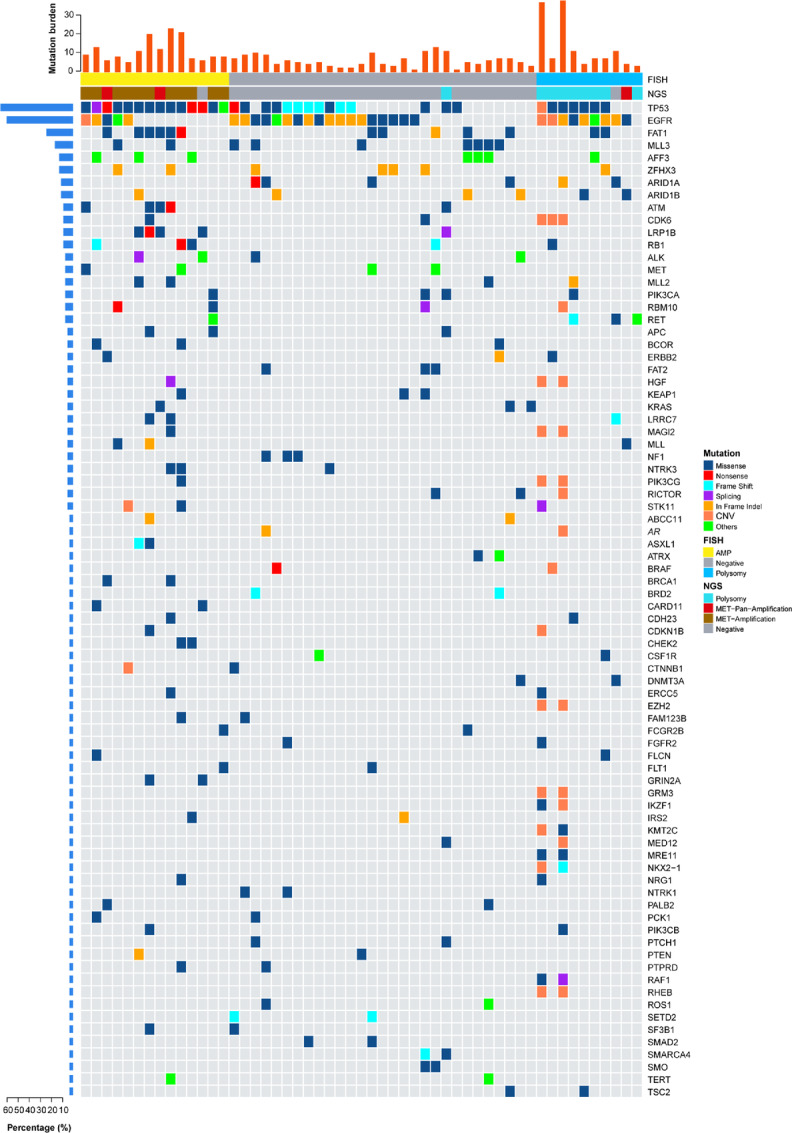
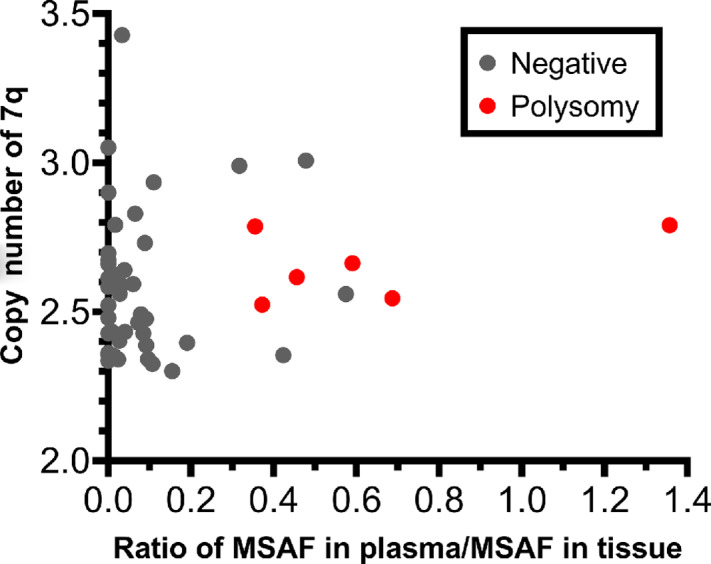
Next-generation sequencing (NGS) has failed to detect mesenchymal epithelial transition factor gene () polysomy in previous studies. We included three non-small cell lung cancer (NSCLC) cohorts in this retrospective study to establish new criteria for detecting polysomy and to explore the clinical relevance of polysomy. Cohort 1 included 53 patients whose tissues were available for both FISH and NGS assays. Paired plasma and tissue samples were obtained from 261 patients with NSCLC as cohort 2. Cohort 3 included 46 patients with metastatic NSCLC, who presented with copy-number gain assessed by NGS. ROC analysis demonstrated that a cut-off point of 2.3 copies achieved the maximum Youden index in discriminating polysomy from normal copy number. Compared with the FISH test for polysomy, the sensitivity, specificity, and agreement of NGS were 90%, 90%, and 96.2%, respectively. Following optimization using maximum somatic allele frequency, the sensitivity and specificity of NGS for defining polysomy using plasma samples according to different circulating tumor DNA mutation frequencies were 42% and 63%. The concordance rate between tissue and plasma samples for detecting polysomy was 85%. Regarding the response to inhibitor, the median progression-free survival (PFS) of the amplification group was significantly higher than that of the polysomy group. The median PFS was similar between the polysomy and normal groups. Our results indicated that NGS may serve as an alternative method for detecting polysomy in NSCLC tissues. Moreover, patients with polysomy may not benefit from inhibitors.
In this study, we established a methodology to differentiate polysomy from normal copy numbers and amplification using NGS. Moreover, this study suggests that it is critical to discriminate polysomy from amplification, for the former may dilute the clinical benefit of inhibitors.
下一代测序(NGS)未能在之前的研究中检测到间质上皮转化因子基因(MET)的多倍体。我们在这项回顾性研究中纳入了三个非小细胞肺癌(NSCLC)队列,以建立新的标准来检测多倍体,并探讨多倍体的临床相关性。队列 1 包括 53 名患者,其组织可同时进行 FISH 和 NGS 检测。队列 2 包括 261 名 NSCLC 患者的配对血浆和组织样本,这些患者均有可通过 NGS 评估的 拷贝数增益。ROC 分析表明,在区分多倍体与正常拷贝数时,2.3 拷贝的截断值获得了最大的 Youden 指数。与 FISH 检测 MET 多倍体相比,NGS 的敏感性、特异性和一致性分别为 90%、90%和 96.2%。通过优化最大体细胞等位基因频率,根据不同循环肿瘤 DNA 突变频率,NGS 用于定义血浆样本多倍体的敏感性和特异性分别为 42%和 63%。组织和血浆样本检测多倍体的一致性率为 85%。关于对 MET 抑制剂的反应,扩增组的中位无进展生存期(PFS)明显高于多倍体组。多倍体组与正常组的中位 PFS 相似。我们的结果表明,NGS 可能是一种替代方法,可用于检测 NSCLC 组织中的 MET 多倍体。此外,MET 多倍体患者可能无法从 MET 抑制剂中获益。
在这项研究中,我们建立了一种使用 NGS 区分多倍体与正常拷贝数和扩增的方法。此外,本研究表明,区分 MET 多倍体与扩增至关重要,因为前者可能会削弱 MET 抑制剂的临床获益。