Institute for Digitalization and General Medicine, University Hospital RWTH Aachen, Aachen, Germany.
Center for Rare Diseases Bonn (ZSEB), University Hospital Bonn, Bonn, Germany.
Dig Dis Sci. 2023 Aug;68(8):3400-3412. doi: 10.1007/s10620-023-07921-5. Epub 2023 Apr 8.
Mast cell activation syndrome (MCAS) is a clinically heterogeneous disease with allergy-like symptoms and abdominal complaints. Its etiology is only partially understood and it is often overlooked.
The aim of this study was to identify subgroups of MCAS patients to facilitate diagnosis and allow a personalized therapy.
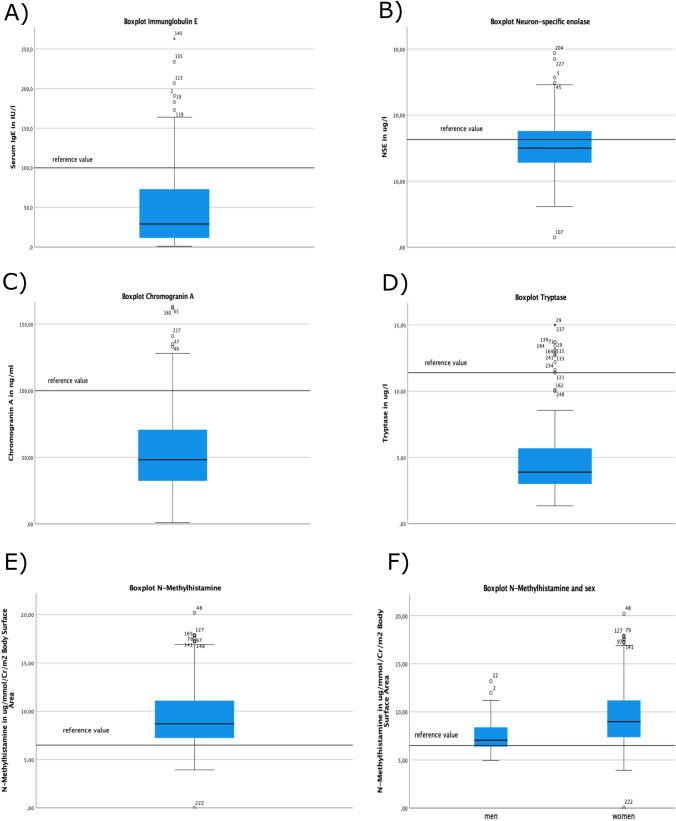
Based on data from 250 MCAS patients, hierarchical and two-step cluster analyses as well as association analyses were performed. The data used included data from a MCAS checklist asking about symptoms and triggers and a set of diagnostically relevant laboratory parameters.
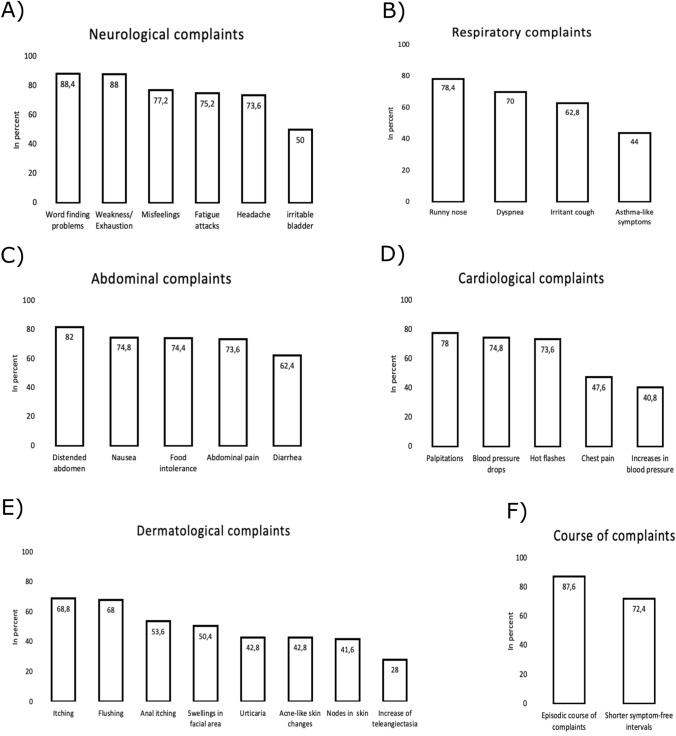
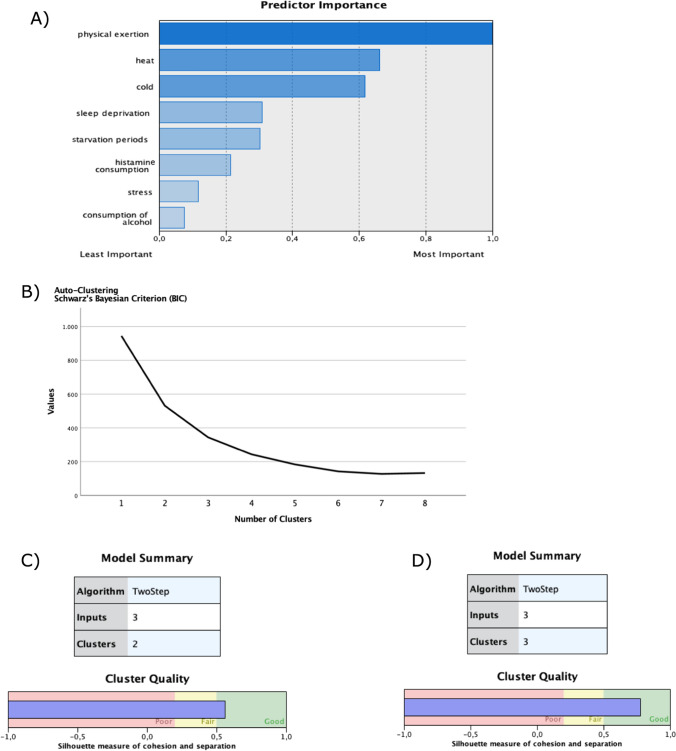
Using a two-step cluster analysis, MCAS patients could be divided into three clusters. Physical trigger factors were particularly decisive for the classification as they showed remarkable differences between the three clusters. Cluster 1, labeled high responders, showed high values for the triggers heat and cold, whereas cluster 2, labeled intermediate responders, presented with high values for the trigger heat and low values for cold. The third cluster, labeled low responders, did not react to thermal triggers. The first two clusters showed more divers clinical symptoms especially with regard to dermatological and cardiological complaints. Subsequent association analyses revealed relationships between triggers and clinical complaints: Abdominal discomfort is mainly triggered by histamine consumption, dermatological discomfort by exercise, and neurological symptoms are related to physical exertion and periods of starvation. The reasons for the occurrence of cardiological complaints are manifold and triggers for respiratory complaints still need better identification.
Our study identified three distinct clusters on the basis of physical triggers, which also differ significantly in their clinical symptoms. A trigger-related classification can be helpful in clinical practice for diagnosis and therapy. Longitudinal studies should be conducted to further understand the relationship between triggers and symptoms.
肥大细胞活化综合征(MCAS)是一种具有过敏样症状和腹部不适的临床异质性疾病。其病因仅部分了解,且常被忽视。
本研究旨在确定 MCAS 患者的亚组,以促进诊断并允许进行个性化治疗。
基于 250 例 MCAS 患者的数据,进行了层次聚类分析和两步聚类分析以及关联分析。使用的数据包括 MCAS 检查表中的症状和触发因素数据以及一组与诊断相关的实验室参数。
使用两步聚类分析,MCAS 患者可分为三组。物理触发因素对分类具有决定性作用,因为它们在三组之间存在显著差异。标记为高反应者的第 1 组表现出对热和冷这两种触发因素的高值,而标记为中反应者的第 2 组表现出对热的高值和对冷的低值。第 3 组标记为低反应者,对热触发无反应。前两组表现出更多样化的临床症状,尤其是皮肤和心脏方面的症状。随后的关联分析揭示了触发因素与临床症状之间的关系:腹部不适主要由组胺消耗引起,皮肤不适主要由运动引起,神经症状与体力消耗和饥饿期有关。心脏症状的发生原因多种多样,呼吸道症状的触发因素仍需更好地确定。
我们的研究基于物理触发因素确定了三个不同的亚组,这些亚组在临床症状上也有显著差异。基于触发因素的分类在临床实践中有助于诊断和治疗。应进行纵向研究以进一步了解触发因素与症状之间的关系。