Department of Chemical and Geological Sciences, University of Modena and Reggio Emilia, via G. Campi 103, 41125 Modena, Italia.
Innovative Technology Laboratories, AGC Inc., Yokohama, Kanagawa 230-0045, Japan.
Langmuir. 2023 Apr 18;39(15):5527-5541. doi: 10.1021/acs.langmuir.3c00304. Epub 2023 Apr 8.
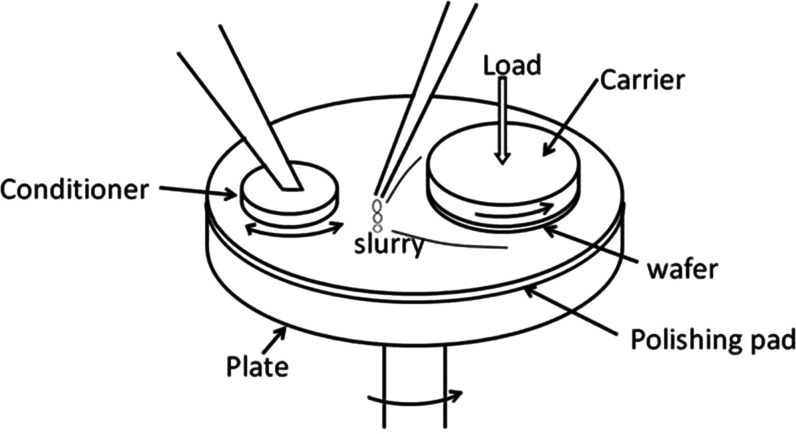
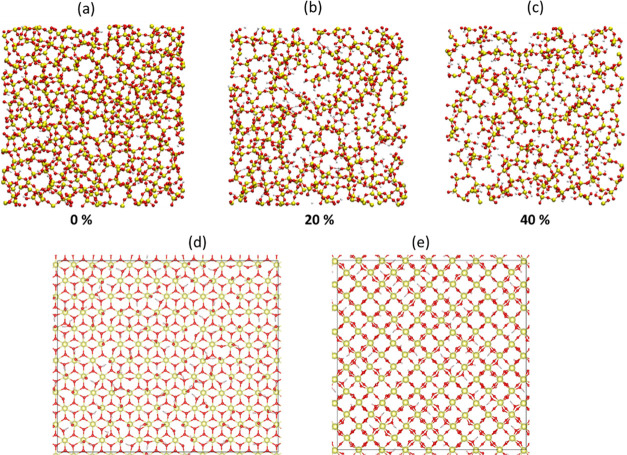
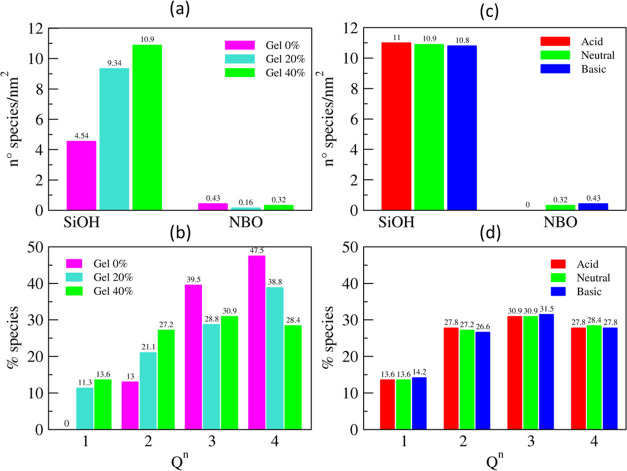
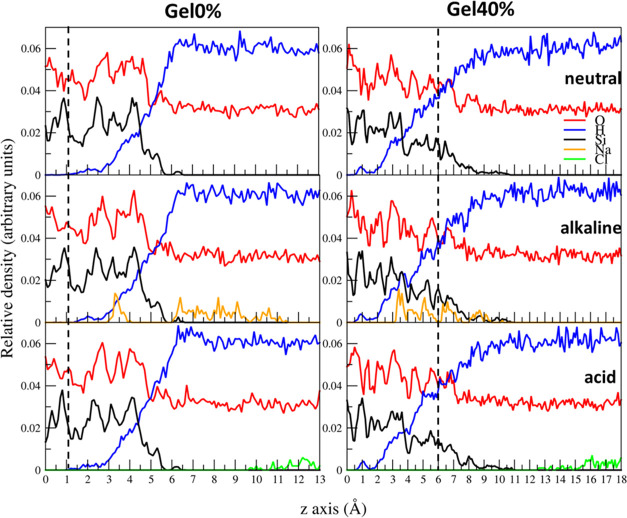
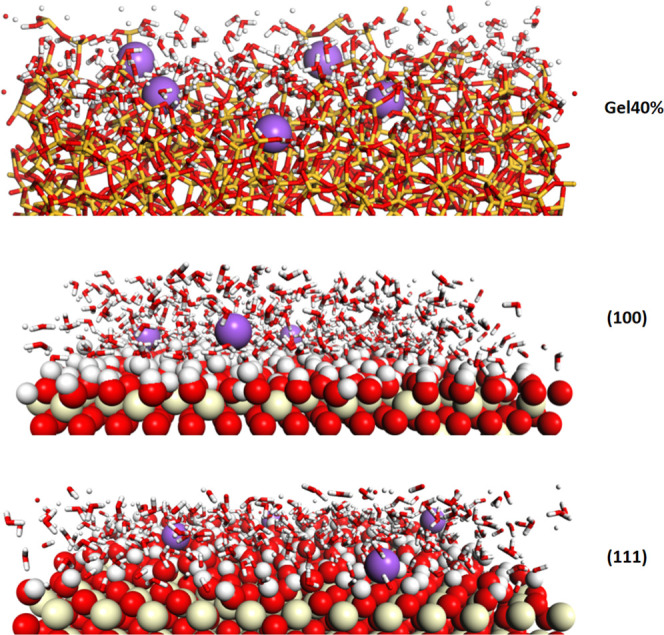
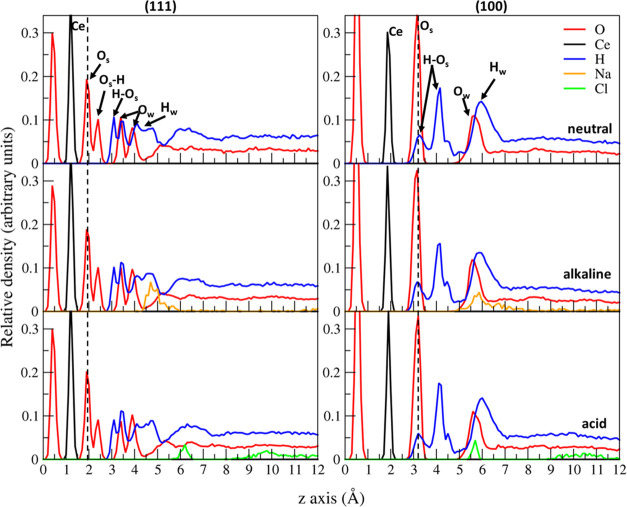
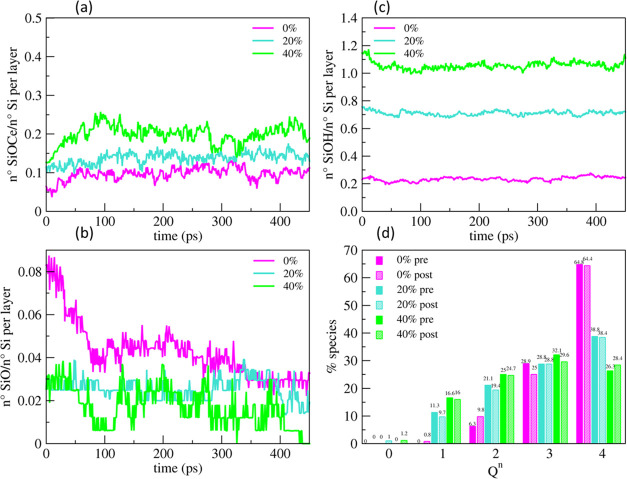
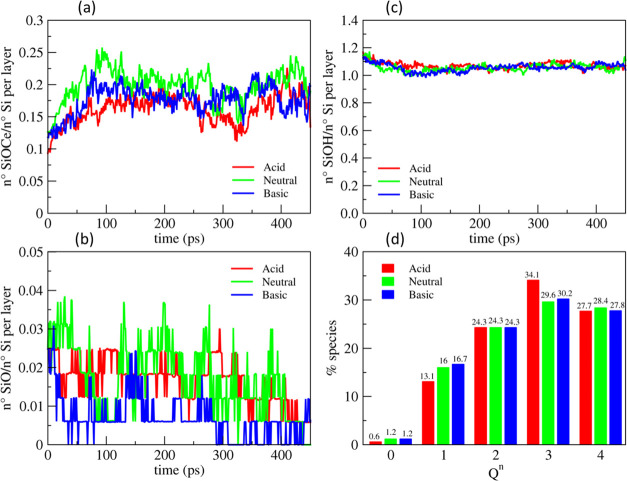
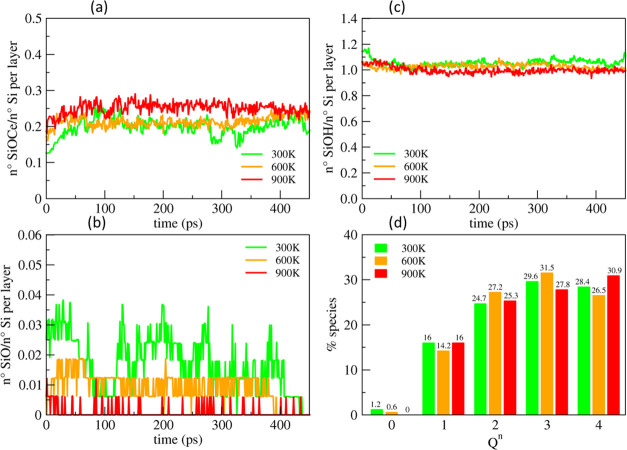
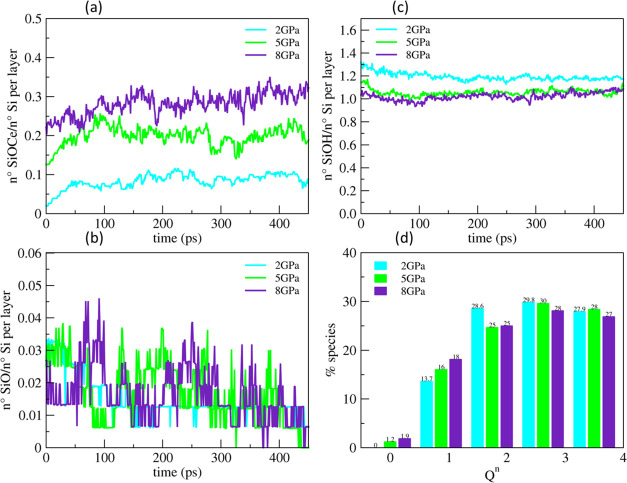
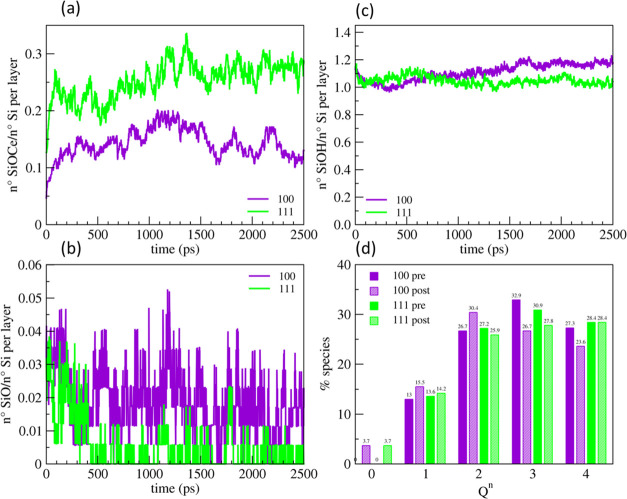
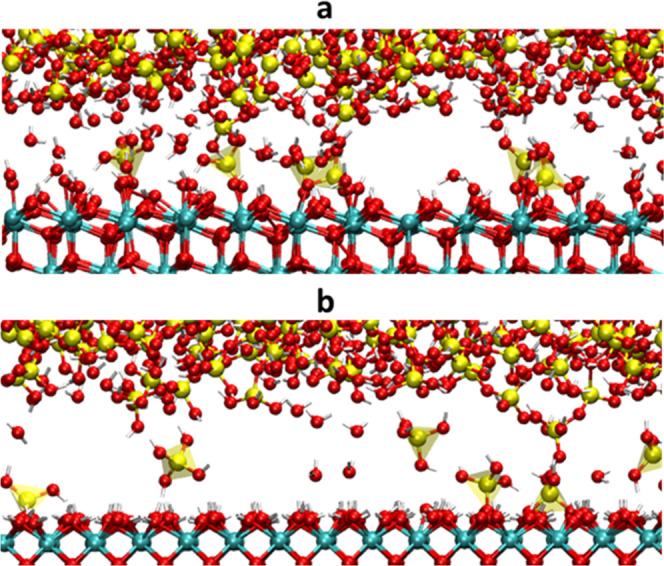
Reactive molecular dynamics simulations have been used to simulate the chemical mechanical polishing (CMP) process of silica glass surfaces with the ceria (111) and (100) surfaces, which are predominantly found in ceria nanoparticles. Since it is known that an alteration layer is formed at the glass surface as a consequence of the chemical interactions with the slurry solutions used for polishing, we have created several glass surface models with different degrees of hydroxylation and porosity for investigating their morphology and chemistry after the interaction with acidic, neutral, and basic water solutions and the ceria surfaces. Both the chemical and mechanical effects under different pressure and temperature conditions have been studied and clarified. According to the simulation results, we have found that the silica slab with a higher degree of hydroxylation (thicker alteration layer) is more reactive, suggesting that proper chemical treatment is fundamental to augment the polishing efficiency. The reactivity between the silica and ceria (111) surfaces is higher at neutral pH since more OH groups present at the two surfaces increased the Si-O-Ce bonds formed at the interface. Usually, an outermost tetrahedral silicate unit connected to the rest of the silicate network through a single bond was removed during the polishing simulations. We observed that higher pressure and temperature accelerated the removal of more SiO units. However, excessively high pressure was found to be detrimental since the heterogeneous detachment of SiO units led to rougher surfaces and breakage of the Si-O-Si bond, even in the bulk of the glass. Despite the lower concentration of Ce ions at the surface resulting in the lower amount of Si-O-Ce formed, the (100) ceria surface was intrinsically more reactive than (111). The different atomic-scale mechanisms of silica removal at the two ceria surfaces were described and discussed.
已使用反应分子动力学模拟来模拟具有铈(111)和(100)表面的二氧化硅玻璃表面的化学机械抛光(CMP)过程,这两种表面在铈纳米颗粒中占主导地位。由于众所周知,由于与用于抛光的浆料溶液的化学相互作用,在玻璃表面形成了改变层,因此我们已经为几种具有不同程度的羟化和多孔性的玻璃表面模型创建了不同程度的羟化和多孔性,以研究它们在与酸性,中性和碱性水溶液以及铈表面相互作用后的形态和化学性质。已经研究并阐明了在不同压力和温度条件下的化学和机械效应。根据模拟结果,我们发现具有更高羟化度(更厚的改变层)的二氧化硅平板更具反应性,这表明适当的化学处理对于提高抛光效率至关重要。由于两个表面存在更多的 OH 基团,因此二氧化硅和铈(111)表面之间在中性 pH 下的反应性更高,从而增加了界面处形成的 Si-O-Ce 键。通常,在抛光模拟过程中,会去除连接到硅酸盐网络其余部分的最外层四面体型硅酸盐单元。我们观察到,更高的压力和温度会加速去除更多的 SiO 单元。但是,过高的压力是有害的,因为 SiO 单元的异质脱附会导致表面更粗糙,并破坏 Si-O-Si 键,即使在玻璃的主体中也是如此。尽管表面处的 Ce 离子浓度较低导致形成的 Si-O-Ce 量较少,但(100)铈表面本质上比(111)更具反应性。描述并讨论了在两个铈表面上除去二氧化硅的不同原子尺度机制。