Diagnostic Genetics, Department of Pathology and Laboratory Medicine, Te Whatu Ora - Health New Zealand, Te Toka Tumai Auckland, Auckland, New Zealand.
Exeter Genomics Laboratory, Royal Devon University Healthcare National Health Service (NHS) Foundation Trust, Exeter, United Kingdom.
Front Endocrinol (Lausanne). 2023 Mar 24;14:1116880. doi: 10.3389/fendo.2023.1116880. eCollection 2023.
To evaluate (a) the diagnostic yield of genetic testing for monogenic diabetes when using single gene and gene panel-based testing approaches in the New Zealand (NZ) population, (b) whether the MODY (Maturity Onset Diabetes of the Young) pre-test probability calculator can be used to guide referrals for testing in NZ, (c) the number of referrals for testing for Māori/Pacific ethnicities compared to NZ European, and (d) the volume of proband vs cascade tests being requested.
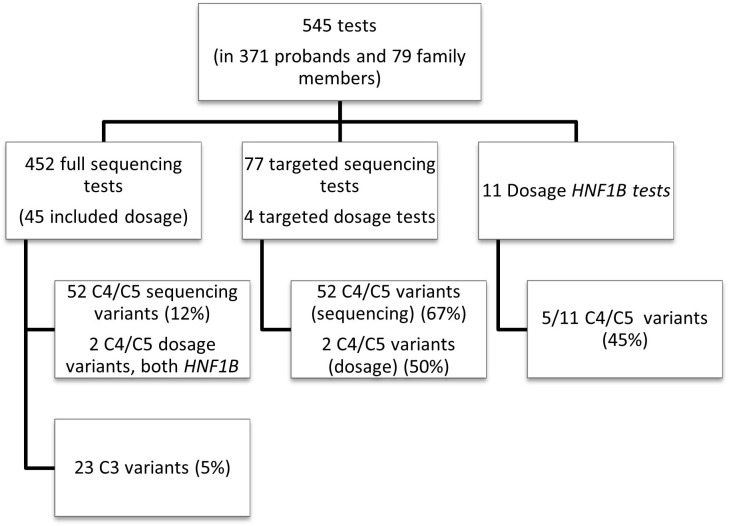
A retrospective audit of 495 referrals, from NZ, for testing of monogenic diabetes genes was performed. Referrals sent to LabPlus (Auckland) laboratory for single gene testing or small multi-gene panel testing, or to the Exeter Genomics Laboratory, UK, for a large gene panel, received from January 2014 - December 2021 were included. Detection rates of single gene, small multi-gene and large gene panels (neonatal and non-neonatal), and cascade testing were analysed. Pre-test probability was calculated using the Exeter MODY probability calculator and ethnicity data was also collected.
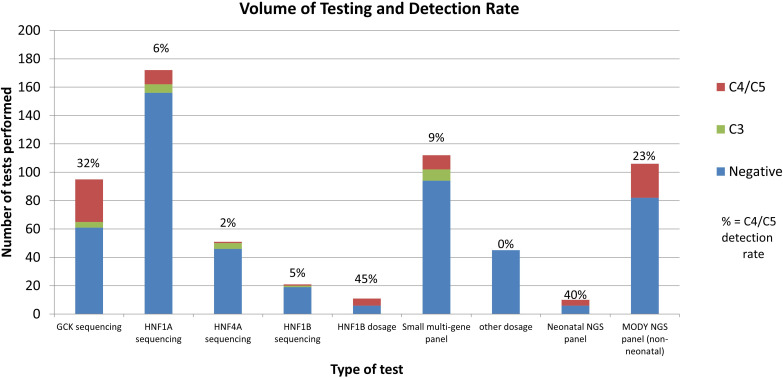
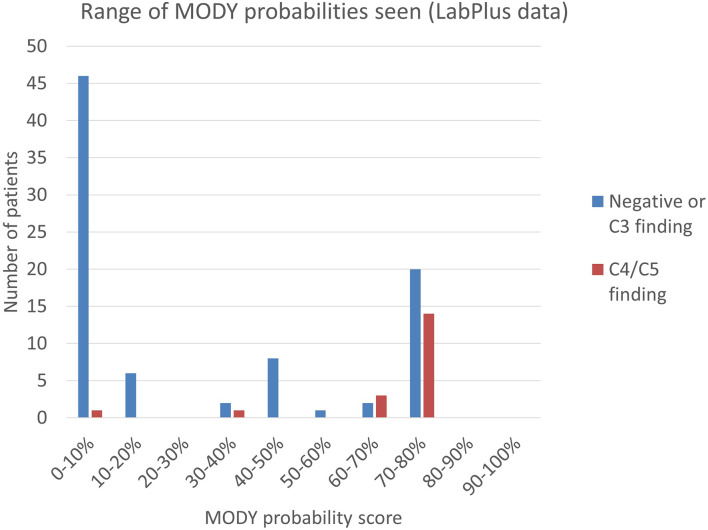
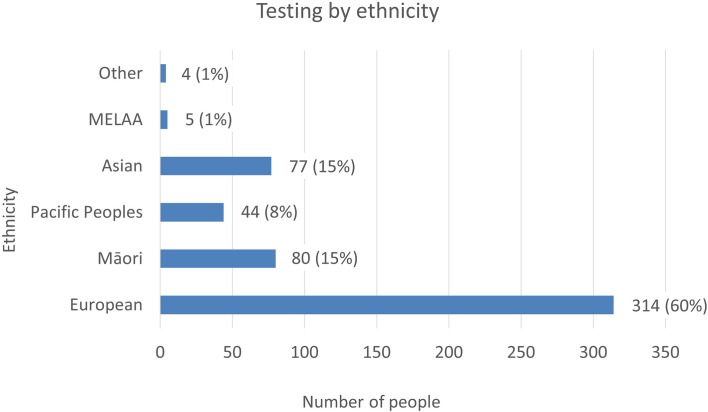
The diagnostic detection rate varied across genes, from 32% in GCK, to 2% in , with single gene or small gene panel testing averaging a 12% detection rate. Detection rate by type of panel was 9% for small gene panel, 23% for non-neonatal monogenic diabetes large gene panel and 40% for neonatal monogenic diabetes large gene panel. 45% (67/147) of patients aged 1-35 years at diabetes diagnosis scored <20% on MODY pre-test probability, of whom 3 had class 4/5 variants in , or . Ethnicity data of those selected for genetic testing correlated with population diabetes prevalence for Māori (15% vs 16%), but Pacific People appeared under-represented (8% vs 14%). Only 1 in 6 probands generated a cascade test.
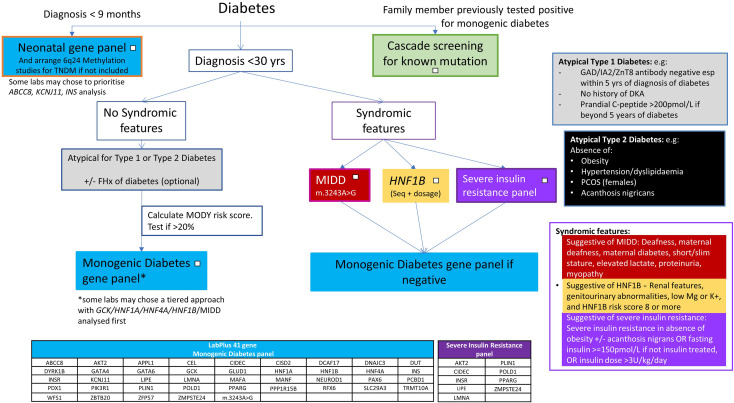
A new monogenic diabetes testing algorithm for NZ is proposed, which directs clinicians to choose a large gene panel in patients without syndromic features who score a pre-test MODY probability of above 20%.
评估在新西兰(NZ)人群中使用单基因和基于基因组合的检测方法时,(a)遗传检测对单基因糖尿病的诊断率,(b)MODY(青年发病的成年型糖尿病)预测试验概率计算器是否可用于指导 NZ 的检测转诊,(c)与 NZ 欧洲人相比,毛利/太平洋族裔的检测转诊人数,以及(d)进行检测的先证者与级联检测的数量。
对来自 NZ 的 495 例单基因糖尿病基因检测转诊进行了回顾性审计。纳入了 2014 年 1 月至 2021 年 12 月期间,送往 LabPlus(奥克兰)实验室进行单基因或小多基因组合检测,或送往英国 Exeter 基因组学实验室进行大基因组合检测的转诊。分析了单基因、小多基因和大基因组合(新生儿和非新生儿)以及级联检测的检测率。使用 Exeter MODY 概率计算器计算预测试验概率,并收集了种族数据。
不同基因的诊断检测率不同,GCK 为 32%, 为 2%,单基因或小基因组合检测的平均检测率为 12%。按面板类型划分,小基因面板的检测率为 9%,非新生儿单基因糖尿病大基因面板为 23%,新生儿单基因糖尿病大基因面板为 40%。在糖尿病诊断时年龄为 1-35 岁的 45%(67/147)患者的 MODY 预测试验概率<20%,其中 3 名患者在 、 或 中携带 4/5 级别的变异。选择进行基因检测的患者的种族数据与毛利人的糖尿病流行率相关(15%比 16%),但太平洋人的比例似乎较低(8%比 14%)。只有 1/6 的先证者进行了级联检测。
提出了一种新的 NZ 单基因糖尿病检测算法,该算法指导临床医生在无综合征特征且预测试验 MODY 概率大于 20%的患者中选择大基因组合。