National Clinical Research Center for Chinese Medicine Cardiology, Xiyuan Hospital, Chinese Academy of Chinese Medical Sciences, Beijing, 100091, China.
The Second Department of Gerontology, Xiyuan Hospital, China Academy of Chinese Medical Sciences, Beijing, 100091, China.
Signal Transduct Target Ther. 2023 Apr 10;8(1):152. doi: 10.1038/s41392-023-01400-z.
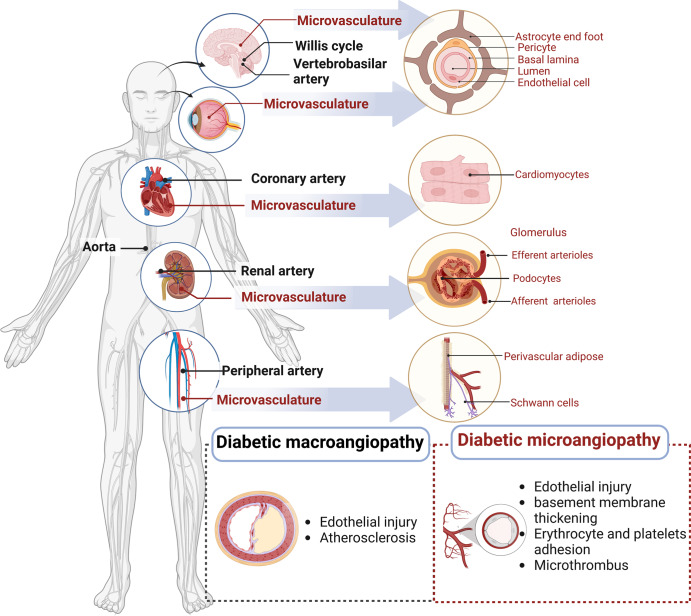
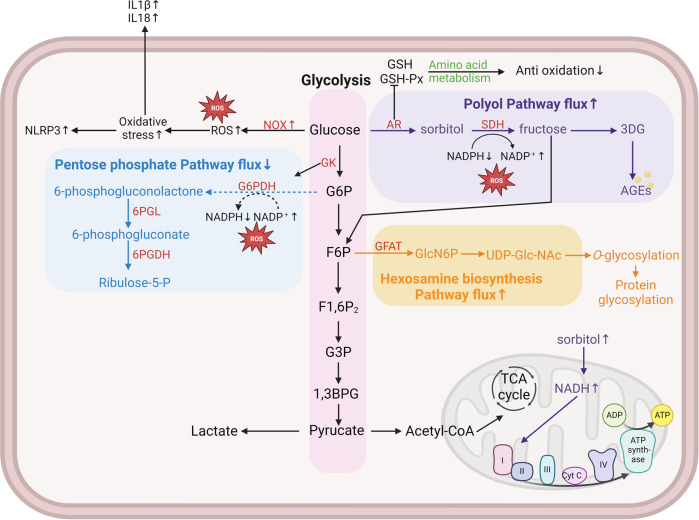
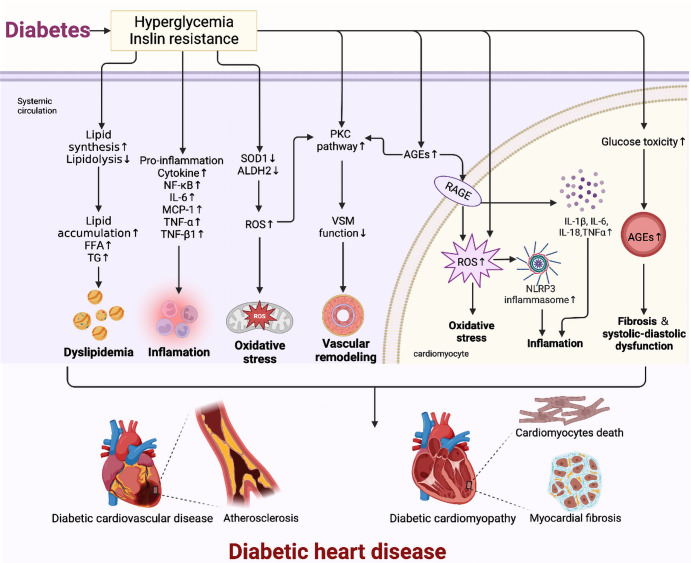
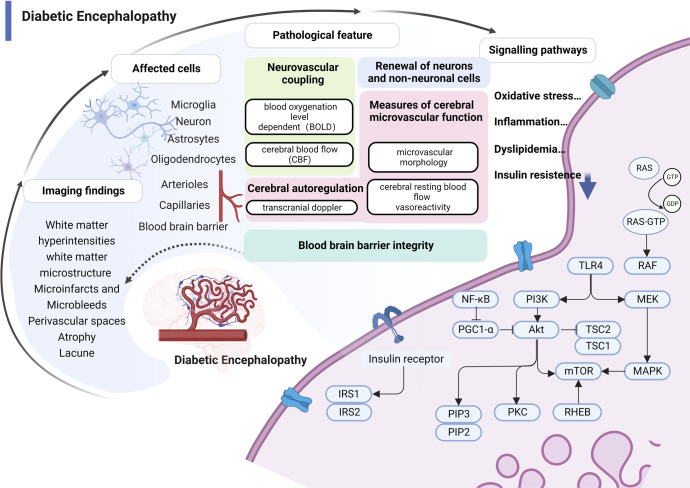
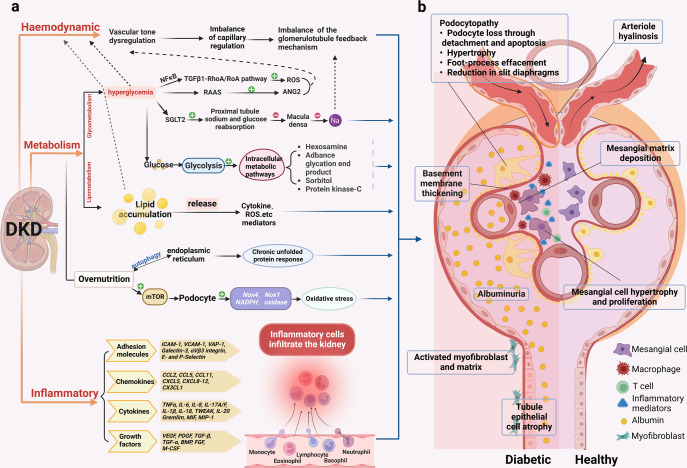
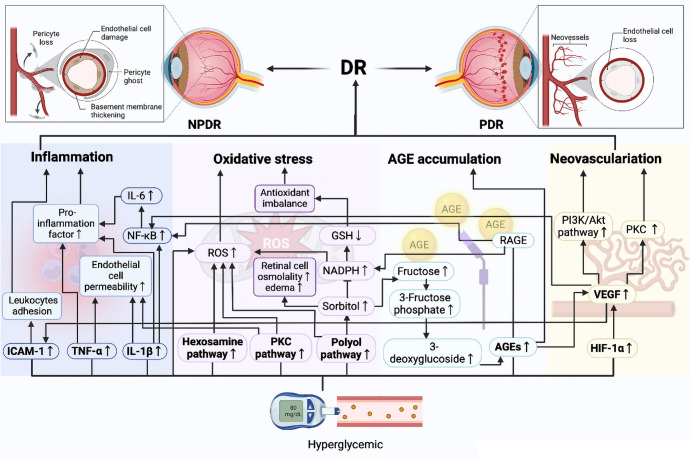
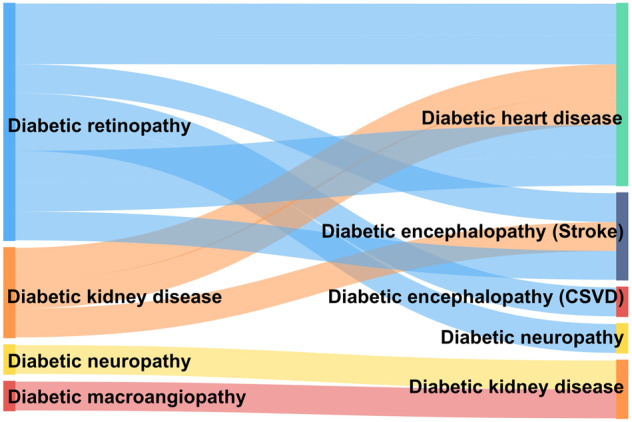
Vascular complications of diabetes pose a severe threat to human health. Prevention and treatment protocols based on a single vascular complication are no longer suitable for the long-term management of patients with diabetes. Diabetic panvascular disease (DPD) is a clinical syndrome in which vessels of various sizes, including macrovessels and microvessels in the cardiac, cerebral, renal, ophthalmic, and peripheral systems of patients with diabetes, develop atherosclerosis as a common pathology. Pathological manifestations of DPDs usually manifest macrovascular atherosclerosis, as well as microvascular endothelial function impairment, basement membrane thickening, and microthrombosis. Cardiac, cerebral, and peripheral microangiopathy coexist with microangiopathy, while renal and retinal are predominantly microangiopathic. The following associations exist between DPDs: numerous similar molecular mechanisms, and risk-predictive relationships between diseases. Aggressive glycemic control combined with early comprehensive vascular intervention is the key to prevention and treatment. In addition to the widely recommended metformin, glucagon-like peptide-1 agonist, and sodium-glucose cotransporter-2 inhibitors, for the latest molecular mechanisms, aldose reductase inhibitors, peroxisome proliferator-activated receptor-γ agonizts, glucokinases agonizts, mitochondrial energy modulators, etc. are under active development. DPDs are proposed for patients to obtain more systematic clinical care requires a comprehensive diabetes care center focusing on panvascular diseases. This would leverage the advantages of a cross-disciplinary approach to achieve better integration of the pathogenesis and therapeutic evidence. Such a strategy would confer more clinical benefits to patients and promote the comprehensive development of DPD as a discipline.
糖尿病血管并发症严重威胁人类健康。基于单一血管并发症的防治方案已不再适用于糖尿病患者的长期管理。糖尿病多血管病变(DPD)是一种临床综合征,其发生机制为糖尿病患者的心脏、大脑、肾脏、眼部和外周等各系统的大小血管均发生动脉粥样硬化,作为共同的病理学改变。DPD 的病理表现通常为大血管粥样硬化,以及微血管内皮功能障碍、基底膜增厚和微血栓形成。心脏、大脑和外周微血管病变与微血管病变共存,而肾脏和视网膜主要为微血管病变。DPD 之间存在以下关联:许多相似的分子机制,以及疾病的风险预测关系。积极的血糖控制加上早期综合血管干预是预防和治疗的关键。除了广泛推荐的二甲双胍、胰高血糖素样肽-1 激动剂和钠-葡萄糖共转运蛋白-2 抑制剂外,针对最新的分子机制,醛糖还原酶抑制剂、过氧化物酶体增殖物激活受体-γ 激动剂、葡萄糖激酶激动剂、线粒体能量调节剂等也在积极开发中。为了使 DPD 患者获得更系统的临床护理,提出了需要一个专注于多血管疾病的全面糖尿病护理中心。这将利用跨学科方法的优势,更好地整合发病机制和治疗证据。这种策略将为患者带来更多的临床获益,并促进 DPD 作为一门学科的全面发展。