Department of Molecular Biology, Umeå University, Umeå, Sweden.
The Laboratory for Molecular Infection Medicine Sweden (MIMS), Umeå University, Umeå, Sweden.
Microbiol Spectr. 2023 Jun 15;11(3):e0056723. doi: 10.1128/spectrum.00567-23. Epub 2023 Apr 11.
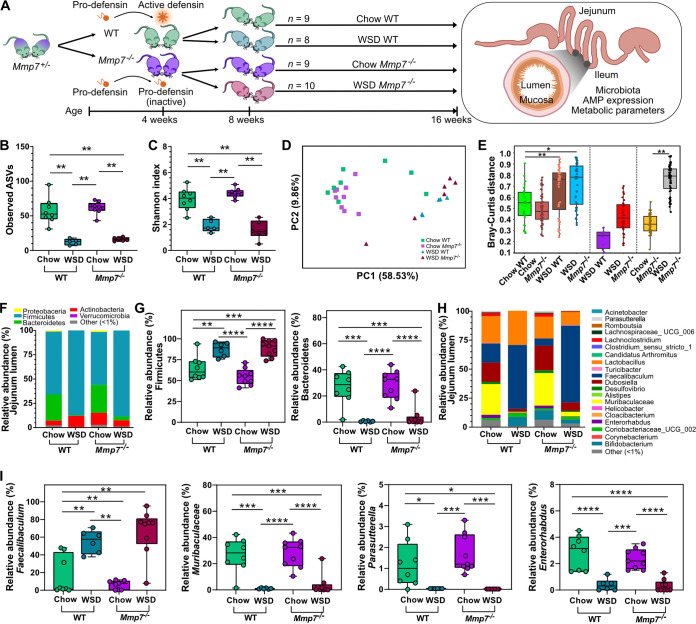
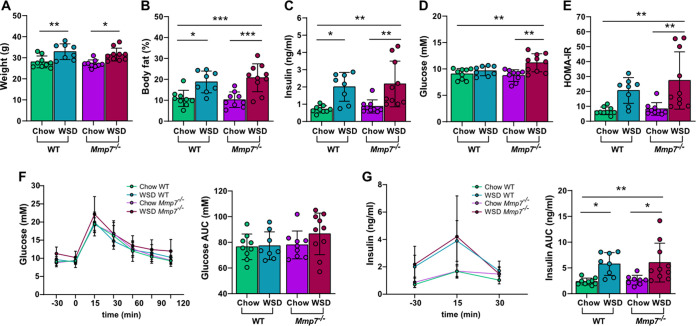
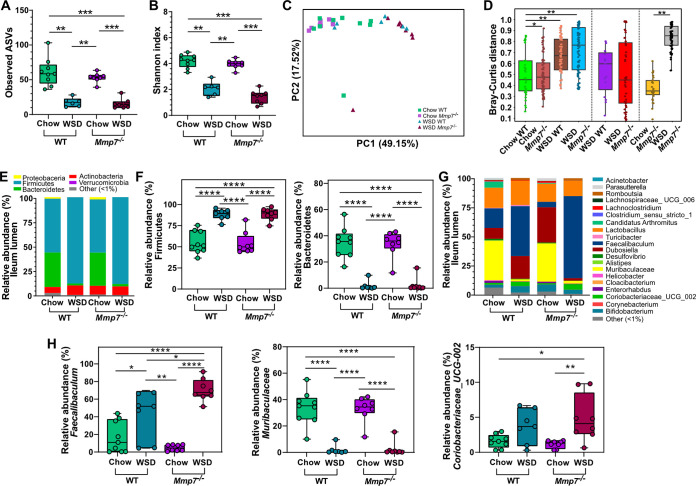
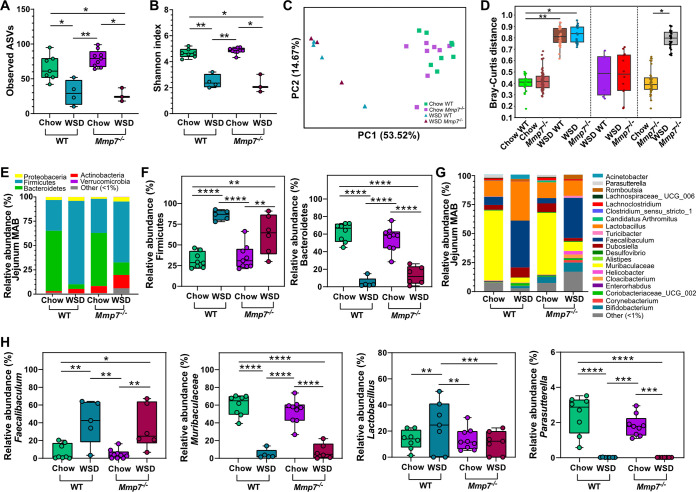
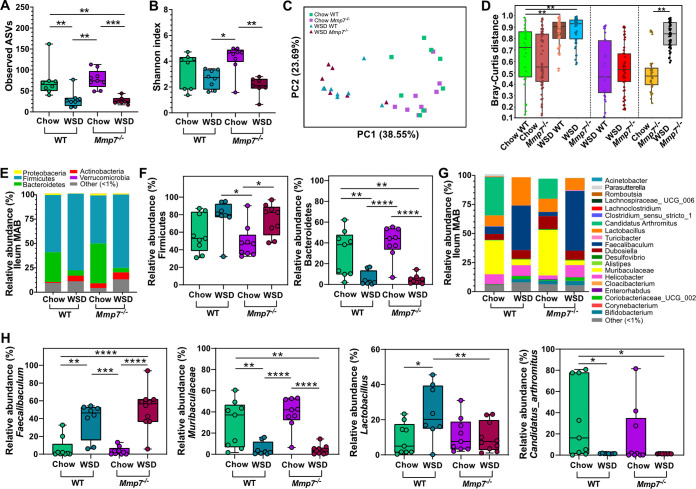
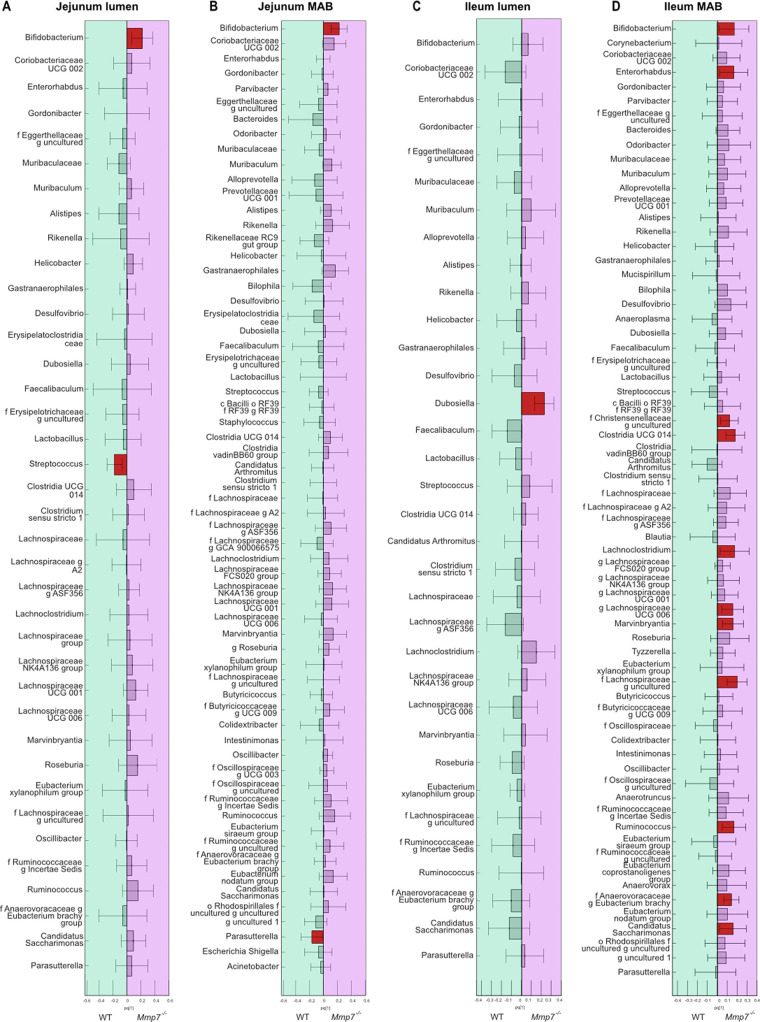
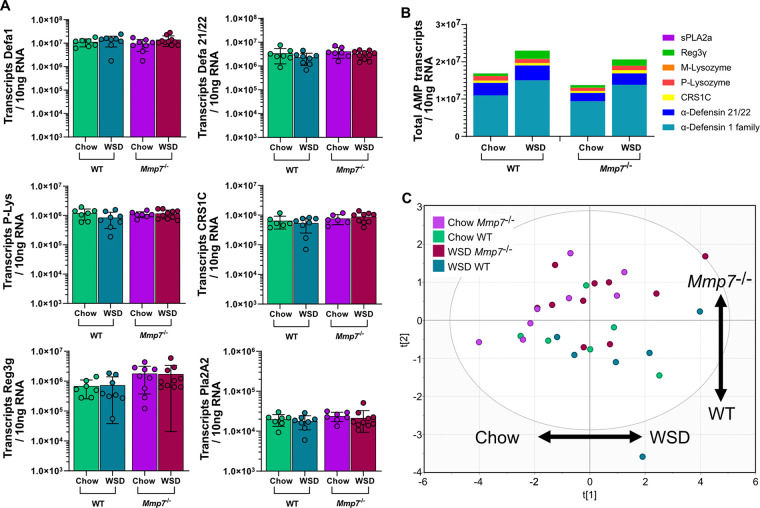
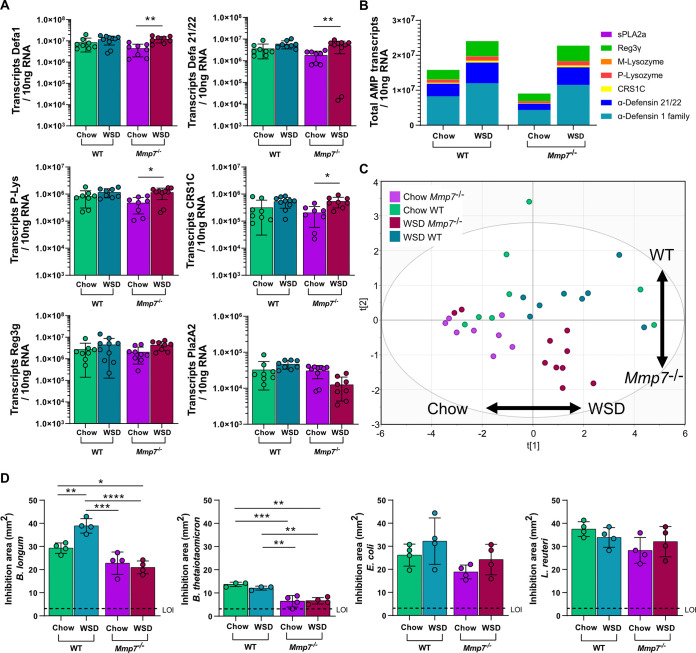
The intestinal microbiota is at the interface between the host and its environment and thus under constant exposure to host-derived and external modulators. While diet is considered to be an important external factor modulating microbiota composition, intestinal defensins, one of the major classes of antimicrobial peptides, have been described as key host effectors that shape the gut microbial community. However, since dietary compounds can affect defensin expression, thereby indirectly modulating the intestinal microbiota, their individual contribution to shaping gut microbiota composition remains to be defined. To disentangle the complex interaction among diet, defensins, and small-intestinal microbiota, we fed wild-type (WT) mice and mice lacking functionally active α-defensins ( mice) either a control diet or a Western-style diet (WSD) that is rich in saturated fat and simple carbohydrates but low in dietary fiber. 16S rDNA sequencing and robust statistical analyses identified that bacterial composition was strongly affected by diet while defensins had only a minor impact. These findings were independent of sample location, with consistent results between the lumen and mucosa of the jejunum and ileum, in both mouse genotypes. However, distinct microbial taxa were also modulated by α-defensins, which was supported by differential antimicrobial activity of ileal protein extracts. As the combination of WSD and defensin deficiency exacerbated glucose metabolism, we conclude that defensins only have a fine-tuning role in shaping the small-intestinal bacterial composition and might instead be important in protecting the host against the development of diet-induced metabolic dysfunction. Alterations in the gut microbial community composition are associated with many diseases, and therefore identifying factors that shape the microbial community under homeostatic and diseased conditions may contribute to the development of strategies to correct a dysbiotic microbiota. Here, we demonstrate that a Western-style diet, as an extrinsic parameter, had a stronger impact on shaping the small intestinal bacterial composition than intestinal defensins, as an intrinsic parameter. While defensins have been previously shown to modulate bacterial composition in young mice, our study supplements these findings by showing that defensins may be less important in adult mice that harbor a mature microbial community. Nevertheless, we observed that defensins did affect the abundance of distinct bacterial taxa in adult mice and protected the host from aggravated diet-induced glucose impairments. Consequently, our study uncovers a new angle on the role of intestinal defensins in the development of metabolic diseases in adult mice.
肠道微生物群位于宿主与其环境的交界处,因此不断受到宿主来源和外部调节剂的影响。虽然饮食被认为是调节微生物群组成的重要外部因素,但作为主要抗菌肽之一的肠道防御素已被描述为塑造肠道微生物群落的关键宿主效应因子。然而,由于膳食化合物可以影响防御素的表达,从而间接调节肠道微生物群,因此它们对塑造肠道微生物群组成的单独贡献仍有待确定。为了理清饮食、防御素和小肠微生物群之间复杂的相互作用,我们用野生型(WT)小鼠和缺乏功能活性α-防御素的小鼠(Δ defensin)分别用对照饮食或富含饱和脂肪和简单碳水化合物但膳食纤维含量低的西式饮食(WSD)喂养。16S rDNA 测序和强大的统计分析表明,细菌组成受饮食强烈影响,而防御素的影响较小。这些发现与样品位置无关,在 WT 小鼠和Δ defensin 小鼠的空肠和回肠的管腔和黏膜中均得到一致的结果。然而,特定的微生物类群也受到α-防御素的调节,回肠蛋白提取物的差异抗菌活性支持了这一点。由于 WSD 和防御素缺乏的组合加剧了葡萄糖代谢,我们得出结论,防御素在塑造小肠细菌组成方面仅具有微调作用,而在保护宿主免受饮食引起的代谢功能障碍方面可能更为重要。肠道微生物群落组成的改变与许多疾病有关,因此确定在稳态和患病条件下塑造微生物群落的因素可能有助于制定纠正失调微生物群的策略。在这里,我们证明了作为外在参数的西式饮食对塑造小肠细菌组成的影响强于作为内在参数的肠道防御素。虽然防御素以前被证明可以调节年轻小鼠的细菌组成,但我们的研究通过表明防御素在具有成熟微生物群的成年小鼠中可能不那么重要来补充这些发现。尽管如此,我们观察到防御素确实会影响成年小鼠中特定细菌类群的丰度,并保护宿主免受加剧的饮食引起的葡萄糖损伤。因此,我们的研究揭示了肠道防御素在成年小鼠代谢性疾病发展中的作用的新角度。