Department of Emergency Medicine and Services, University of Helsinki and University Hospital, Helsinki, Finland.
Scand J Trauma Resusc Emerg Med. 2023 Apr 11;31(1):19. doi: 10.1186/s13049-023-01080-2.
The cardiopulmonary resuscitation (CPR) guidelines recommend identifying and correcting the underlying reversible causes of out-of-hospital cardiac arrest (OHCA). However, it is uncertain how often these causes can be identified and treated. Our aim was to estimate the frequency of point of care ultrasound examinations, blood sample analyses and cause-specific treatments during OHCA.
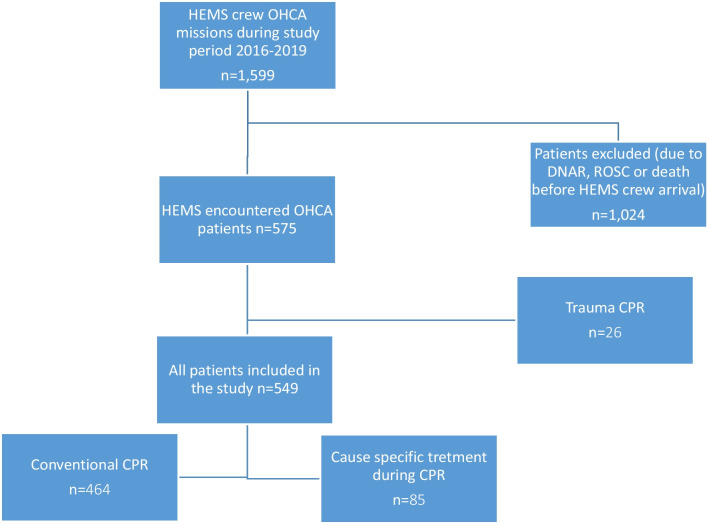
We performed a retrospective study in a physician-staffed helicopter emergency medical service (HEMS) unit. Data on 549 non-traumatic OHCA patients who were undergoing CPR at the arrival of the HEMS unit from 2016 to 2019 were collected from the HEMS database and patient records. We also recorded the frequency of ultrasound examinations, blood sample analyses and specific therapies provided during OHCA, such as procedures or medications other than chest compressions, airway management, ventilation, defibrillation, adrenaline or amiodarone.
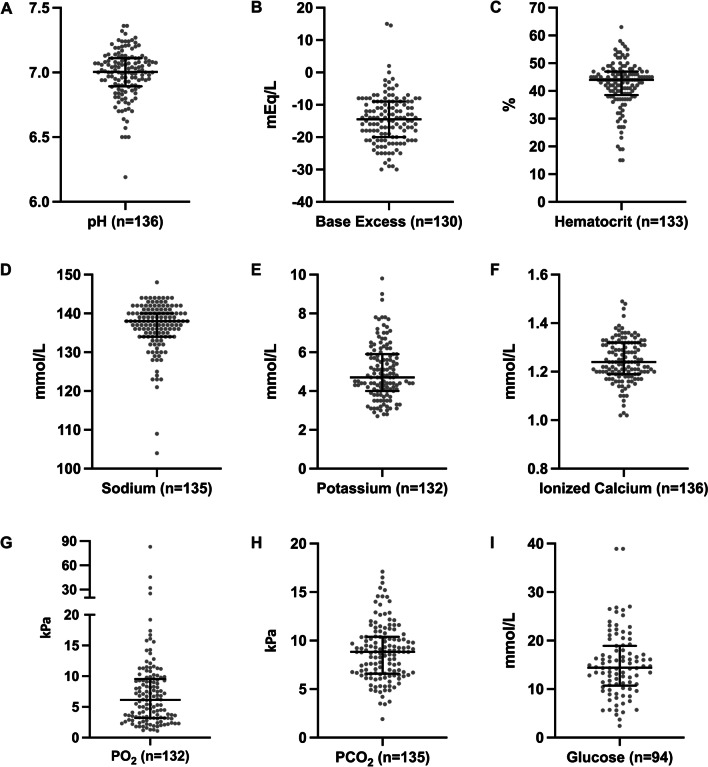
Of the 549 patients, ultrasound was used in 331 (60%) and blood sample analyses in 136 (24%) patients during CPR. A total of 85 (15%) patients received cause-specific treatment, the most common ones being transportation to extracorporeal CPR and percutaneous coronary intervention (PCI) (n = 30), thrombolysis (n = 23), sodium bicarbonate (n = 17), calcium gluconate administration (n = 11) and fluid resuscitation (n = 10).
In our study, HEMS physicians deployed ultrasound or blood sample analyses in 84% of the encountered OHCA cases. Cause-specific treatment was administered in 15% of the cases. Our study demonstrates the frequent use of differential diagnostic tools and relatively infrequent use of cause-specific treatment during OHCA. Effect on protocol for differential diagnostics should be evaluated for more efficient cause specific treatment during OHCA.
心肺复苏(CPR)指南建议识别和纠正院外心脏骤停(OHCA)的潜在可逆转原因。然而,这些原因的识别和治疗频率尚不确定。我们的目的是评估在 OHCA 期间进行即时护理超声检查、血液样本分析和针对特定病因的治疗的频率。
我们对一家配备医生的直升机紧急医疗服务(HEMS)单位进行了回顾性研究。从 2016 年至 2019 年,从 HEMS 单位到达时正在进行 CPR 的 549 名非创伤性 OHCA 患者的 HEMS 数据库和患者记录中收集数据。我们还记录了在 OHCA 期间进行超声检查、血液样本分析和特定治疗的频率,例如除胸外按压、气道管理、通气、除颤、肾上腺素或胺碘酮以外的程序或药物。
在 549 名患者中,有 331 名(60%)在 CPR 期间使用了超声,136 名(24%)进行了血液样本分析。共有 85 名(15%)患者接受了针对特定病因的治疗,最常见的治疗方法是转至体外心肺复苏和经皮冠状动脉介入治疗(PCI)(n=30)、溶栓(n=23)、碳酸氢钠(n=17)、葡萄糖酸钙给药(n=11)和液体复苏(n=10)。
在我们的研究中,HEMS 医生在遇到的 OHCA 病例中 84%使用了超声或血液样本分析。在 15%的病例中进行了针对特定病因的治疗。我们的研究表明,在 OHCA 期间经常使用鉴别诊断工具,而针对特定病因的治疗相对较少。应评估针对特定病因的治疗方案,以在 OHCA 期间更有效地进行治疗。