Zhao Yawei, Su Shang, Li Xiaohong
Department of Cell and Cancer Biology, College of Medicine and Life Sciences, The University of Toledo, Toledo, OH 43614, USA.
Cancers (Basel). 2023 Mar 26;15(7):1982. doi: 10.3390/cancers15071982.
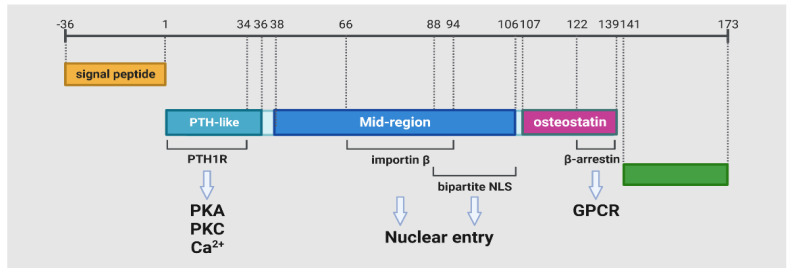
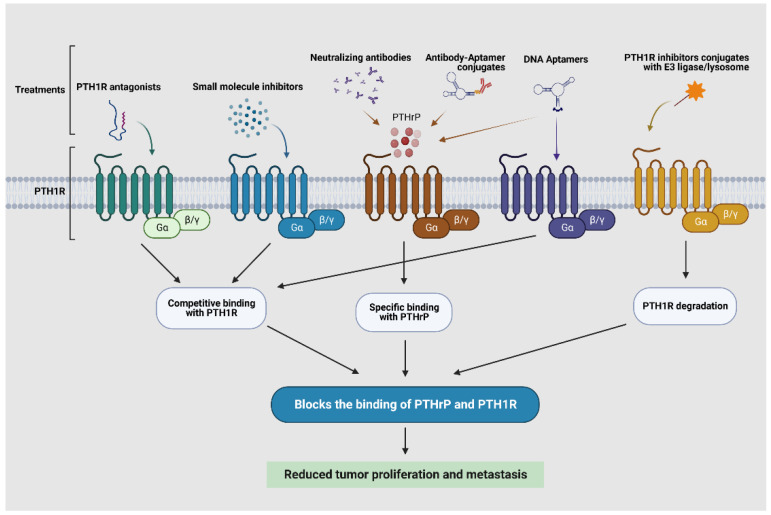
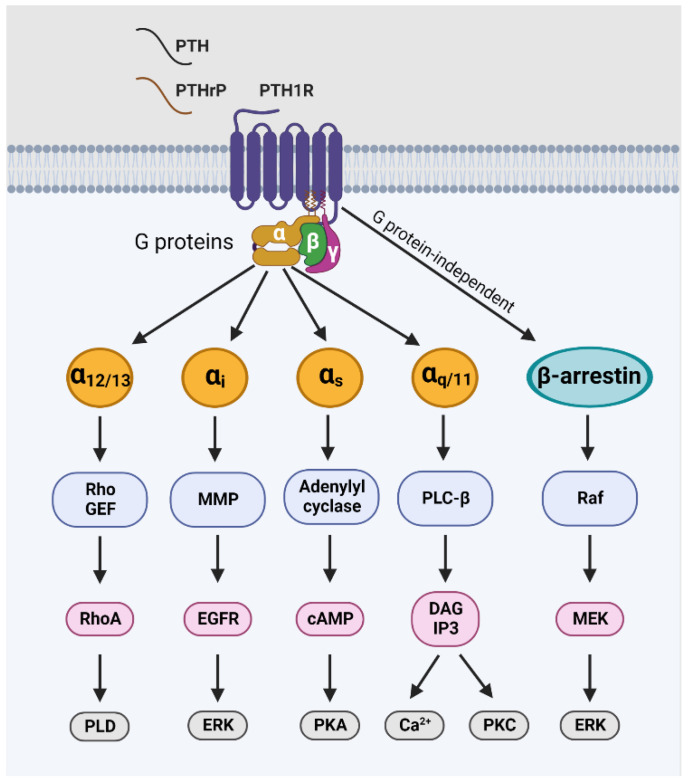
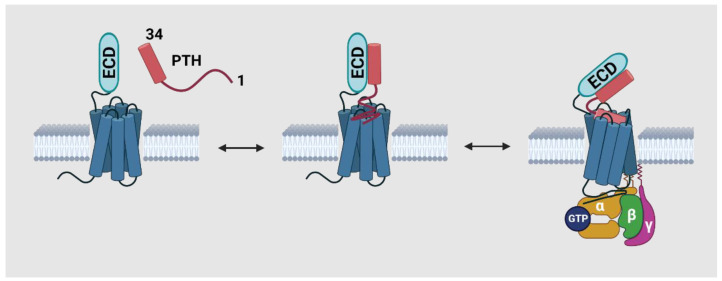
PTHrP exerts its effects by binding to its receptor, PTH1R, a G protein-coupled receptor (GPCR), activating the downstream cAMP signaling pathway. As an autocrine, paracrine, or intracrine factor, PTHrP has been found to stimulate cancer cell proliferation, inhibit apoptosis, and promote tumor-induced osteolysis of bone. Despite these findings, attempts to develop PTHrP and PTH1R as drug targets have not produced successful results in the clinic. Nevertheless, the efficacy of blocking PTHrP and PTH1R has been shown in various types of cancer, suggesting its potential for therapeutic applications. In light of these conflicting data, we conducted a comprehensive review of the studies of PTHrP/PTH1R in cancer progression and metastasis and highlighted the strengths and limitations of targeting PTHrP or PTH1R in cancer therapy. This review also offers our perspectives for future research in this field.
甲状旁腺激素相关蛋白(PTHrP)通过与它的受体甲状旁腺激素1型受体(PTH1R)结合发挥作用,PTH1R是一种G蛋白偶联受体(GPCR),可激活下游的环磷酸腺苷(cAMP)信号通路。作为一种自分泌、旁分泌或胞内分泌因子,PTHrP已被发现可刺激癌细胞增殖、抑制细胞凋亡,并促进肿瘤诱导的骨溶解。尽管有这些发现,但将PTHrP和PTH1R作为药物靶点的尝试在临床上并未取得成功。然而,阻断PTHrP和PTH1R的疗效已在多种类型的癌症中得到证实,表明其具有治疗应用潜力。鉴于这些相互矛盾的数据,我们对PTHrP/PTH1R在癌症进展和转移方面的研究进行了全面综述,并强调了在癌症治疗中靶向PTHrP或PTH1R的优势和局限性。本综述还提供了我们对该领域未来研究的看法。