Department of Clinical Medicine, Public Health, Life and Environmental Sciences (MeSVA), University of L'Aquila, 67100 L'Aquila, Italy.
Department of Experimental Medicine, Sapienza University of Rome, 00161 Rome, Italy.
Int J Mol Sci. 2023 Mar 30;24(7):6460. doi: 10.3390/ijms24076460.
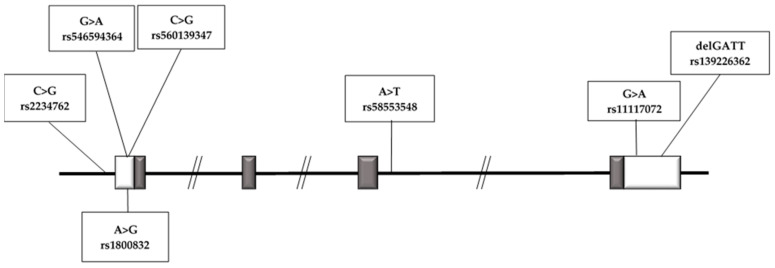
Neurotensin (NT) is a small protein implicated in the regulation of energy balance which acts as both a neurotransmitter in the central nervous system and as a gastrointestinal peptide. In the gut, NT is secreted after fat ingestion and promotes the absorption of fatty acids. The circulating levels of its precursor, pro-NT, predicts the presence and development of metabolic and cardiovascular diseases. Despite the extensive knowledge on the dynamic changes that occur to pro-NT = after fat load, the determinants of fasting pro-NT are unknown. The aim of this study was to determine the possible genetic regulation of plasma pro-NT. The NT gene (NTS) was sequenced for potential functional variants, evaluating its entire genomic and potentially regulatory regions, in DNA from 28 individuals, stratified by low and high pro-NT levels. The identified variant differently distributed in the two pro-NT subgroups was genotyped in a cohort of nine hundred and thirty-two overweight/obese children and adolescents. A total of seven sequence variations across the NTS gene, none of them located in coding regions, were identified. The rs2234762 polymorphism, sited in the NTS gene promoter, was statistically more frequent in the lowest pro-NTS level group. Carriers of the rs2234762 variant showed lower pro-NT levels, after adjusting for sex, age, BMI, triglycerides and the Tanner stage. Having NTS rs2234762 predicted less pronounced insulin resistance at the 6.5-year follow-up with OR: 0.46 (0.216-0.983), at the logistic regression analysis adjusted for age, sex and BMI. In conclusion, the NTS rs2234762 gene variant is a determinant of reduced circulating pro-NT levels in overweight and obese children, which predisposes this group to a more favorable metabolic profile and a reduced insulin resistance later in life, independently from metabolic confounders.
神经降压素(NT)是一种参与调节能量平衡的小蛋白,它既是中枢神经系统的神经递质,也是一种胃肠肽。在肠道中,NT 在脂肪摄入后被分泌,并促进脂肪酸的吸收。其前体 pro-NT 的循环水平可预测代谢和心血管疾病的存在和发展。尽管人们对脂肪负荷后 pro-NT 发生的动态变化有了广泛的了解,但空腹 pro-NT 的决定因素尚不清楚。本研究旨在确定 pro-NT 可能的遗传调控。对 28 名个体的 DNA 进行了 NT 基因(NTS)测序,以寻找潜在的功能变异体,评估其整个基因组和潜在的调节区域,这些个体按低和高 pro-NT 水平分层。在 932 名超重/肥胖儿童和青少年的队列中,对在两个 pro-NT 亚组中分布不同的鉴定变异进行了基因分型。在 NTS 基因中总共发现了 7 种跨越基因的序列变异,它们都不在编码区域内。位于 NTS 基因启动子中的 rs2234762 多态性在最低 pro-NTS 水平组中统计学上更为频繁。在调整性别、年龄、BMI、甘油三酯和 Tanner 阶段后,rs2234762 变体的携带者显示出较低的 pro-NT 水平。在调整年龄、性别和 BMI 的逻辑回归分析中,rs2234762 预测在 6.5 年随访时胰岛素抵抗程度降低的 OR:0.46(0.216-0.983)。总之,NTS rs2234762 基因变异是超重和肥胖儿童循环 pro-NT 水平降低的决定因素,这使该组在以后的生活中具有更有利的代谢特征和降低的胰岛素抵抗,而与代谢混杂因素无关。