Ren Lingling, Wang Zhenbiao, Wang Shuai, Li Chengde, Wang Wei, Ming Zhu, Zhai Yuchun
Inner Mongolia Metal Material Research Institute, Baotou 014000, China.
Welding and Additive Manufacturing Centre, Cranfield University, Bedfordshire MK43 0AL, UK.
Materials (Basel). 2023 Mar 28;16(7):2694. doi: 10.3390/ma16072694.
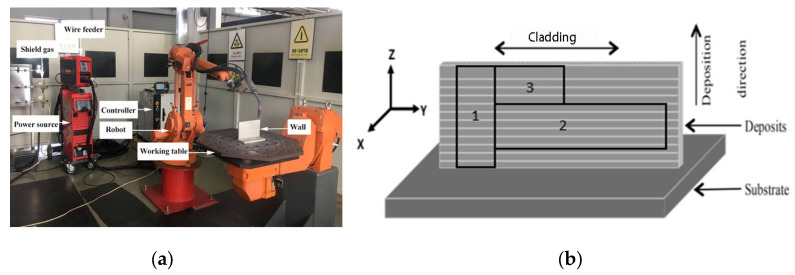
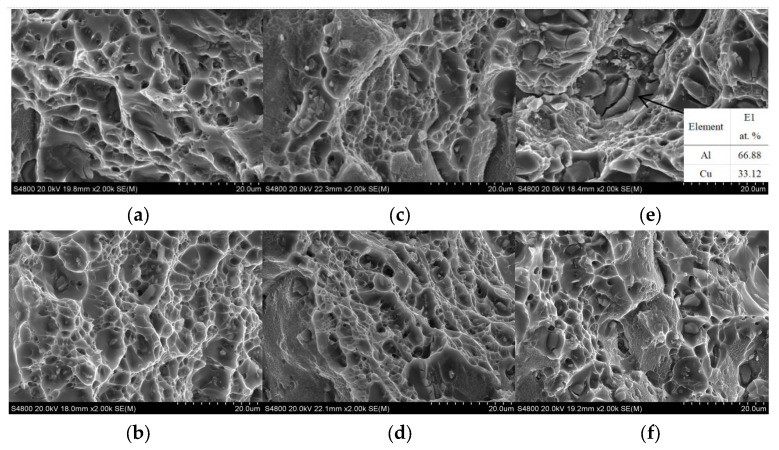
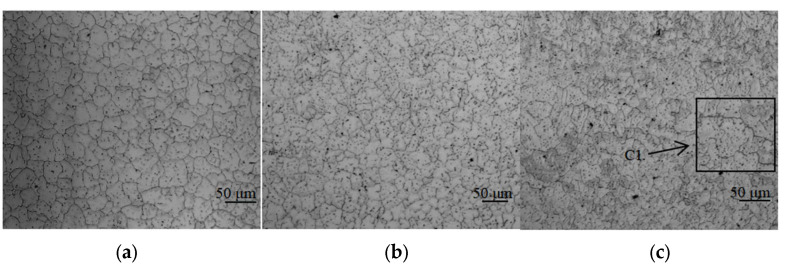
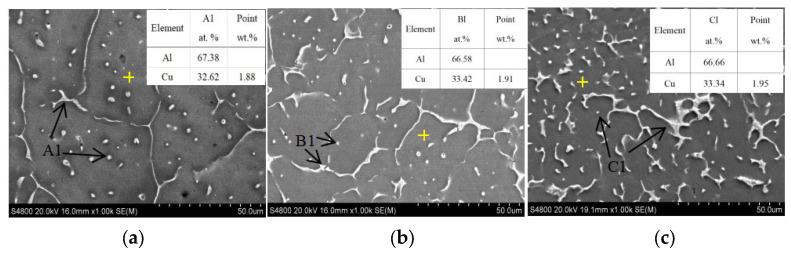
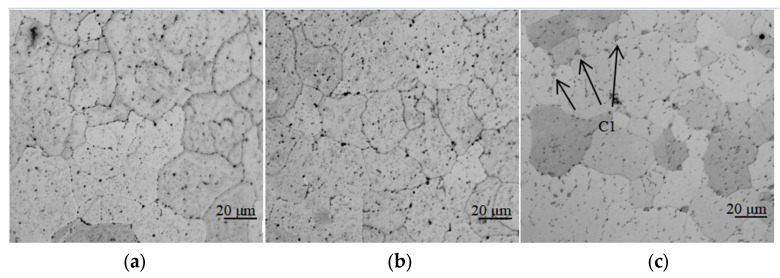
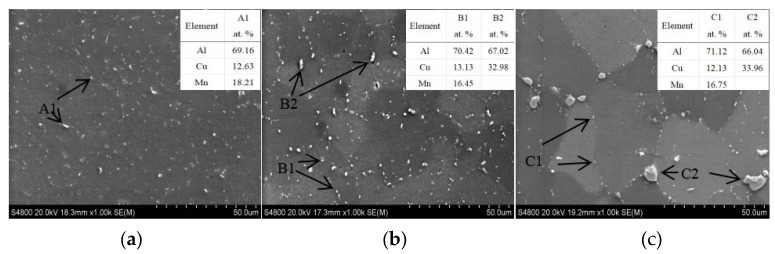
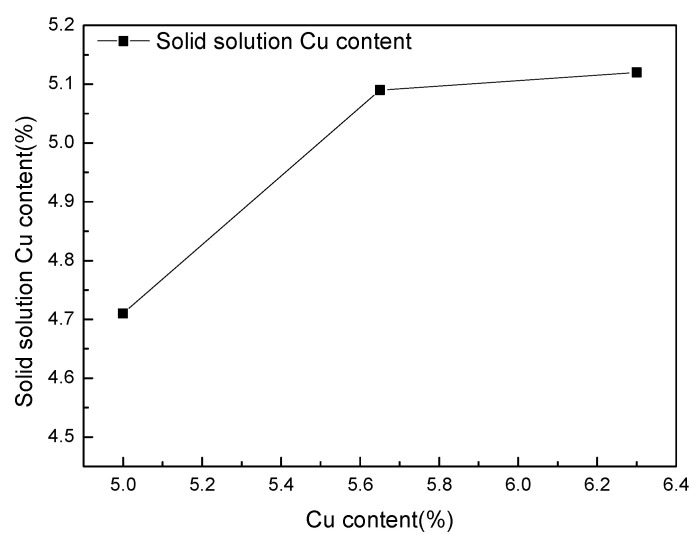
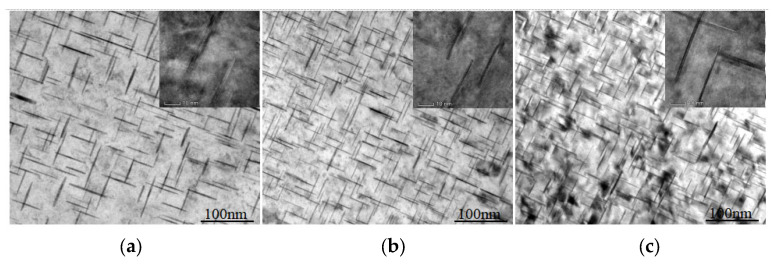
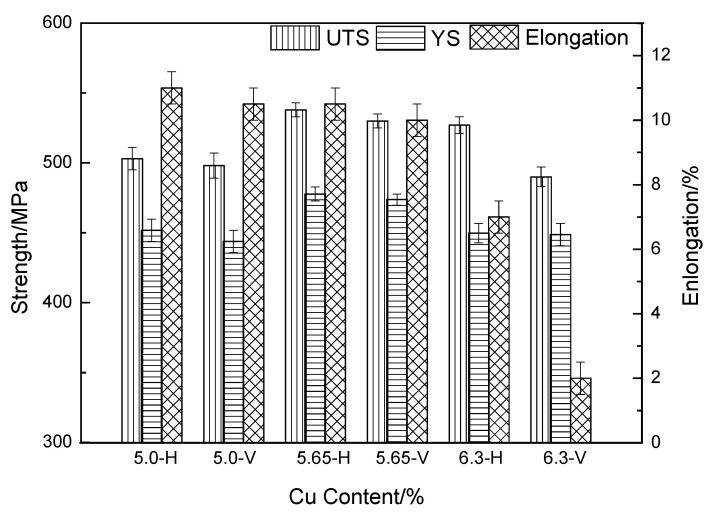
Al-Cu alloy has broad application prospects in the field of aerospace due to its excellent performance. In this paper, deposits with different Cu contents were prepared by the wire arc additive manufacturing (WAAM) process, and the effects of Cu content on the microstructure and mechanical properties were investigated. The microstructure of Al-Cu alloy was investigated by metallography, scanning electron microscope (SEM), energy-dispersive spectrometer (EDS), and transmission electron microscope (TEM). The results show that both the number and size of the precipitated θ phases (AlCu) in the as-deposited material increase with the increase of Cu content. After the T4 treatment, the solid solution amount of Cu in the matrix showed a trend of first increasing and then remaining stable. When the content of Cu was greater than 5.65%, as the Cu content increased, the number and size of the remaining θ phases both increased. In the peak ageing state, the amount of precipitated θ' phase showed a trend of increasing and then remaining stable. After the T6 treatment, the mechanical properties showed a trend of first increasing and then decreasing with the increase of the content of Cu. When the Cu content was 5.65%, the deposit achieved the best mechanical properties, and the anisotropy of the mechanical properties disappeared. The tensile strength, yield strength, and elongation reached 538 MPa, 478 MPa, and 10.5%, respectively. When the content of Cu was greater than 5.65%, the anisotropy of mechanical properties was obvious, and the fracture mode of the vertical specimen changed from ductile fracture to brittle fracture.
铝铜合金因其优异的性能在航空航天领域具有广阔的应用前景。本文采用电弧增材制造(WAAM)工艺制备了不同铜含量的沉积物,并研究了铜含量对微观结构和力学性能的影响。通过金相显微镜、扫描电子显微镜(SEM)、能谱仪(EDS)和透射电子显微镜(TEM)对铝铜合金的微观结构进行了研究。结果表明,沉积态材料中析出的θ相(AlCu)的数量和尺寸均随铜含量的增加而增加。经过T4处理后,基体中铜的固溶量呈现先增加后稳定的趋势。当铜含量大于5.65%时,随着铜含量的增加,剩余θ相的数量和尺寸均增大。在峰值时效状态下,析出的θ'相数量呈现先增加后稳定的趋势。经过T6处理后,力学性能随铜含量的增加呈现先增加后降低的趋势。当铜含量为5.65%时,沉积物的力学性能最佳,力学性能的各向异性消失。抗拉强度、屈服强度和伸长率分别达到538MPa、478MPa和10.5%。当铜含量大于5.65%时,力学性能的各向异性明显,垂直试样的断裂模式从韧性断裂转变为脆性断裂。