
上埃及地区 COVID-19 感染患者肺栓塞的患者特征和预测因素。
Patient Characteristics and Predictors of Pulmonary Embolism in Patients Infected with COVID - 19 in Upper Egypt.
机构信息
Cardiology Unit, Department of Internal Medicine, Faculty of Medicine, Sohag University, Sohag, Egypt.
Department of Internal Medicine, Faculty of Medicine, Beni-Suef University, Beni-Suef, Egypt.
出版信息
Vasc Health Risk Manag. 2023 Apr 6;19:201-210. doi: 10.2147/VHRM.S403391. eCollection 2023.
BACKGROUND
A little is known about the risk factors and predictors of pulmonary embolism (PE) in Coronavirus disease 2019 (Covid-19) infected patients. Therefore, we directed this study to investigate the predictors of PE in patients infected with Covid - 19 in Upper Egypt.
METHODS
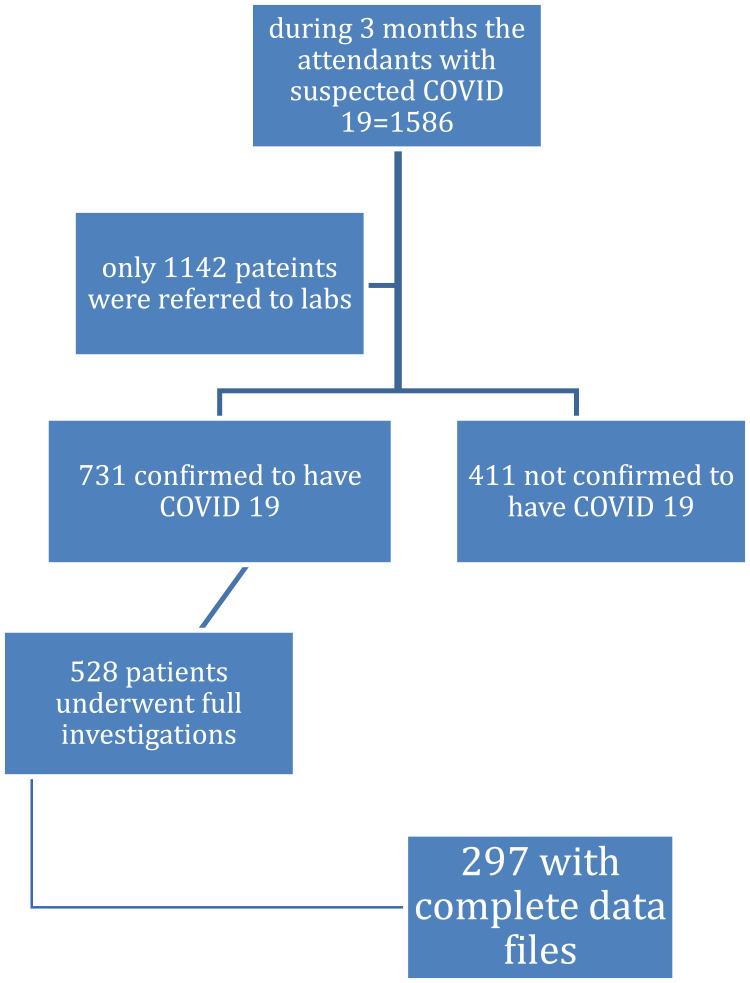
We conducted a retrospective cohort study on 297 patients infected with COVID-19, aged ≥ 18 years old. Suspicion of COVID-19 infection was based on the World Health Organization (WHO) criteria and confirmed by nasal and pharyngeal swab for real-time reverse transcriptase-polymerase chain reaction (RT-PCR) analysis. The patient was also determined to have COVID-19 when CT results that were thought to be typical for COVID-19 and clinical data that were compatible were present.
RESULTS
PE was diagnosed in 18.2% of patients. We found that the incidence of PE was significantly higher in older patients, females, those with higher BMI, hypertensive patients, diabetics, and patients with co-morbidities. Also, PE was significantly higher in patients presented with dyspnea, chest pain, longer duration of symptoms at hospital admission, and lower oxygen concentration. The mean serum Hb level, platelet count, TLC and absolute lymphocytic count were markedly reduced in those who had PE. All the patients who developed PE had a CO-RADS scale five on their CT chest scan. Age > 65, BMI > 25, DM, and associated co-morbidities were the independent patients' characteristics associated with the development of PE after the multivariate regression analysis.
CONCLUSION
PE is a common complication of Covid 19 infection. PE is associated with a variety of clinical and laboratory parameters in univariate analysis, but age > 65, BMI > 25, DM, and associated co-morbidities were the independent patients' characteristics associated with the development of PE in those infected with Covid-19.
背景
关于感染 2019 年冠状病毒病(COVID-19)的患者中肺栓塞(PE)的危险因素和预测因素知之甚少。因此,我们进行了这项研究,以调查上埃及 COVID-19 感染患者中 PE 的预测因素。
方法
我们对 297 名年龄≥18 岁的 COVID-19 感染患者进行了回顾性队列研究。COVID-19 感染的怀疑基于世界卫生组织(WHO)标准,并通过鼻和咽拭子进行实时逆转录-聚合酶链反应(RT-PCR)分析进行确认。当 CT 结果被认为是 COVID-19 的典型结果且临床数据相符时,患者也被确定为 COVID-19。
结果
18.2%的患者诊断为 PE。我们发现,年龄较大、女性、BMI 较高、高血压患者、糖尿病患者和合并症患者的 PE 发生率明显更高。此外,呼吸困难、胸痛、住院时症状持续时间较长以及氧气浓度较低的患者中,PE 的发生率也明显更高。发生 PE 的患者的平均血清 Hb 水平、血小板计数、TLC 和绝对淋巴细胞计数明显降低。所有发生 PE 的患者的 CT 胸部扫描 CO-RADS 评分均为 5。多变量回归分析后,年龄>65 岁、BMI>25、DM 和合并症是与 PE 发生相关的独立患者特征。
结论
PE 是 COVID-19 感染的常见并发症。PE 在单变量分析中与多种临床和实验室参数相关,但年龄>65 岁、BMI>25、DM 和合并症是 COVID-19 感染患者中发生 PE 的独立患者特征。
 Zotero 插件