Olivia Newton-John Cancer Research Institute, Heidelberg, Victoria 3084, Australia.
School of Cancer Medicine, La Trobe University, Bundoora, Victoria 3086, Australia.
Biochem Soc Trans. 2023 Apr 26;51(2):811-826. doi: 10.1042/BST20221300.
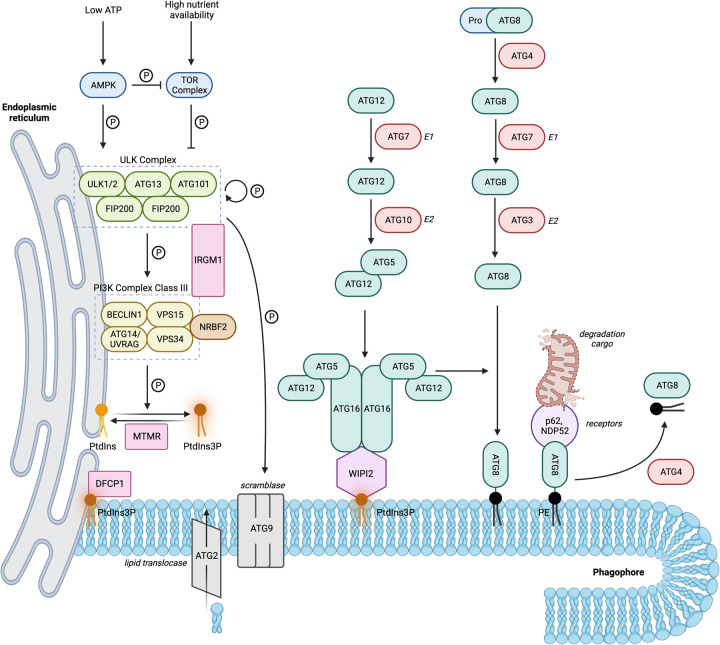
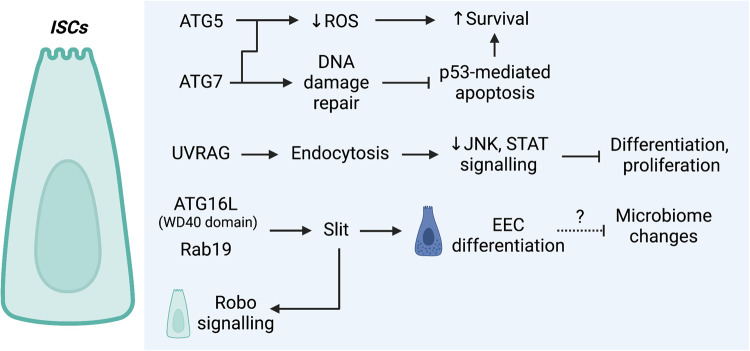
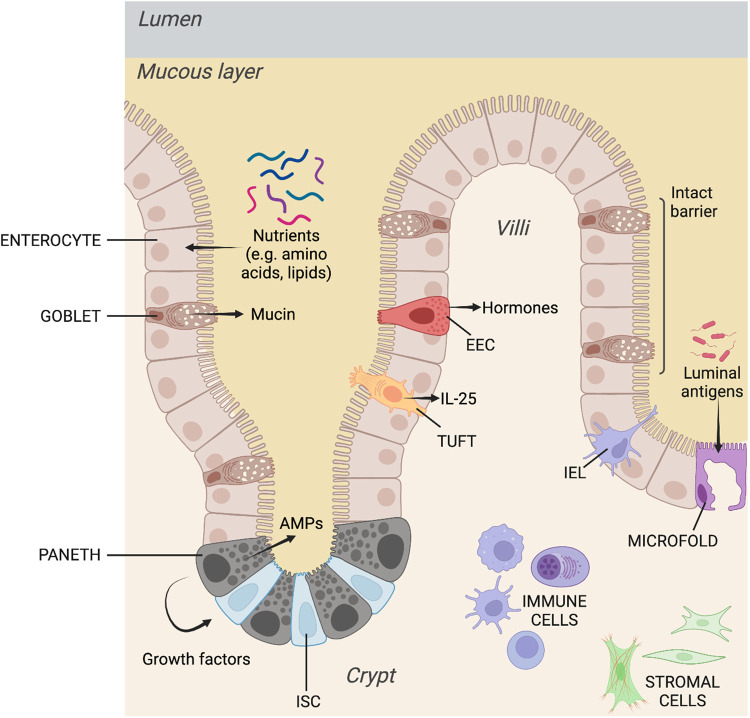
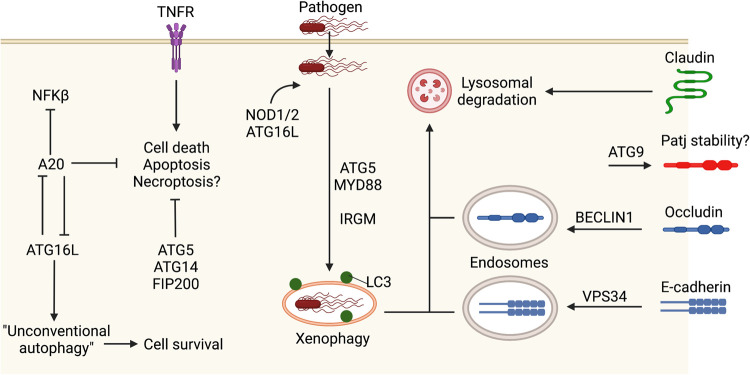
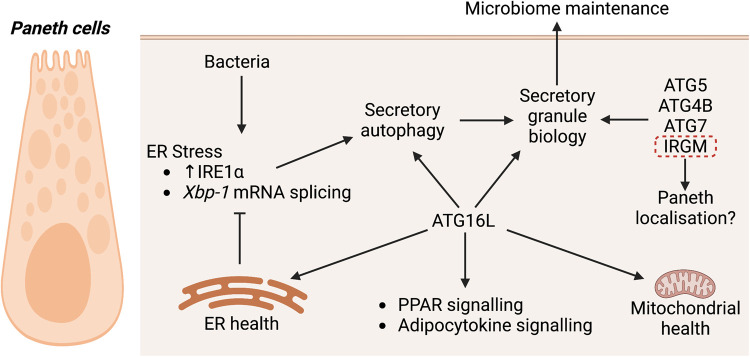
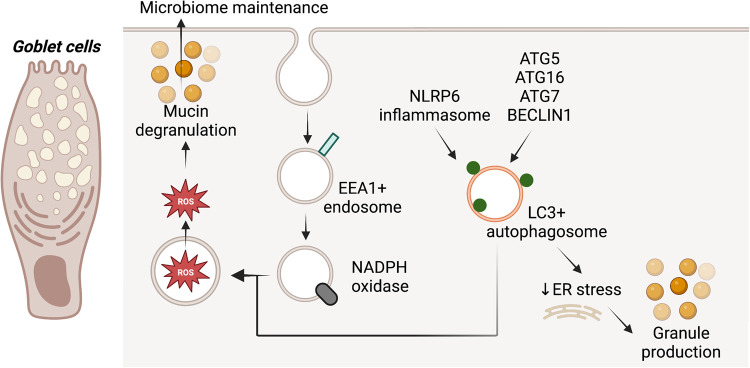
Landmark genome-wide association studies (GWAS) identified that mutations in autophagy genes correlated with inflammatory bowel disease (IBD), a heterogenous disease characterised by prolonged inflammation of the gastrointestinal tract, that can reduce a person's quality of life. Autophagy, the delivery of intracellular components to the lysosome for degradation, is a critical cellular housekeeping process that removes damaged proteins and turns over organelles, recycling their amino acids and other constituents to supply cells with energy and necessary building blocks. This occurs under both basal and challenging conditions such as nutrient deprivation. An understanding of the relationship between autophagy, intestinal health and IBD aetiology has improved over time, with autophagy having a verified role in the intestinal epithelium and immune cells. Here, we discuss research that has led to an understanding that autophagy genes, including ATG16L, ATG5, ATG7, IRGM, and Class III PI3K complex members, contribute to innate immune defence in intestinal epithelial cells (IECs) via selective autophagy of bacteria (xenophagy), how autophagy contributes to the regulation of the intestinal barrier via cell junctional proteins, and the critical role of autophagy genes in intestinal epithelial secretory subpopulations, namely Paneth and goblet cells. We also discuss how intestinal stem cells can utilise autophagy. Importantly, mouse studies have provided evidence that autophagy deregulation has serious physiological consequences including IEC death and intestinal inflammation. Thus, autophagy is now established as a key regulator of intestinal homeostasis. Further research into how its cytoprotective mechanisms can prevent intestinal inflammation may provide insights into the effective management of IBD.
里程碑式的全基因组关联研究(GWAS)表明,自噬基因的突变与炎症性肠病(IBD)相关,这是一种以胃肠道长期炎症为特征的异质性疾病,会降低患者的生活质量。自噬是将细胞内成分递送至溶酶体进行降解的过程,是一种关键的细胞管家过程,它可以清除受损的蛋白质并更新细胞器,回收其氨基酸和其他成分以为细胞提供能量和必要的构建块。这一过程发生在基础条件和营养缺乏等挑战性条件下。随着时间的推移,人们对自噬、肠道健康和 IBD 发病机制之间的关系的理解有所提高,自噬在肠道上皮细胞和免疫细胞中已被证实具有作用。在这里,我们讨论了一些研究,这些研究使人们了解到自噬基因,包括 ATG16L、ATG5、ATG7、IRGM 和 Class III PI3K 复合物成员,通过对细菌(异噬)的选择性自噬,在肠道上皮细胞(IEC)中对先天免疫防御做出贡献,自噬如何通过细胞连接蛋白促进肠道屏障的调节,以及自噬基因在肠道上皮分泌亚群(即潘氏细胞和杯状细胞)中的关键作用。我们还讨论了肠道干细胞如何利用自噬。重要的是,小鼠研究为自噬失调会产生严重的生理后果(包括 IEC 死亡和肠道炎症)提供了证据。因此,自噬现在被认为是肠道稳态的关键调节因子。进一步研究其细胞保护机制如何预防肠道炎症,可能有助于深入了解 IBD 的有效管理。