Vera O Daniel, Wulff Heike, Braun Andrew P
Department of Physiology and Pharmacology, Libin Cardiovascular Institute, Cumming School of Medicine, University of Calgary, Calgary, AB, Canada.
Department of Pharmacology, School of Medicine, University of California, Davis, CA, United States.
Front Pharmacol. 2023 Mar 31;14:1151244. doi: 10.3389/fphar.2023.1151244. eCollection 2023.
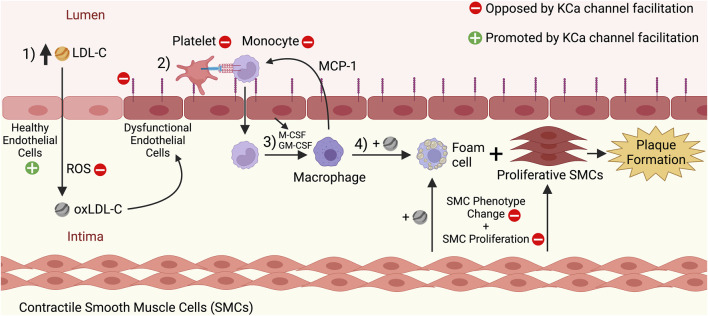
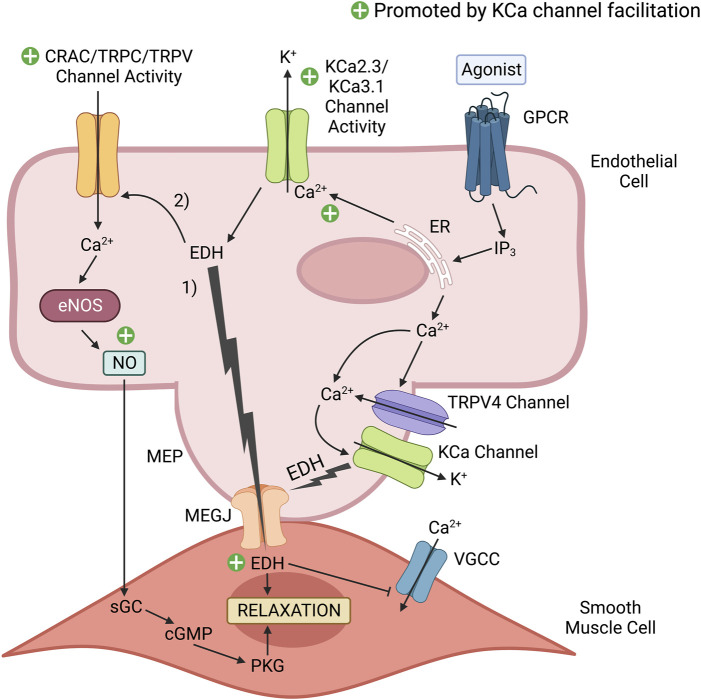
Elevated levels of cholesterol in the blood can induce endothelial dysfunction, a condition characterized by impaired nitric oxide production and decreased vasodilatory capacity. Endothelial dysfunction can promote vascular disease, such as atherosclerosis, where macrophages accumulate in the vascular intima and fatty plaques form that impair normal blood flow in conduit arteries. Current pharmacological strategies to treat atherosclerosis mostly focus on lipid lowering to prevent high levels of plasma cholesterol that induce endothelial dysfunction and atherosclerosis. While this approach is effective for most patients with atherosclerosis, for some, lipid lowering is not enough to reduce their cardiovascular risk factors associated with atherosclerosis (e.g., hypertension, cardiac dysfunction, stroke, etc.). For such patients, additional strategies targeted at reducing endothelial dysfunction may be beneficial. One novel strategy to restore endothelial function and mitigate atherosclerosis risk is to enhance the activity of Ca-activated K (KCa) channels in the endothelium with positive gating modulator drugs. Here, we review the mechanism of action of these small molecules and discuss their ability to improve endothelial function. We then explore how this strategy could mitigate endothelial dysfunction in the context of atherosclerosis by examining how KCa modulators can improve cardiovascular function in other settings, such as aging and type 2 diabetes. Finally, we consider questions that will need to be addressed to determine whether KCa channel activation could be used as a long-term add-on to lipid lowering to augment atherosclerosis treatment, particularly in patients where lipid-lowering is not adequate to improve their cardiovascular health.
血液中胆固醇水平升高可诱发内皮功能障碍,这是一种以一氧化氮生成受损和血管舒张能力降低为特征的病症。内皮功能障碍可促进血管疾病,如动脉粥样硬化,其中巨噬细胞积聚在血管内膜并形成脂肪斑块,从而损害导管动脉中的正常血流。目前治疗动脉粥样硬化的药理学策略主要集中在降低血脂,以预防诱导内皮功能障碍和动脉粥样硬化的高水平血浆胆固醇。虽然这种方法对大多数动脉粥样硬化患者有效,但对一些患者来说,降低血脂不足以降低他们与动脉粥样硬化相关的心血管危险因素(如高血压、心脏功能障碍中风等)。对于此类患者,针对减少内皮功能障碍的额外策略可能有益。一种恢复内皮功能和减轻动脉粥样硬化风险的新策略是用正向门控调节剂药物增强内皮中钙激活钾(KCa)通道的活性。在此,我们综述这些小分子的作用机制,并讨论它们改善内皮功能的能力。然后,我们通过研究KCa调节剂如何在其他情况下(如衰老和2型糖尿病)改善心血管功能,来探讨该策略如何在动脉粥样硬化背景下减轻内皮功能障碍。最后,我们考虑了一些问题,这些问题需要得到解决,以确定KCa通道激活是否可用作降低血脂的长期附加疗法,以增强动脉粥样硬化的治疗效果,特别是在降低血脂不足以改善心血管健康的患者中。