Le Anthony T, Wu Manhong, Khan Afraz, Phillips Nicholas, Rajpurkar Pranav, Garland Megan, Magid Kayla, Sibai Mamdouh, Huang ChunHong, Sahoo Malaya K, Bowen Raffick, Cowan Tina M, Pinsky Benjamin A, Hogan Catherine A
Department of Pathology, Stanford University School of Medicine, Stanford, CA, United States.
Department of Anesthesiology, Stanford University School of Medicine, Stanford, CA, United States.
Front Microbiol. 2023 Mar 29;13:1059289. doi: 10.3389/fmicb.2022.1059289. eCollection 2022.
The routine clinical diagnosis of severe acute respiratory syndrome coronavirus 2 (SARS-CoV-2) is largely restricted to real-time reverse transcription quantitative PCR (RT-qPCR), and tests that detect SARS-CoV-2 nucleocapsid antigen. Given the diagnostic delay and suboptimal sensitivity associated with these respective methods, alternative diagnostic strategies are needed for acute infection.
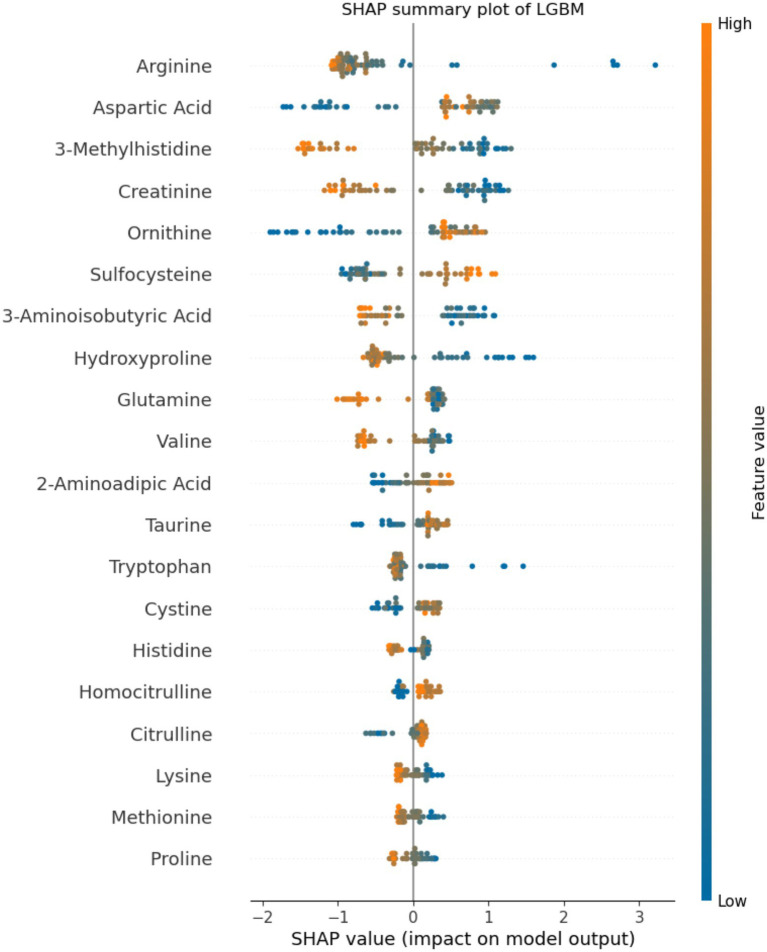
We studied the use of a clinically validated liquid chromatography triple quadrupole method (LC/MS-MS) for detection of amino acids from plasma specimens. We applied machine learning models to distinguish between SARS-CoV-2-positive and negative samples and analyzed amino acid feature importance.
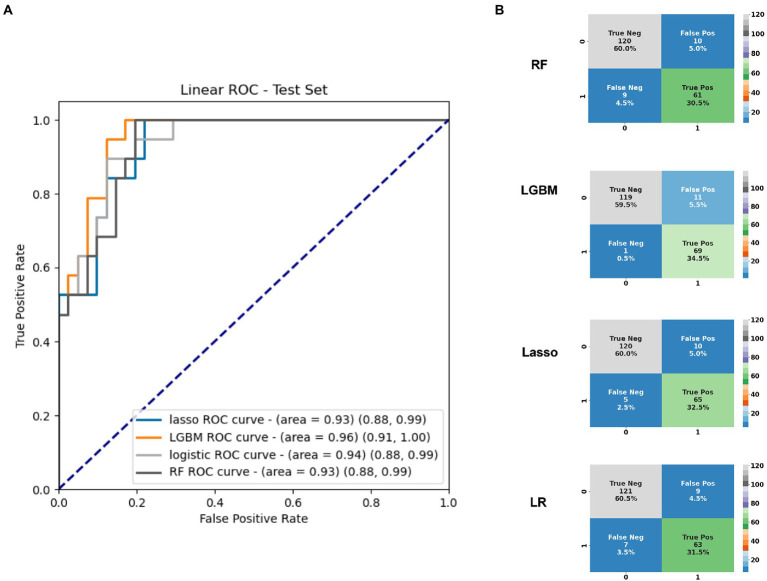
A total of 200 samples were tested, including 70 from individuals with COVID-19, and 130 from negative controls. The top performing model overall allowed discrimination between SARS-CoV-2-positive and negative control samples with an area under the receiver operating characteristic curve (AUC) of 0.96 (95%CI 0.91, 1.00), overall sensitivity of 0.99 (95%CI 0.92, 1.00), and specificity of 0.92 (95%CI 0.85, 0.95).
This approach holds potential as an alternative to existing methods for the rapid and accurate diagnosis of acute SARS-CoV-2 infection.
严重急性呼吸综合征冠状病毒2(SARS-CoV-2)的常规临床诊断主要局限于实时逆转录定量聚合酶链反应(RT-qPCR)以及检测SARS-CoV-2核衣壳抗原的检测方法。鉴于这些方法各自存在诊断延迟和灵敏度欠佳的问题,急性感染需要其他诊断策略。
我们研究了使用经过临床验证的液相色谱三重四极杆方法(LC/MS-MS)检测血浆标本中的氨基酸。我们应用机器学习模型区分SARS-CoV-2阳性和阴性样本,并分析氨基酸特征的重要性。
共检测了200个样本,其中70个来自新冠肺炎患者,130个来自阴性对照。总体表现最佳的模型能够区分SARS-CoV-2阳性和阴性对照样本,受试者操作特征曲线(AUC)下面积为0.96(95%CI 0.91, 1.00),总体灵敏度为0.99(95%CI 0.92, 1.00),特异性为0.92(95%CI 0.85, 0.95)。
这种方法有望成为现有方法的替代方案,用于快速、准确地诊断急性SARS-CoV-2感染。