Sun Wei, Zhuang Shaohui, Cheng Minghua, Qiu Zeting
Department of Anesthesiology, The First Affiliated Hospital of Shantou University Medical College, Shantou, China.
Front Oncol. 2023 Mar 30;13:1134744. doi: 10.3389/fonc.2023.1134744. eCollection 2023.
Opioids are widely used for patients with solid tumors during surgery and for cancer pain relief. We conducted a pan-cancer genomic analysis to investigate the prognostic features of Mu opioid receptor () mRNA expression across 18 primary solid cancers.
All the data of cancer with mRNA were retrieved from cBioPortal for Cancer Genomics. Logistic regression was used to determine the associations between mRNA expression and clinicopathological features. Log-rank test and Cox regression was used for survival analysis. Subgroup analysis and propensity score matching were also carried out.
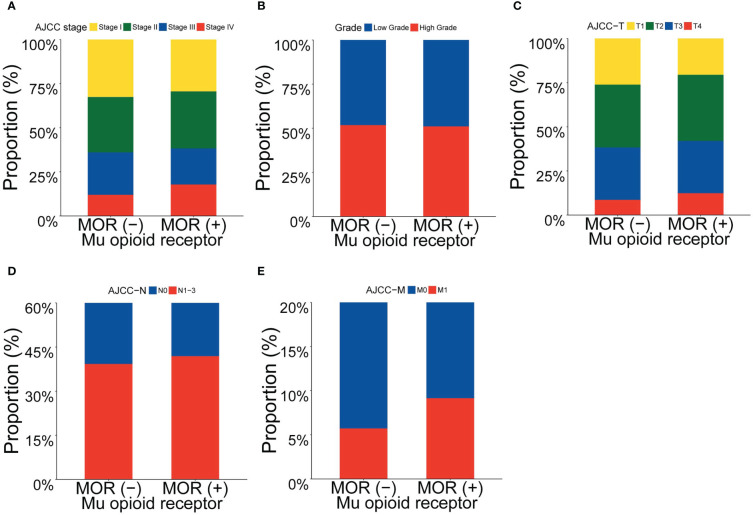
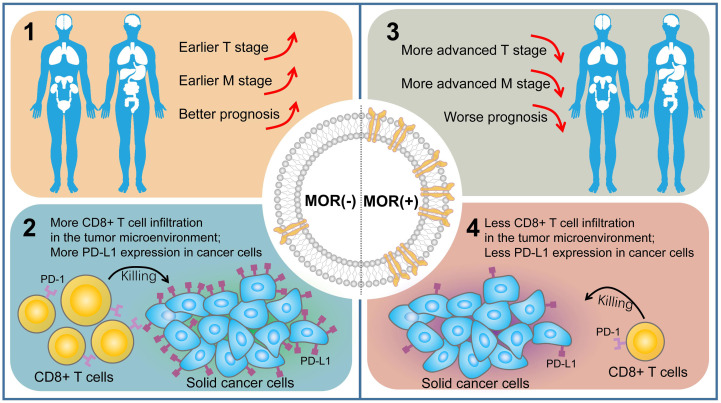
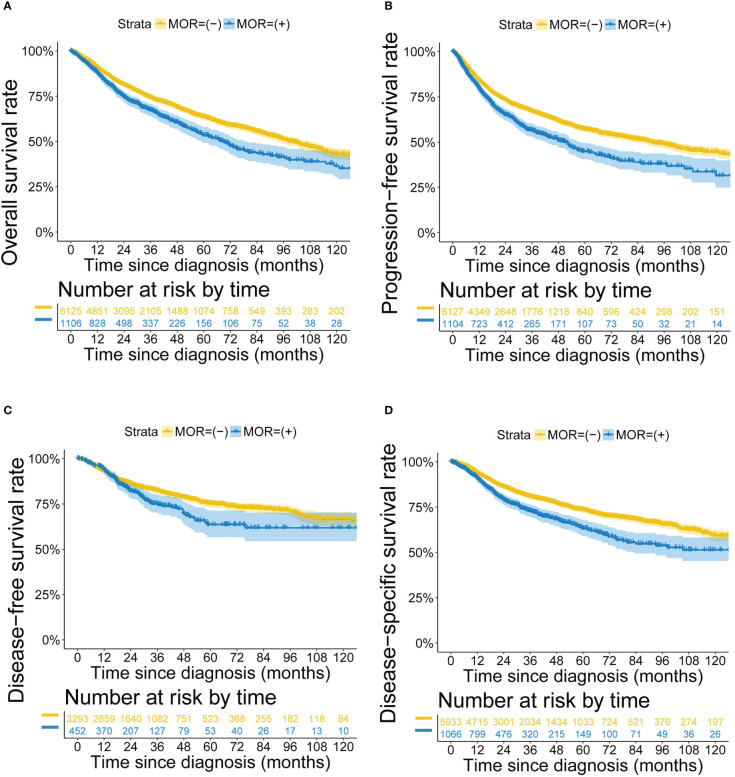
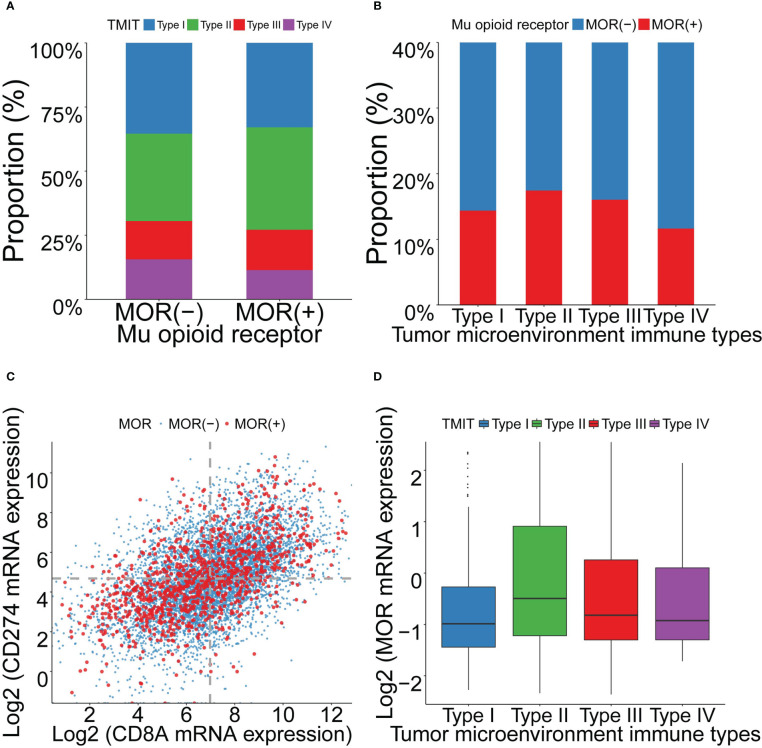
7,274 patients, including 1,112 patients with positive mRNA expression, were included for data analyses. Positive mRNA expression was associated with more advanced stage of T (adjusted Odds ratio [OR], 1.176; 95% confidence interval [CI], 1.022-1.354; =0.024), M (adjusted OR, 1.548; 95% CI, 1.095-2.189; =0.013) except N (adjusted OR, 1.145; 95% CI, 0.975-1.346; =0.101), and worse prognosis for overall survival (Hazard ratio [HR] 1.347, 95% CI 1.200-1.512, <0.001), progression-free survival (HR 1.359, 95% CI 1.220-1.513, <0.001), disease-free survival (HR 1.269, 95% CI 1.016-1.585, <0.001) and disease-specific survival (HR 1.474, 95% CI 1.284-1.693, <0.001). Patients with positive mRNA expression tended to be classified as tumor microenvironment immune types II, representing low PD-L1 and low CD8A expression.
mRNA overexpression is associated with poor prognosis and poor response to PD-L1 therapy.
阿片类药物广泛用于实体瘤患者的手术期间及癌症疼痛缓解。我们进行了一项泛癌基因组分析,以研究18种原发性实体癌中μ阿片受体(MOR)mRNA表达的预后特征。
从癌症基因组学的cBioPortal检索所有具有MOR mRNA的癌症数据。采用逻辑回归确定MOR mRNA表达与临床病理特征之间的关联。采用对数秩检验和Cox回归进行生存分析。还进行了亚组分析和倾向得分匹配。
纳入7274例患者进行数据分析,其中1112例患者MOR mRNA表达呈阳性。MOR mRNA表达阳性与T分期更晚(调整优势比[OR],1.176;95%置信区间[CI],1.022 - 1.354;P = 0.024)、M分期更晚(调整OR,1.548;95% CI,1.095 - 2.189;P = 0.013)相关,但与N分期无关(调整OR,1.145;95% CI,0.975 - 1.346;P = 0.101),且总生存期(风险比[HR] 1.347,95% CI 1.200 - 1.512,P < 0.001)、无进展生存期(HR 1.359,95% CI 1.220 - 1.513,P < 0.001)、无病生存期(HR 1.269,95% CI 1.016 - 1.585,P < 0.001)和疾病特异性生存期(HR 1.474,95% CI 1.284 - 1.693,P < 0.001)的预后更差。MOR mRNA表达阳性的患者倾向于被归类为肿瘤微环境免疫II型,代表低PD-L1和低CD8A表达。
MOR mRNA过表达与预后不良及对PD-L1治疗反应不佳相关。