Omi Maiko, Koneru Tejaswi, Lyu Yishan, Haraguchi Ai, Kamiya Nobuhiro, Mishina Yuji
Department of Biologic and Materials Sciences and Prosthodontics, University of Michigan School of Dentistry, Ann Arbor, MI, United States.
Department of Budo and Sport Studies, Faculty of Budo and Sport Studies, Tenri University, Nara, Japan.
Front Physiol. 2023 Mar 30;14:1145763. doi: 10.3389/fphys.2023.1145763. eCollection 2023.
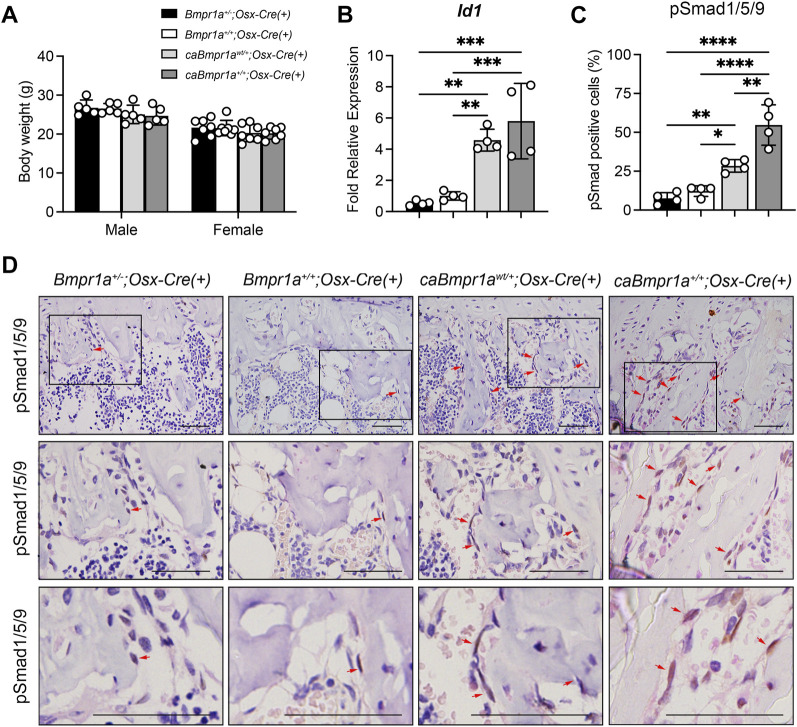
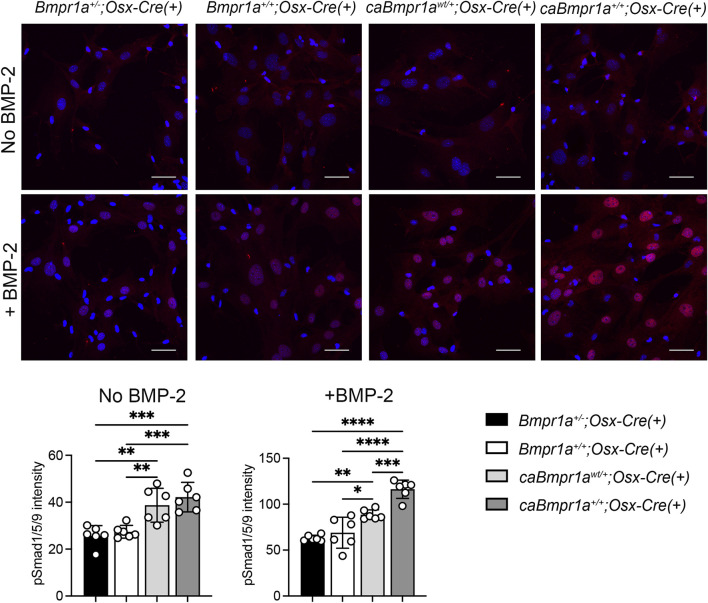
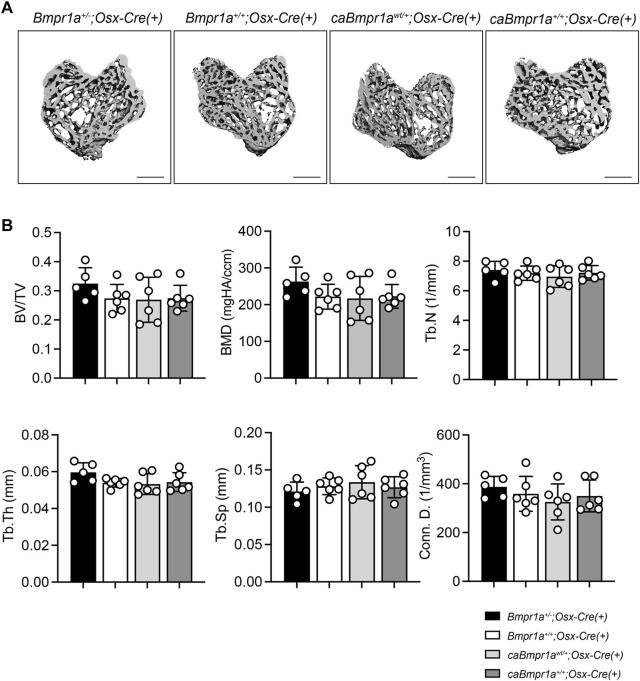
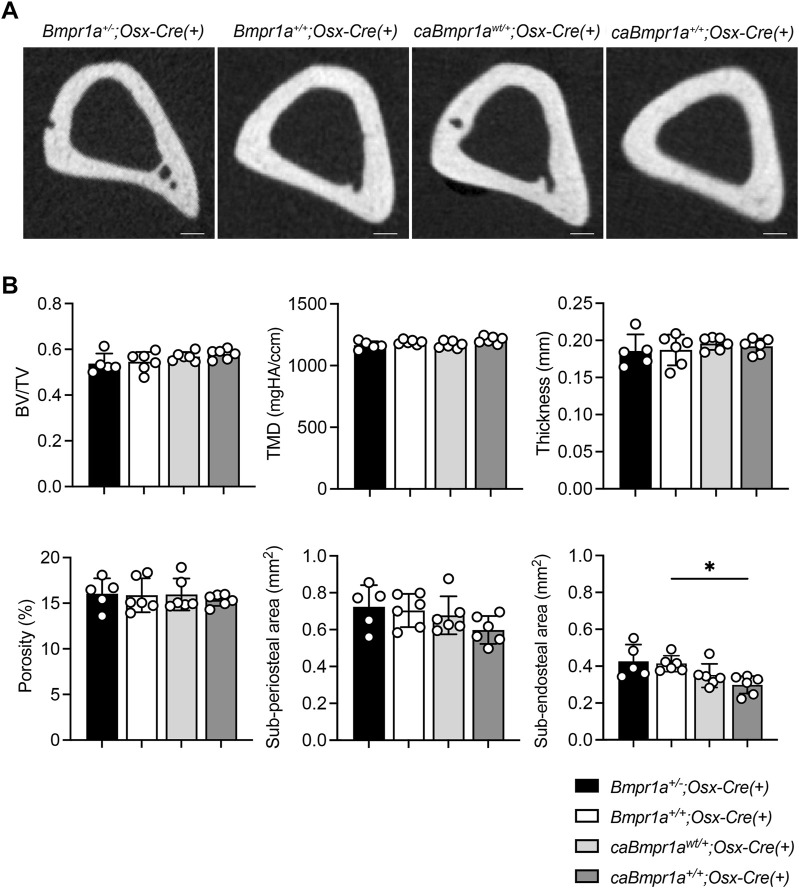
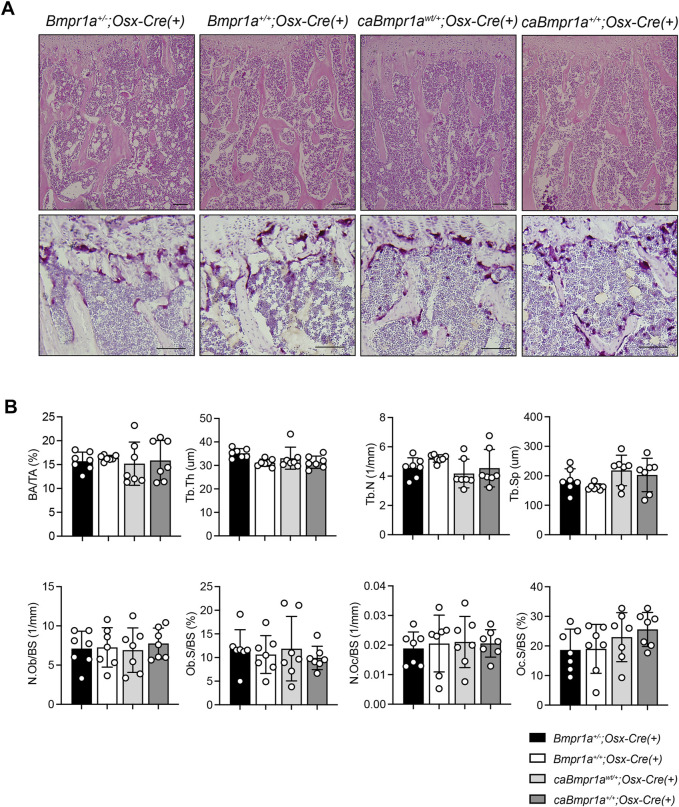
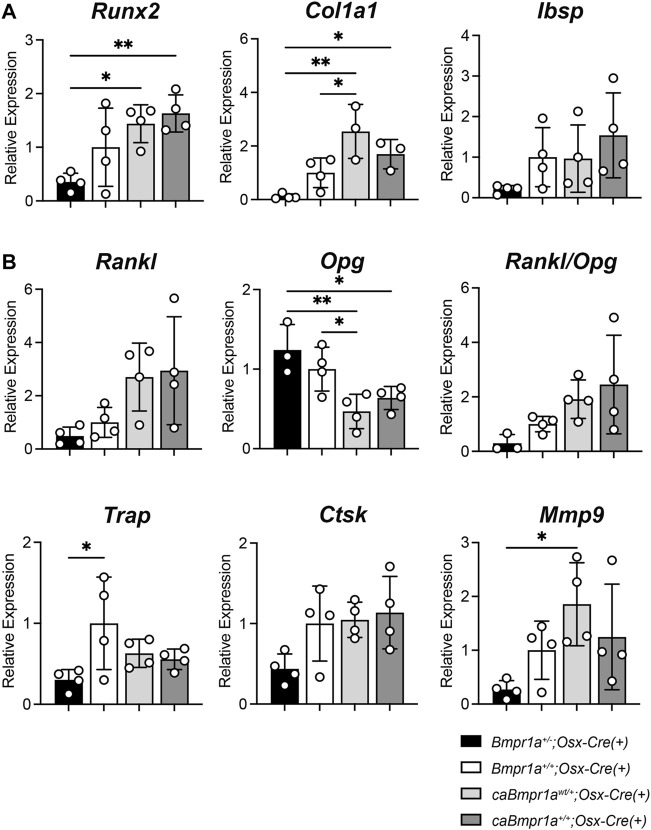
Bone morphogenetic proteins (BMPs) have been used for orthopedic and dental application due to their osteoinductive properties; however, substantial numbers of adverse reactions such as heterotopic bone formation, increased bone resorption and greater cancer risk have been reported. Since bone morphogenetic proteins signaling exerts pleiotropic effects on various tissues, it is crucial to understand tissue-specific and context-dependent functions of bone morphogenetic proteins. We previously reported that loss-of-function of bone morphogenetic proteins receptor type IA (BMPR1A) in osteoblasts leads to more bone mass in mice partly due to inhibition of bone resorption, indicating that bone morphogenetic protein signaling in osteoblasts promotes osteoclast function. On the other hand, hemizygous constitutively active (ca) mutations for BMPR1A ( ) in osteoblasts result in higher bone morphogenetic protein signaling activity and no overt skeletal changes in adult mice. Here, we further bred mice for heterozygous null for ) and homozygous mutations of ( ) crossed with -Cre transgenic mice to understand how differences in the levels of bone morphogenetic protein signaling activity specifically in osteoblasts contribute to bone phenotype. We found that , and mice at 3 months of age showed no overt bone phenotypes in tibiae compared to controls by micro-CT and histological analysis although BMP-Smad signaling is increased in both and tibiae and decreased in the mice compared to controls. Gene expression analysis demonstrated that slightly higher levels of bone formation markers and resorption markers along with levels of bone morphogenetic protein-Smad signaling, however, there was no significant changes in TRAP positive cells in tibiae. These findings suggest that changes in bone morphogenetic protein signaling activity within differentiating osteoblasts does not affect net bone mass in the adult stage, providing insights into the concerns in the clinical setting such as high-dose and unexpected side effects of bone morphogenetic protein application.
骨形态发生蛋白(BMPs)因其骨诱导特性已被用于骨科和牙科领域;然而,已报道了大量不良反应,如异位骨形成、骨吸收增加和癌症风险升高。由于骨形态发生蛋白信号传导对各种组织发挥多效性作用,了解骨形态发生蛋白的组织特异性和背景依赖性功能至关重要。我们先前报道,成骨细胞中骨形态发生蛋白受体IA型(BMPR1A)功能丧失会导致小鼠骨量增加,部分原因是骨吸收受到抑制,这表明成骨细胞中的骨形态发生蛋白信号传导促进破骨细胞功能。另一方面,成骨细胞中BMPR1A( )的半合子组成型激活(ca)突变导致骨形态发生蛋白信号传导活性更高,而成年小鼠无明显骨骼变化。在此,我们进一步培育了( )杂合缺失和( )纯合突变的小鼠,并与-Cre转基因小鼠杂交,以了解成骨细胞中骨形态发生蛋白信号传导活性水平的差异如何具体影响骨表型。我们发现,通过微计算机断层扫描(micro-CT)和组织学分析,与对照组相比,3月龄的( )、( )和( )小鼠胫骨未表现出明显的骨表型,尽管与对照组相比,( )和( )小鼠胫骨中的BMP-Smad信号传导增强,而( )小鼠中的该信号传导减弱。基因表达分析表明,骨形成标志物和骨吸收标志物的水平以及骨形态发生蛋白-Smad信号传导水平略有升高,然而,胫骨中抗酒石酸酸性磷酸酶(TRAP)阳性细胞无显著变化。这些发现表明,分化中的成骨细胞内骨形态发生蛋白信号传导活性的变化不会影响成年期的净骨量,这为临床应用中诸如骨形态发生蛋白高剂量和意外副作用等问题提供了见解。