Canbolat Yusuf, Rutkowski David, Rutkowski Leslie
Department of Education Policy Studies, Indiana University, 201 N. Rose Avenue, Bloomington, IN 47405 USA.
Department of Counseling and Educational Psychology, Indiana University, Bloomington, USA.
Large Scale Assess Educ. 2023;11(1):13. doi: 10.1186/s40536-023-00161-z. Epub 2023 Apr 11.
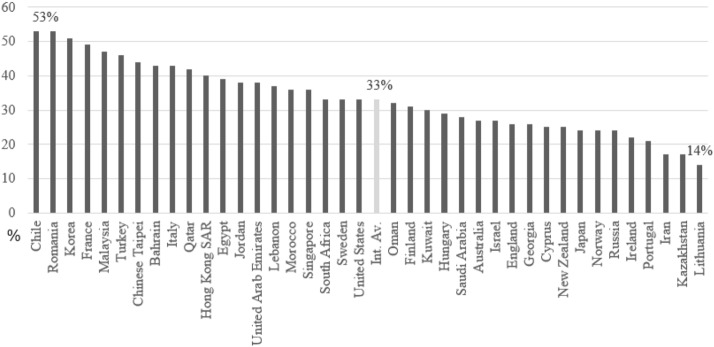
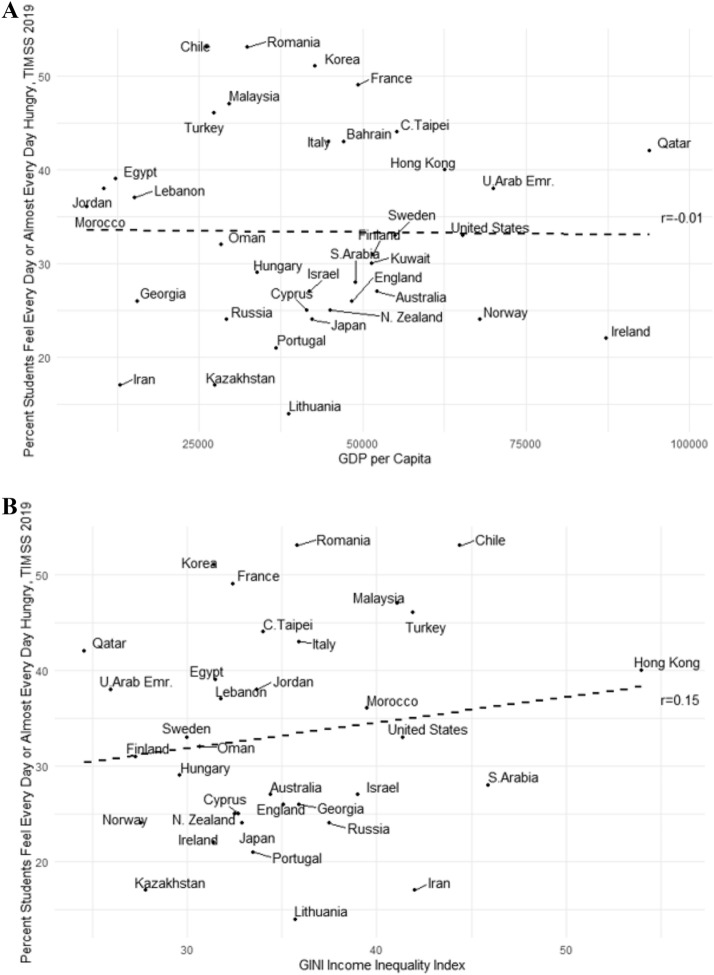
In low-income countries, there exists a common concern about the effect of hunger and food insecurity on educational outcomes. However, income inequalities, economic slowdown, conflict, and climate change have raised those concerns globally. Yet, little is known about how widespread the problem of hunger in schools is worldwide. This study examines child hunger and student achievement internationally, using data from the Trends in Mathematics and Science Study (TIMSS) 2019. To examine the relationship between hunger and student achievement, we fitted multilevel models to the data and controlled for student SES, class SES, teacher experience, and teacher educational attainment. The results suggest that hunger among students is not exclusive to low-income countries. Instead, child hunger is a common issue around the world, affecting about one-third of children and exacerbating unequal education opportunities globally. Controlling for other variables, the achievement gap between students who never come to school hungry and those who come to school always or almost always hungry is significant and deserves our attention. A clear policy recommendation from our results suggests that all countries that participated in TIMSS need to examine their school meal programs and explore ways to feed the students who show up to school hungry.
在低收入国家,人们普遍担心饥饿和粮食不安全对教育成果的影响。然而,收入不平等、经济放缓、冲突和气候变化已在全球范围内引发了这些担忧。然而,对于全球范围内学校饥饿问题的普遍程度却知之甚少。本研究利用2019年数学和科学趋势研究(TIMSS)的数据,对国际上的儿童饥饿和学生成绩进行了考察。为了研究饥饿与学生成绩之间的关系,我们对数据拟合了多层次模型,并控制了学生社会经济地位、班级社会经济地位、教师经验和教师教育程度。结果表明,学生饥饿并非低收入国家所特有。相反,儿童饥饿是一个全球性的普遍问题,影响着约三分之一的儿童,并加剧了全球教育机会的不平等。在控制其他变量的情况下,从未饿着肚子上学的学生与总是或几乎总是饿着肚子上学的学生之间的成绩差距很大,值得我们关注。我们的研究结果给出了一个明确的政策建议,即所有参与TIMSS的国家都需要审视其学校供餐计划,并探索解决学生饿着肚子上学问题的办法。