• 文献检索
  • 文档翻译
  • 深度研究
  • 学术资讯
  • Suppr Zotero 插件Zotero 插件
  • 邀请有礼
  • 套餐&价格
  • 历史记录
应用&插件
Suppr Zotero 插件Zotero 插件浏览器插件Mac 客户端Windows 客户端微信小程序
定价
高级版会员购买积分包购买API积分包
服务
文献检索文档翻译深度研究API 文档MCP 服务
关于我们
关于 Suppr公司介绍联系我们用户协议隐私条款
关注我们

Suppr 超能文献

核心技术专利:CN118964589B侵权必究
粤ICP备2023148730 号-1Suppr @ 2026

文献检索

告别复杂PubMed语法,用中文像聊天一样搜索,搜遍4000万医学文献。AI智能推荐,让科研检索更轻松。

立即免费搜索

文件翻译

保留排版,准确专业,支持PDF/Word/PPT等文件格式,支持 12+语言互译。

免费翻译文档

深度研究

AI帮你快速写综述,25分钟生成高质量综述,智能提取关键信息,辅助科研写作。

立即免费体验

运用团簇理论计算抗体溶液的实验结构因子。

Using Cluster Theory to Calculate the Experimental Structure Factors of Antibody Solutions.

机构信息

Physical Chemistry, Department of Chemistry, Lund University, SE-221 00 Lund, Sweden.

Soft Condensed Matter, Debye Institute for Nanomaterials Science, Utrecht University, Princetonplein 5, 3584 CC Utrecht, The Netherlands.

出版信息

Mol Pharm. 2023 May 1;20(5):2738-2753. doi: 10.1021/acs.molpharmaceut.3c00191. Epub 2023 Apr 17.

DOI:10.1021/acs.molpharmaceut.3c00191
PMID:37067466
原文链接:https://pmc.ncbi.nlm.nih.gov/articles/PMC10155212/
Abstract

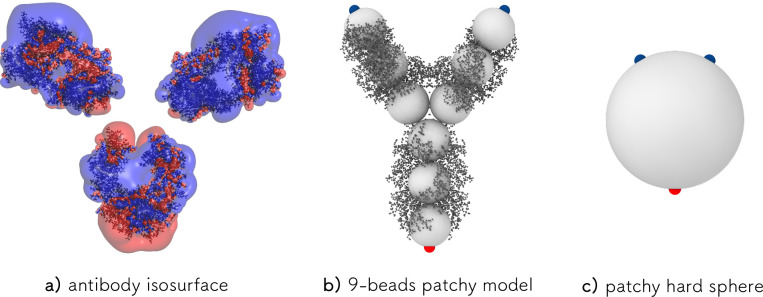
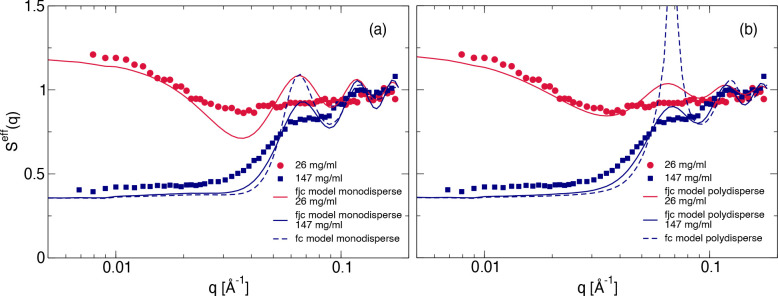
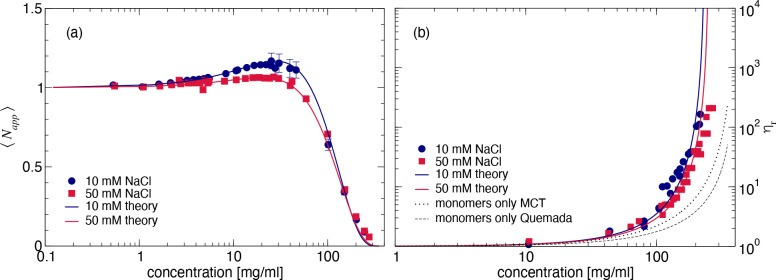
Monoclonal antibody solutions are set to become a major therapeutic tool in the years to come, capable of targeting various diseases by clever design of their antigen binding site. However, the formulation of stable solutions suitable for patient self-administration typically presents challenges, as a result of the increase in viscosity that often occurs at high concentrations. Here, we establish a link between the microscopic molecular details and the resulting properties of an antibody solution through the characterization of clusters, which arise in the presence of self-associating antibodies. In particular, we find that experimental small-angle X-ray scattering data can be interpreted by means of analytical models previously exploited for the study of polymeric and colloidal objects, based on the presence of such clusters. The latter are determined by theoretical calculations and supported by computer simulations of a coarse-grained minimal model, in which antibodies are treated as Y-shaped colloidal molecules and attractive domains are designed as patches. Using the theoretically predicted cluster size distributions, we are able to describe the experimental structure factors over a wide range of concentration and salt conditions. We thus provide microscopic evidence for the well-established fact that the concentration-dependent increase in viscosity is originated by the presence of clusters. Our findings bring new insights on the self-assembly of monoclonal antibodies, which can be exploited for guiding the formulation of stable and effective antibody solutions.

摘要

单克隆抗体溶液有望成为未来几年的主要治疗工具,通过巧妙设计其抗原结合位点,能够针对各种疾病。然而,由于在高浓度下通常会出现粘度增加,因此为适合患者自我给药而配制稳定溶液通常具有挑战性。在这里,我们通过对自缔合抗体存在时出现的聚集体的特性进行表征,在抗体溶液的微观分子细节与其产生的性质之间建立了联系。具体而言,我们发现可以通过基于存在此类聚集体的先前用于研究聚合物和胶体物体的分析模型来解释实验小角度 X 射线散射数据。这些聚集体由理论计算确定,并得到了粗粒度最小模型的计算机模拟的支持,其中抗体被视为 Y 形胶体分子,而吸引力域被设计为补丁。使用理论预测的聚集体尺寸分布,我们能够在广泛的浓度和盐条件下描述实验结构因子。因此,我们提供了微观证据,证明了粘度随浓度增加的事实源于聚集体的存在。我们的研究结果为单克隆抗体的自组装提供了新的见解,可用于指导稳定有效的抗体溶液的配方。
https://cdn.ncbi.nlm.nih.gov/pmc/blobs/28f2/10155212/2d048347a356/mp3c00191_0012.jpg
https://cdn.ncbi.nlm.nih.gov/pmc/blobs/28f2/10155212/af25d2892fab/mp3c00191_0001.jpg
https://cdn.ncbi.nlm.nih.gov/pmc/blobs/28f2/10155212/fba10b608154/mp3c00191_0002.jpg
https://cdn.ncbi.nlm.nih.gov/pmc/blobs/28f2/10155212/cbf7678c1891/mp3c00191_0003.jpg
https://cdn.ncbi.nlm.nih.gov/pmc/blobs/28f2/10155212/348c805e4adc/mp3c00191_0004.jpg
https://cdn.ncbi.nlm.nih.gov/pmc/blobs/28f2/10155212/cfec03cabd4f/mp3c00191_0005.jpg
https://cdn.ncbi.nlm.nih.gov/pmc/blobs/28f2/10155212/c7daad6e6d17/mp3c00191_0006.jpg
https://cdn.ncbi.nlm.nih.gov/pmc/blobs/28f2/10155212/3cd8a5cb27c5/mp3c00191_0007.jpg
https://cdn.ncbi.nlm.nih.gov/pmc/blobs/28f2/10155212/531026894041/mp3c00191_0008.jpg
https://cdn.ncbi.nlm.nih.gov/pmc/blobs/28f2/10155212/898d1a0f47f7/mp3c00191_0009.jpg
https://cdn.ncbi.nlm.nih.gov/pmc/blobs/28f2/10155212/8b2935555cc6/mp3c00191_0010.jpg
https://cdn.ncbi.nlm.nih.gov/pmc/blobs/28f2/10155212/2e32a6ddfd54/mp3c00191_0011.jpg
https://cdn.ncbi.nlm.nih.gov/pmc/blobs/28f2/10155212/2d048347a356/mp3c00191_0012.jpg
https://cdn.ncbi.nlm.nih.gov/pmc/blobs/28f2/10155212/af25d2892fab/mp3c00191_0001.jpg
https://cdn.ncbi.nlm.nih.gov/pmc/blobs/28f2/10155212/fba10b608154/mp3c00191_0002.jpg
https://cdn.ncbi.nlm.nih.gov/pmc/blobs/28f2/10155212/cbf7678c1891/mp3c00191_0003.jpg
https://cdn.ncbi.nlm.nih.gov/pmc/blobs/28f2/10155212/348c805e4adc/mp3c00191_0004.jpg
https://cdn.ncbi.nlm.nih.gov/pmc/blobs/28f2/10155212/cfec03cabd4f/mp3c00191_0005.jpg
https://cdn.ncbi.nlm.nih.gov/pmc/blobs/28f2/10155212/c7daad6e6d17/mp3c00191_0006.jpg
https://cdn.ncbi.nlm.nih.gov/pmc/blobs/28f2/10155212/3cd8a5cb27c5/mp3c00191_0007.jpg
https://cdn.ncbi.nlm.nih.gov/pmc/blobs/28f2/10155212/531026894041/mp3c00191_0008.jpg
https://cdn.ncbi.nlm.nih.gov/pmc/blobs/28f2/10155212/898d1a0f47f7/mp3c00191_0009.jpg
https://cdn.ncbi.nlm.nih.gov/pmc/blobs/28f2/10155212/8b2935555cc6/mp3c00191_0010.jpg
https://cdn.ncbi.nlm.nih.gov/pmc/blobs/28f2/10155212/2e32a6ddfd54/mp3c00191_0011.jpg
https://cdn.ncbi.nlm.nih.gov/pmc/blobs/28f2/10155212/2d048347a356/mp3c00191_0012.jpg

相似文献

1
Using Cluster Theory to Calculate the Experimental Structure Factors of Antibody Solutions.运用团簇理论计算抗体溶液的实验结构因子。
Mol Pharm. 2023 May 1;20(5):2738-2753. doi: 10.1021/acs.molpharmaceut.3c00191. Epub 2023 Apr 17.
2
Characterizing Protein-Protein Interactions and Viscosity of a Monoclonal Antibody from Low to High Concentration Using Small-Angle X-ray Scattering and Molecular Dynamics Simulations.利用小角度 X 射线散射和分子动力学模拟研究单克隆抗体在低浓度到高浓度下的蛋白质-蛋白质相互作用和黏度特性。
Mol Pharm. 2023 Nov 6;20(11):5563-5578. doi: 10.1021/acs.molpharmaceut.3c00484. Epub 2023 Oct 2.
3
X-ray Scattering and Coarse-Grained Simulations for Clustering and Interactions of Monoclonal Antibodies at High Concentrations.X 射线散射和粗粒化模拟在高浓度下单克隆抗体的聚集和相互作用。
J Phys Chem B. 2019 Jun 27;123(25):5274-5290. doi: 10.1021/acs.jpcb.9b04478. Epub 2019 Jun 18.
4
Coarse-Grained Molecular Dynamics Simulations for Understanding the Impact of Short-Range Anisotropic Attractions on Structure and Viscosity of Concentrated Monoclonal Antibody Solutions.粗粒化分子动力学模拟理解短程各向异性吸引力对高浓度单克隆抗体溶液结构和黏度的影响。
Mol Pharm. 2020 May 4;17(5):1748-1756. doi: 10.1021/acs.molpharmaceut.9b00960. Epub 2020 Apr 2.
5
Characterizing Experimental Monoclonal Antibody Interactions and Clustering Using a Coarse-Grained Simulation Library and a Viscosity Model.使用粗粒化模拟库和粘度模型对实验性单克隆抗体相互作用和聚类进行特征描述。
J Phys Chem B. 2023 Feb 9;127(5):1120-1137. doi: 10.1021/acs.jpcb.2c07616. Epub 2023 Jan 30.
6
Combining Scattering Experiments and Colloid Theory to Characterize Charge Effects in Concentrated Antibody Solutions.结合散射实验和胶体理论研究在高浓度抗体溶液中的电荷效应。
Mol Pharm. 2024 May 6;21(5):2250-2271. doi: 10.1021/acs.molpharmaceut.3c01023. Epub 2024 Apr 25.
7
Studying Excipient Modulated Physical Stability and Viscosity of Monoclonal Antibody Formulations Using Small-Angle Scattering.利用小角散射研究赋形剂调节的单克隆抗体制剂的物理稳定性和黏度。
Mol Pharm. 2019 Oct 7;16(10):4319-4338. doi: 10.1021/acs.molpharmaceut.9b00687. Epub 2019 Sep 24.
8
Cluster Size and Quinary Structure Determine the Rheological Effects of Antibody Self-Association at High Concentrations.簇大小和五元结构决定了高浓度下抗体自组装的流变学效应。
J Phys Chem B. 2018 Feb 22;122(7):2138-2154. doi: 10.1021/acs.jpcb.7b10728. Epub 2018 Feb 8.
9
Characterization of the NISTmAb Reference Material using small-angle scattering and molecular simulation : Part II: Concentrated protein solutions.使用小角散射和分子模拟对 NISTmAb 参考物质进行表征:第 II 部分:浓缩蛋白质溶液。
Anal Bioanal Chem. 2018 Mar;410(8):2161-2171. doi: 10.1007/s00216-018-0869-1. Epub 2018 Feb 8.
10
Subclass Effects on Self-Association and Viscosity of Monoclonal Antibodies at High Concentrations.亚类效应对单克隆抗体在高浓度下自组装和黏度的影响。
Mol Pharm. 2023 Jun 5;20(6):2991-3008. doi: 10.1021/acs.molpharmaceut.3c00023. Epub 2023 May 16.

引用本文的文献

1
Growth of Clusters toward Liquid-Liquid Phase Separation of Monoclonal Antibodies as Characterized by Small-Angle X-ray Scattering and Molecular Dynamics Simulation.通过小角X射线散射和分子动力学模拟表征单克隆抗体向液-液相分离的聚集体生长
J Phys Chem B. 2025 Mar 20;129(11):2856-2871. doi: 10.1021/acs.jpcb.4c07064. Epub 2025 Mar 7.
2
Reconciling predicted and measured viscosity parameters in high concentration therapeutic antibody solutions.调和高浓度治疗性抗体溶液中预测粘度参数与实测粘度参数
MAbs. 2024 Jan-Dec;16(1):2438172. doi: 10.1080/19420862.2024.2438172. Epub 2024 Dec 11.
3
Combining Scattering Experiments and Colloid Theory to Characterize Charge Effects in Concentrated Antibody Solutions.

本文引用的文献

1
Non-specificity as the sticky problem in therapeutic antibody development.非特异性作为治疗性抗体开发中的棘手问题。
Nat Rev Chem. 2022 Dec;6(12):844-861. doi: 10.1038/s41570-022-00438-x. Epub 2022 Nov 14.
2
Characterizing Experimental Monoclonal Antibody Interactions and Clustering Using a Coarse-Grained Simulation Library and a Viscosity Model.使用粗粒化模拟库和粘度模型对实验性单克隆抗体相互作用和聚类进行特征描述。
J Phys Chem B. 2023 Feb 9;127(5):1120-1137. doi: 10.1021/acs.jpcb.2c07616. Epub 2023 Jan 30.
3
Calculation of therapeutic antibody viscosity with coarse-grained models, hydrodynamic calculations and machine learning-based parameters.
结合散射实验和胶体理论研究在高浓度抗体溶液中的电荷效应。
Mol Pharm. 2024 May 6;21(5):2250-2271. doi: 10.1021/acs.molpharmaceut.3c01023. Epub 2024 Apr 25.
4
A multi-scale numerical approach to study monoclonal antibodies in solution.一种研究溶液中单克隆抗体的多尺度数值方法。
APL Bioeng. 2024 Feb 26;8(1):016111. doi: 10.1063/5.0186642. eCollection 2024 Mar.
5
Poly(glutamic acid)-Based Viscosity Reducers for Concentrated Formulations of a Monoclonal IgG Antibody.基于聚谷氨酸的粘度降低剂用于单克隆 IgG 抗体的高浓度制剂。
Mol Pharm. 2024 Feb 5;21(2):982-991. doi: 10.1021/acs.molpharmaceut.3c01159. Epub 2024 Jan 19.
使用粗粒度模型、流体力学计算和基于机器学习的参数计算治疗性抗体的粘度。
MAbs. 2021 Jan-Dec;13(1):1907882. doi: 10.1080/19420862.2021.1907882.
4
Multiscale Coarse-Grained Approach to Investigate Self-Association of Antibodies.多尺度粗粒化方法研究抗体的自组装。
Biophys J. 2020 Jun 2;118(11):2741-2754. doi: 10.1016/j.bpj.2020.04.022. Epub 2020 Apr 29.
5
Coarse-Grained Molecular Dynamics Simulations for Understanding the Impact of Short-Range Anisotropic Attractions on Structure and Viscosity of Concentrated Monoclonal Antibody Solutions.粗粒化分子动力学模拟理解短程各向异性吸引力对高浓度单克隆抗体溶液结构和黏度的影响。
Mol Pharm. 2020 May 4;17(5):1748-1756. doi: 10.1021/acs.molpharmaceut.9b00960. Epub 2020 Apr 2.
6
Development of therapeutic antibodies for the treatment of diseases.治疗性抗体的开发用于疾病的治疗。
J Biomed Sci. 2020 Jan 2;27(1):1. doi: 10.1186/s12929-019-0592-z.
7
X-ray Scattering and Coarse-Grained Simulations for Clustering and Interactions of Monoclonal Antibodies at High Concentrations.X 射线散射和粗粒化模拟在高浓度下单克隆抗体的聚集和相互作用。
J Phys Chem B. 2019 Jun 27;123(25):5274-5290. doi: 10.1021/acs.jpcb.9b04478. Epub 2019 Jun 18.
8
A Colloid Approach to Self-Assembling Antibodies.胶体方法用于自组装抗体。
Mol Pharm. 2019 Jun 3;16(6):2394-2404. doi: 10.1021/acs.molpharmaceut.9b00019. Epub 2019 May 15.
9
Dynamic cluster formation determines viscosity and diffusion in dense protein solutions.动态簇形成决定了密集蛋白质溶液的粘度和扩散性。
Proc Natl Acad Sci U S A. 2019 May 14;116(20):9843-9852. doi: 10.1073/pnas.1817564116. Epub 2019 Apr 29.
10
Experimental Evidence for a Cluster Glass Transition in Concentrated Lysozyme Solutions.实验证据表明,在浓缩溶菌酶溶液中存在团簇玻璃化转变。
J Phys Chem B. 2019 Mar 14;123(10):2432-2438. doi: 10.1021/acs.jpcb.8b11781. Epub 2019 Mar 4.