Farhikhtegan Medical Convergence Sciences Research Center, Farhikhtegan Hospital Tehran Medical Sciences, Islamic Azad University, Tehran, Iran.
Department of Genetics, Faculty of Advanced Science and Technology, Tehran Medical Sciences, Islamic Azad University, Tehran, Iran.
Cell Mol Biol Lett. 2023 Apr 21;28(1):33. doi: 10.1186/s11658-023-00438-9.
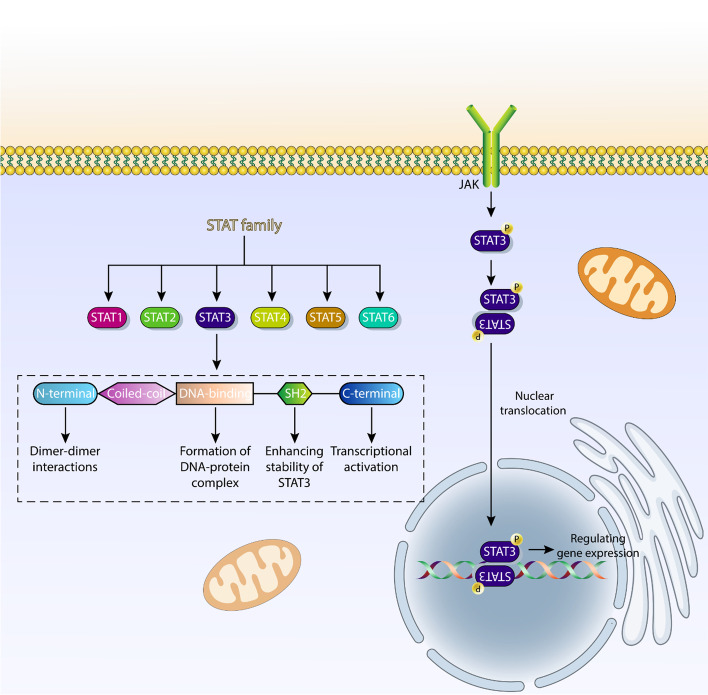
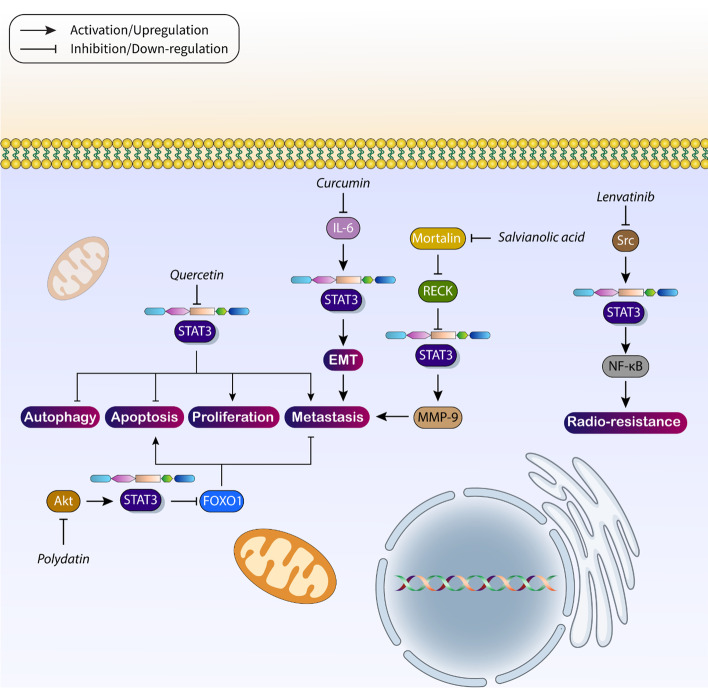
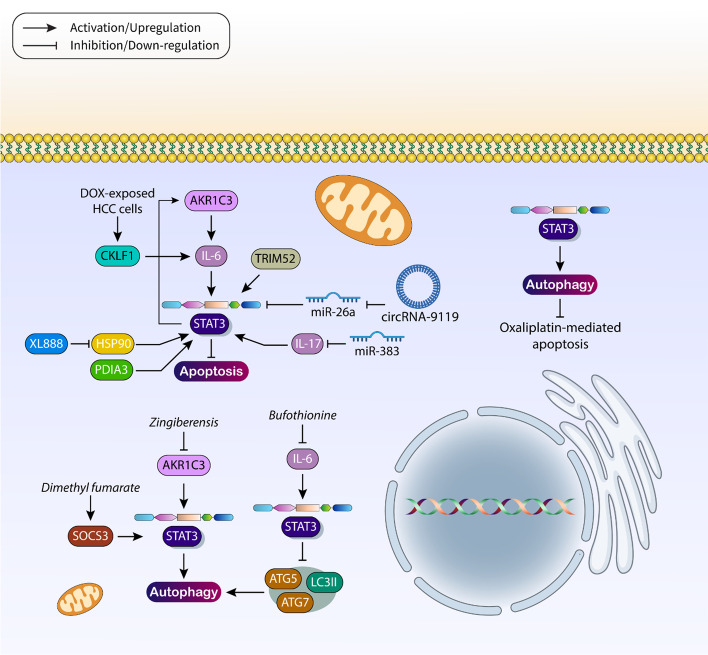
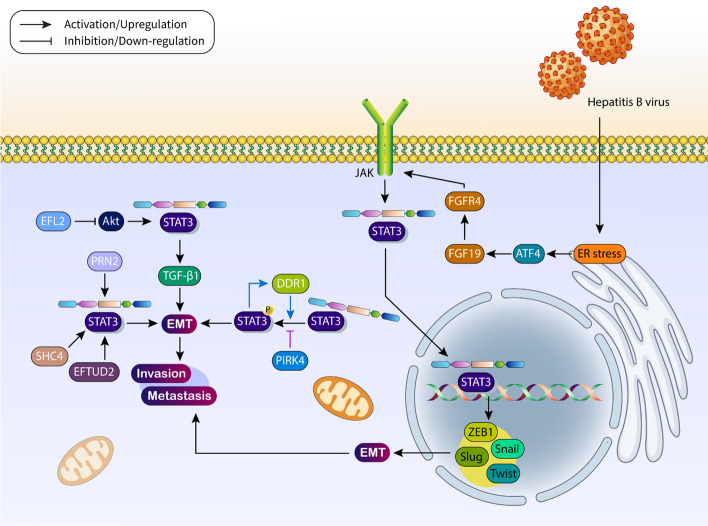
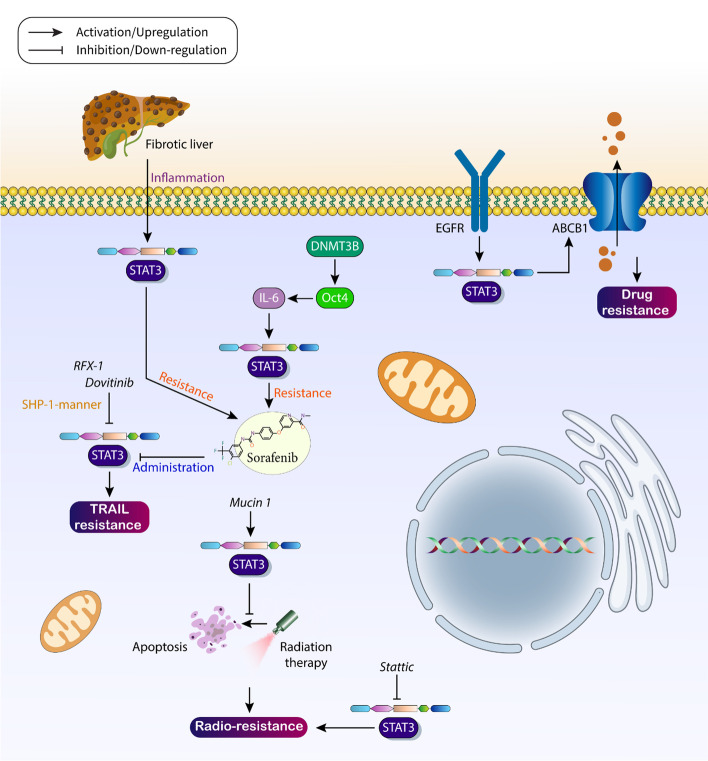
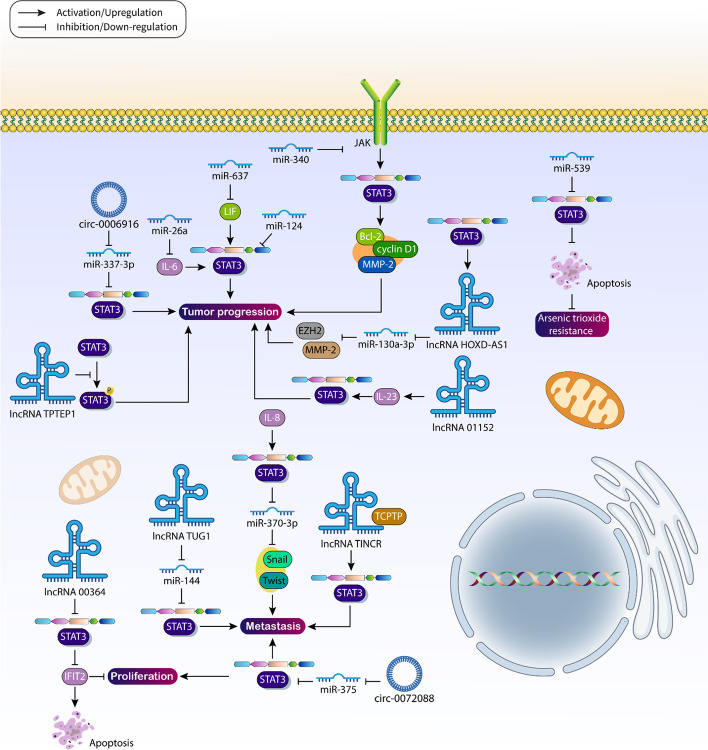
Hepatocellular carcinoma (HCC) is considered one of the greatest challenges to human life and is the most common form of liver cancer. Treatment of HCC depends on chemotherapy, radiotherapy, surgery, and immunotherapy, all of which have their own drawbacks, and patients may develop resistance to these therapies due to the aggressive behavior of HCC cells. New and effective therapies for HCC can be developed by targeting molecular signaling pathways. The expression of signal transducer and activator of transcription 3 (STAT3) in human cancer cells changes, and during cancer progression, the expression tends to increase. After induction of STAT3 signaling by growth factors and cytokines, STAT3 is phosphorylated and translocated to the nucleus to regulate cancer progression. The concept of the current review revolves around the expression and phosphorylation status of STAT3 in HCC, and studies show that the expression of STAT3 is high during the progression of HCC. This review addresses the function of STAT3 as an oncogenic factor in HCC, as STAT3 is able to prevent apoptosis and thus promote the progression of HCC. Moreover, STAT3 regulates both survival- and death-inducing autophagy in HCC and promotes cancer metastasis by inducing the epithelial-mesenchymal transition (EMT). In addition, upregulation of STAT3 is associated with the occurrence of chemoresistance and radioresistance in HCC. Specifically, non-protein-coding transcripts regulate STAT3 signaling in HCC, and their inhibition by antitumor agents may affect tumor progression. In this review, all these topics are discussed in detail to provide further insight into the role of STAT3 in tumorigenesis, treatment resistance, and pharmacological regulation of HCC.
肝细胞癌 (HCC) 被认为是对人类生命的最大挑战之一,也是最常见的肝癌形式。HCC 的治疗取决于化疗、放疗、手术和免疫疗法,所有这些都有其自身的缺点,并且由于 HCC 细胞的侵袭性行为,患者可能会对这些疗法产生耐药性。通过靶向分子信号通路,可以开发出针对 HCC 的新的有效疗法。信号转导子和转录激活子 3(STAT3)在人类癌细胞中的表达发生改变,并且在癌症进展过程中,表达倾向于增加。在生长因子和细胞因子诱导 STAT3 信号转导后,STAT3 被磷酸化并易位到细胞核中以调节癌症进展。本综述的概念围绕着 HCC 中 STAT3 的表达和磷酸化状态,研究表明 STAT3 在 HCC 进展过程中表达较高。本综述探讨了 STAT3 作为 HCC 致癌因子的功能,因为 STAT3 能够阻止细胞凋亡,从而促进 HCC 的进展。此外,STAT3 调节 HCC 中诱导细胞存活和死亡的自噬,并通过诱导上皮-间充质转化(EMT)促进癌症转移。此外,STAT3 的上调与 HCC 中化疗耐药和放射耐药的发生有关。具体而言,非蛋白编码转录本调节 HCC 中的 STAT3 信号转导,并且抗肿瘤剂对其的抑制可能会影响肿瘤进展。在本综述中,详细讨论了所有这些主题,以提供对 STAT3 在肿瘤发生、治疗耐药性和 HCC 的药理学调节中的作用的进一步了解。