3B Pharmaceuticals GmbH, Magnusstraße 11, D-12489, Berlin, Germany.
Minerva Imaging ApS, Ølstykke, Denmark.
Eur J Nucl Med Mol Imaging. 2023 Jul;50(9):2621-2635. doi: 10.1007/s00259-023-06211-6. Epub 2023 Apr 22.
FAP is a membrane-bound protease under investigation as a pan-cancer target, given its high levels in tumors but limited expression in normal tissues. FAP-2286 is a radiopharmaceutical in clinical development for solid tumors that consists of two functional elements: a FAP-targeting peptide and a chelator used to attach radioisotopes. Preclinically, we evaluated the immune modulation and anti-tumor efficacy of FAP-2287, a murine surrogate for FAP-2286, conjugated to the radionuclide lutetium-177 (Lu) as a monotherapy and in combination with a PD-1 targeting antibody.
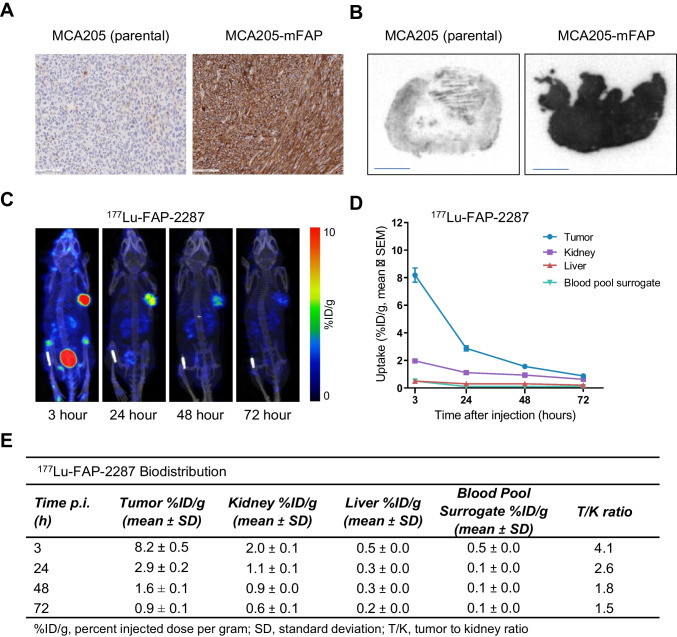
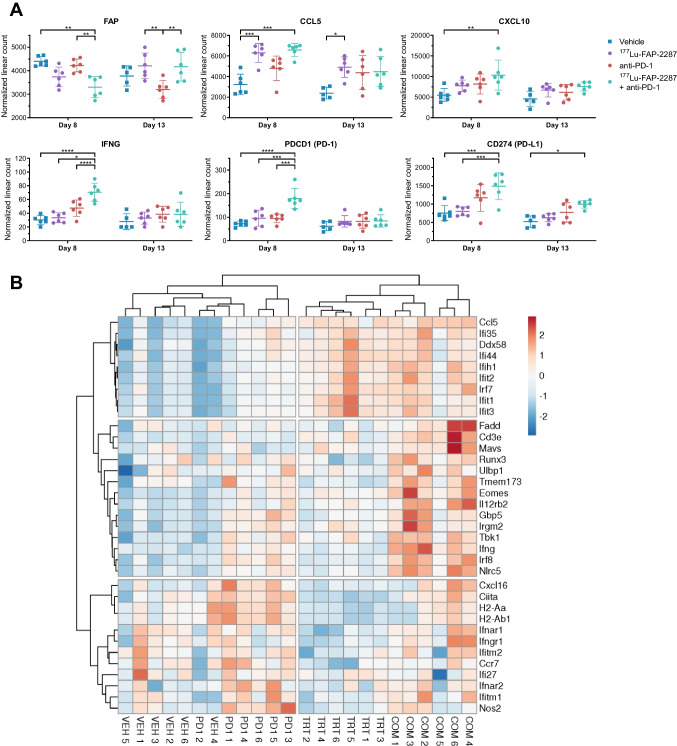
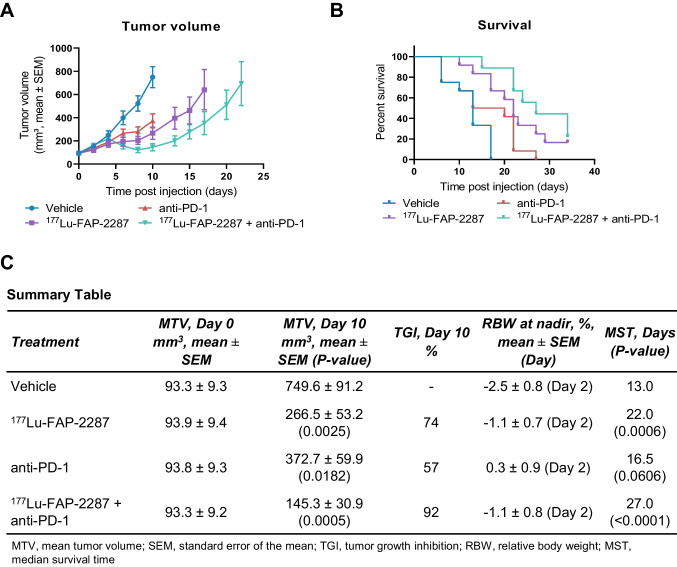
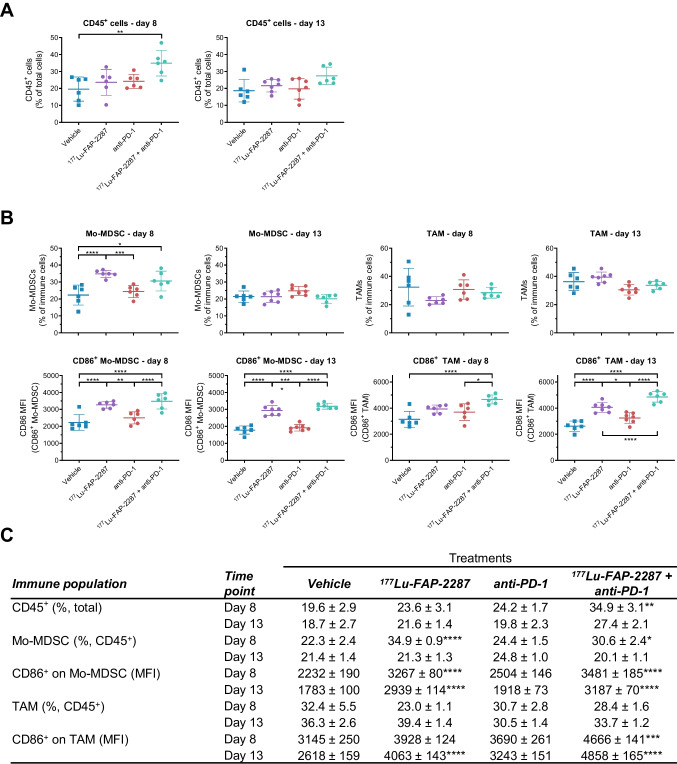
C57BL/6 mice bearing MCA205 mouse FAP-expressing tumors (MCA205-mFAP) were treated with Lu-FAP-2287, anti-PD-1, or both. Tumor uptake of Lu- FAP-2287 was assessed by SPECT/CT scanning, while therapeutic efficacy was measured by tumor volume and survival. Immune profiling of tumor infiltrates was evaluated through flow cytometry, RNA expression, and immunohistochemistry analyses.
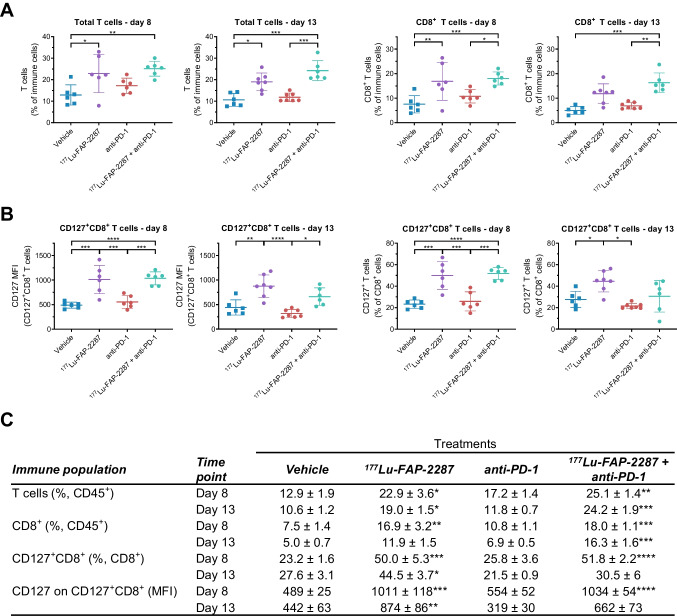
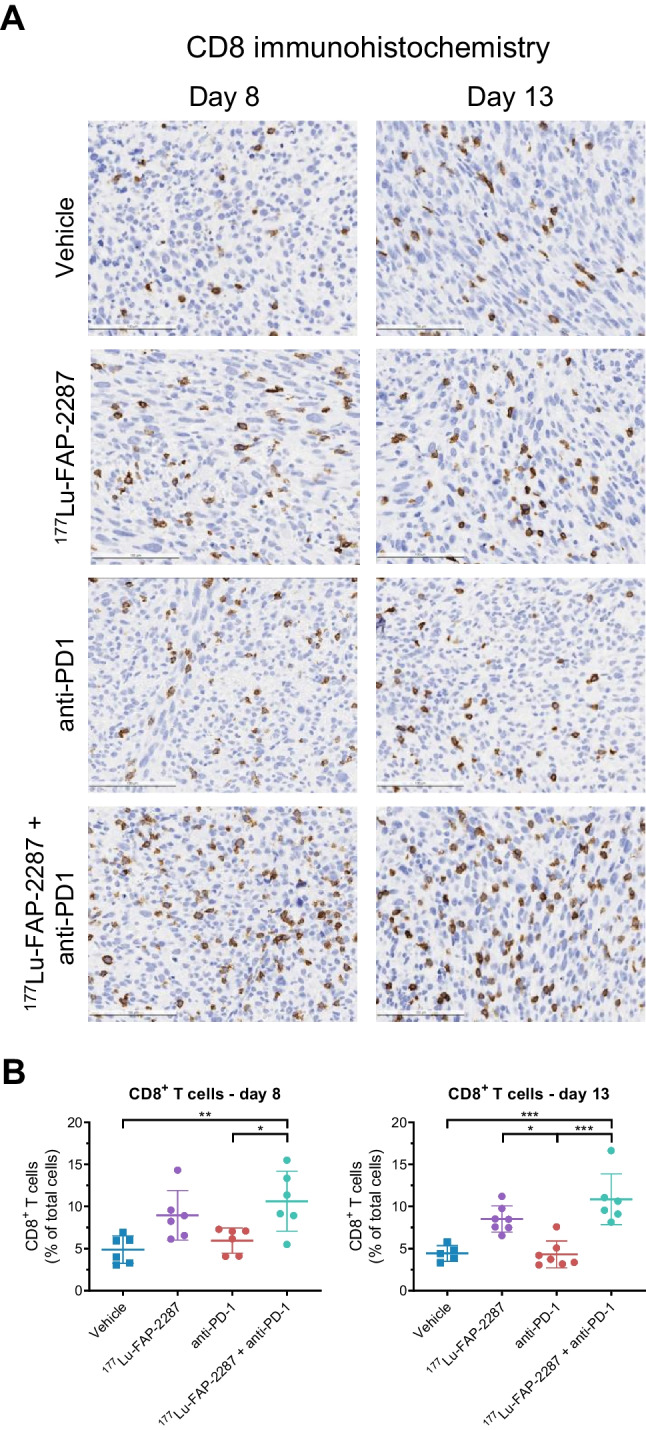
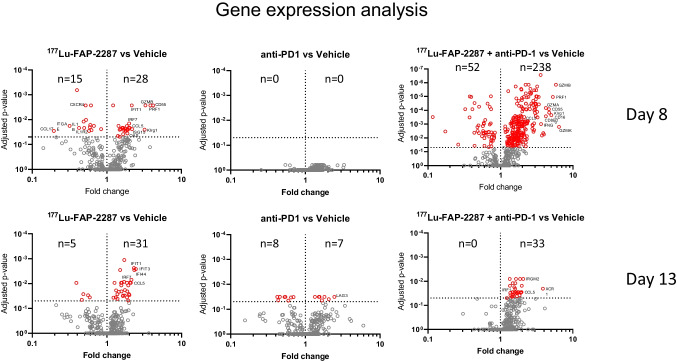
Lu-FAP-2287 rapidly accumulated in MCA205-mFAP tumors leading to significant tumor growth inhibition (TGI) and longer survival time. Significant TGI was also observed from anti-PD-1 and the combination. In flow cytometry analysis of tumors, Lu-FAP-2287 increased CD8 T cell infiltration which was maintained in the combination with anti-PD-1. The increase in CD8 T cells was accompanied by an induction of STING-mediated type I interferon response and higher levels of co-stimulatory molecules such as CD86.
In a preclinical model, FAP-targeted radiotherapy enhanced anti-PD-1-mediated TGI by modulating the TME and increasing the recruitment of tumor-infiltrating CD8 T cells. These findings provide a rationale for clinical studies of combined Lu-FAP-2286 radiotherapy and immune checkpoint inhibition in FAP-positive tumors.
FAP 是一种膜结合蛋白酶,因其在肿瘤中的高水平表达和在正常组织中的有限表达而被作为一种泛癌靶点进行研究。FAP-2286 是一种用于实体瘤的临床开发的放射性药物,由两个功能元件组成:一个针对 FAP 的肽和一个用于连接放射性同位素的螯合剂。在临床前,我们评估了 FAP-2287(FAP-2286 的鼠源替代品)与放射性核素镥-177(Lu)偶联作为单一疗法以及与 PD-1 靶向抗体联合治疗时的免疫调节和抗肿瘤疗效。
用 MCA205 小鼠 FAP 表达肿瘤(MCA205-mFAP)荷瘤的 C57BL/6 小鼠接受 Lu-FAP-2287、抗 PD-1 或两者联合治疗。通过 SPECT/CT 扫描评估 Lu-FAP-2287 在肿瘤中的摄取,通过肿瘤体积和生存时间来衡量治疗效果。通过流式细胞术、RNA 表达和免疫组化分析评估肿瘤浸润物的免疫特征。
Lu-FAP-2287 在 MCA205-mFAP 肿瘤中迅速积累,导致显著的肿瘤生长抑制(TGI)和更长的生存时间。抗 PD-1 和联合治疗也观察到显著的 TGI。在肿瘤的流式细胞术分析中,Lu-FAP-2287 增加了 CD8 T 细胞浸润,而与抗 PD-1 联合治疗则保持了这种浸润。CD8 T 细胞的增加伴随着 STING 介导的 I 型干扰素反应的诱导和更高水平的共刺激分子,如 CD86。
在临床前模型中,FAP 靶向放疗通过调节肿瘤微环境和增加肿瘤浸润性 CD8 T 细胞的募集,增强了抗 PD-1 介导的 TGI。这些发现为 FAP 阳性肿瘤中 Lu-FAP-2286 放疗和免疫检查点抑制联合治疗的临床研究提供了依据。