Kim Elle S, Scharpf Robert B, Garcia-Closas Montserrat, Visvanathan Kala, Velculescu Victor E, Chatterjee Nilanjan
Department of Biostatistics, Johns Hopkins Bloomberg School of Public Health, Baltimore, MD, 21205, USA.
Department of Oncology, The Sidney Kimmel Comprehensive Cancer Center, Johns Hopkins University School of Medicine, Baltimore, MD, 21205, USA.
NPJ Precis Oncol. 2023 Apr 22;7(1):39. doi: 10.1038/s41698-023-00377-w.
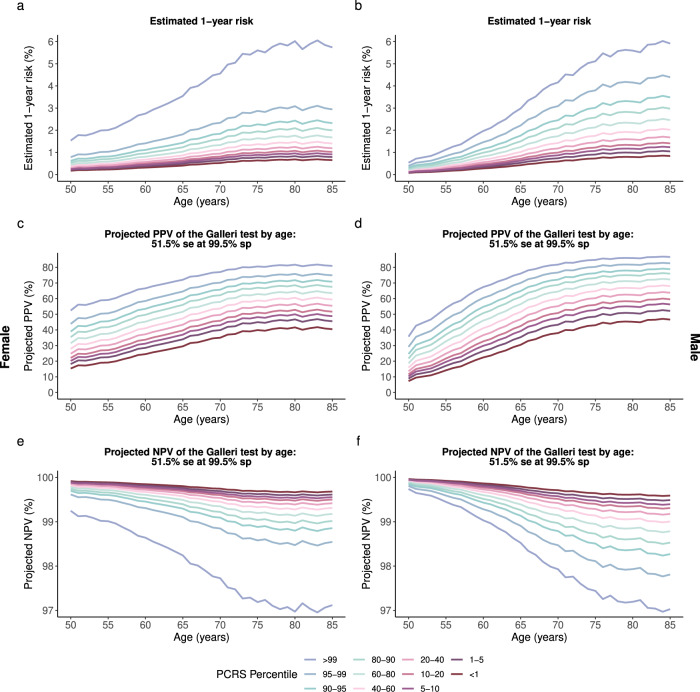
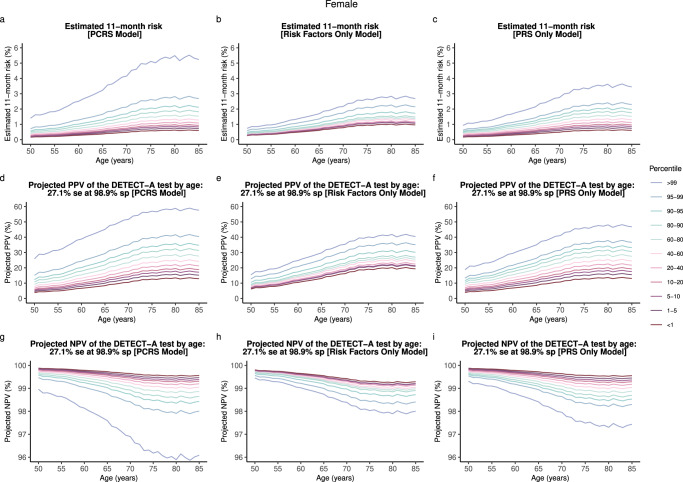
Our proof-of-concept study reveals the potential of risk stratification by the combined effects of age, polygenic risk scores (PRS), and non-genetic risk factors in increasing the risk-benefit balance of rapidly emerging non-invasive multicancer early detection (MCED) liquid biopsy tests. We develop and validate sex-specific pan-cancer risk scores (PCRSs), defined by the combination of body mass index, smoking, family history of cancers, and cancer-specific polygenic risk scores (PRSs), to predict the absolute risk of developing at least one of the many common cancer types. We demonstrate the added value of PRSs in improving the predictive performance of the risk factors only model and project the positive and negative predictive values for two promising multicancer screening tests across risk strata defined by age and PCRS.
我们的概念验证研究揭示了通过年龄、多基因风险评分(PRS)和非基因风险因素的综合作用进行风险分层,在提高快速兴起的非侵入性多癌早期检测(MCED)液体活检检测的风险效益平衡方面的潜力。我们开发并验证了性别特异性泛癌风险评分(PCRS),其由体重指数、吸烟、癌症家族史和癌症特异性多基因风险评分(PRS)组合定义,以预测患多种常见癌症类型中至少一种的绝对风险。我们证明了PRS在改善仅风险因素模型的预测性能方面的附加价值,并预测了两种有前景的多癌筛查检测在由年龄和PCRS定义的风险分层中的阳性和阴性预测值。