Ciołczyk-Wierzbicka Dorota, Krawczyk Agnieszka, Zarzycka Marta, Zemanek Grzegorz, Wierzbicki Karol
Chair of Medical Biochemistry, Jagiellonian University Medical College, Ul. Kopernika 7, 31-034, Kraków, Poland.
Department of Cardiovascular Surgery and Transplantology, Institute of Cardiology, Jagiellonian University, John Paul II Hospital, Ul. Prądnicka 80, 31-202, Kraków, Poland.
J Cell Commun Signal. 2023 Sep;17(3):975-989. doi: 10.1007/s12079-023-00748-9. Epub 2023 Apr 25.
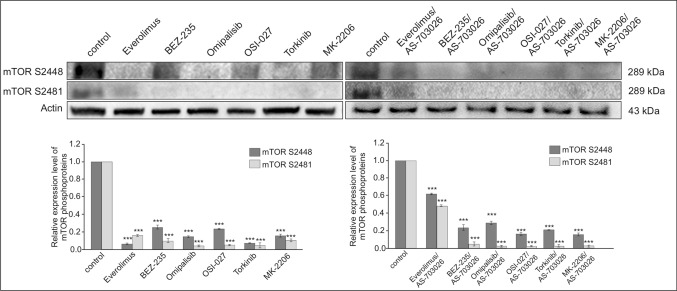
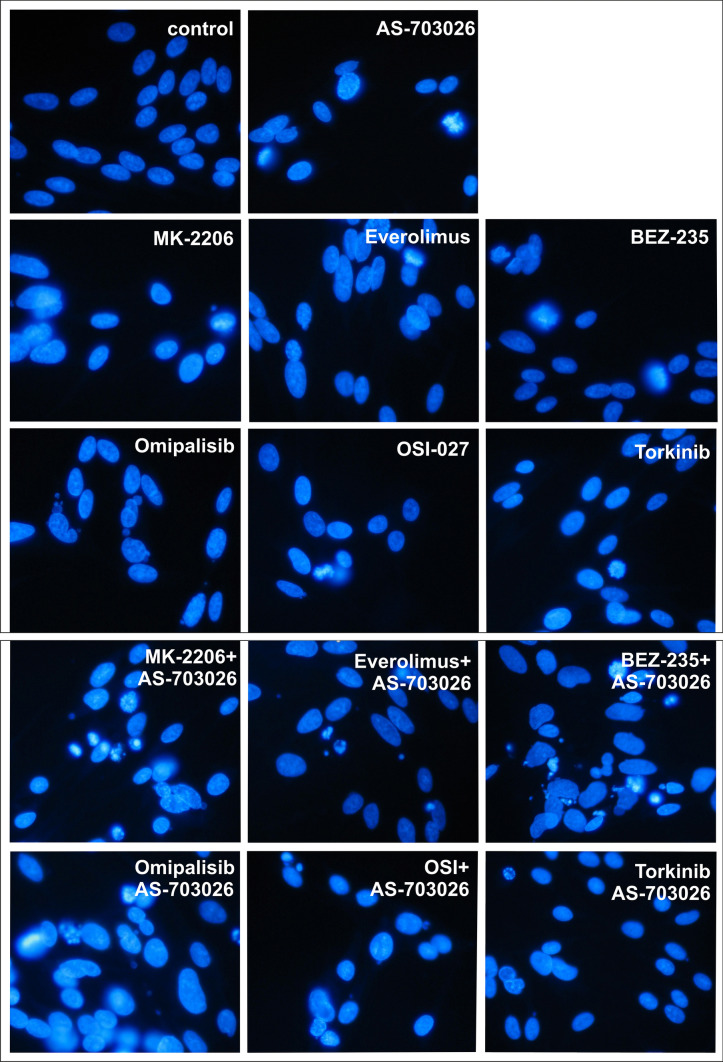
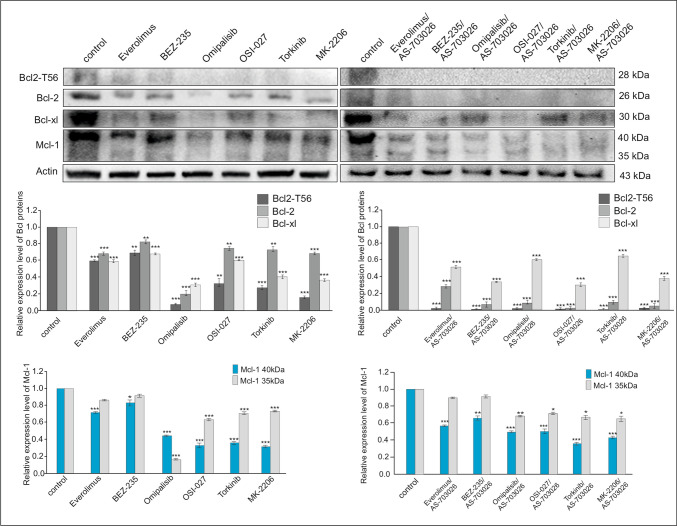
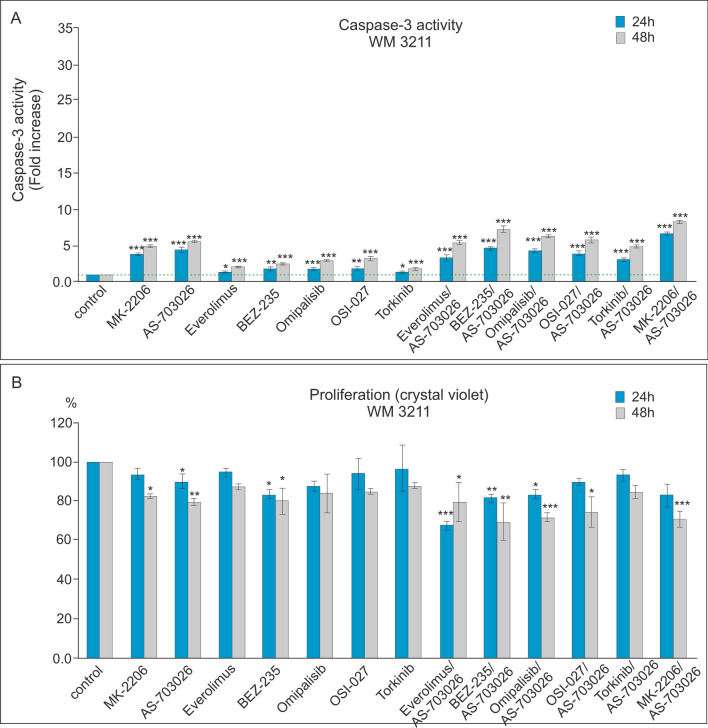
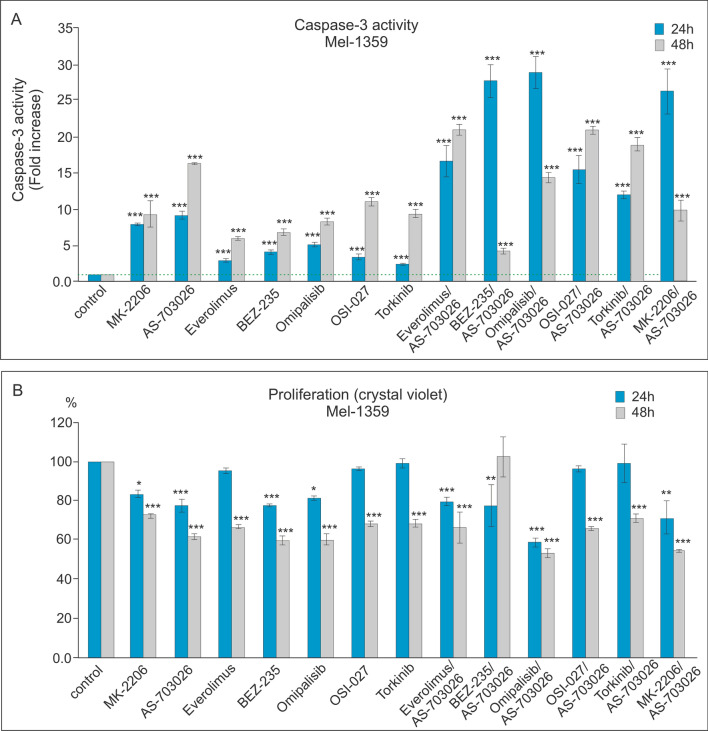
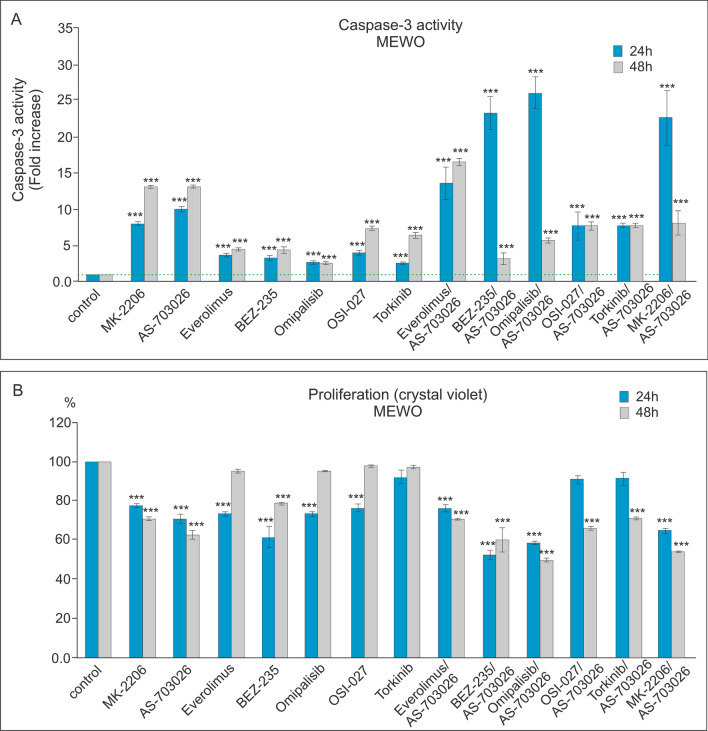
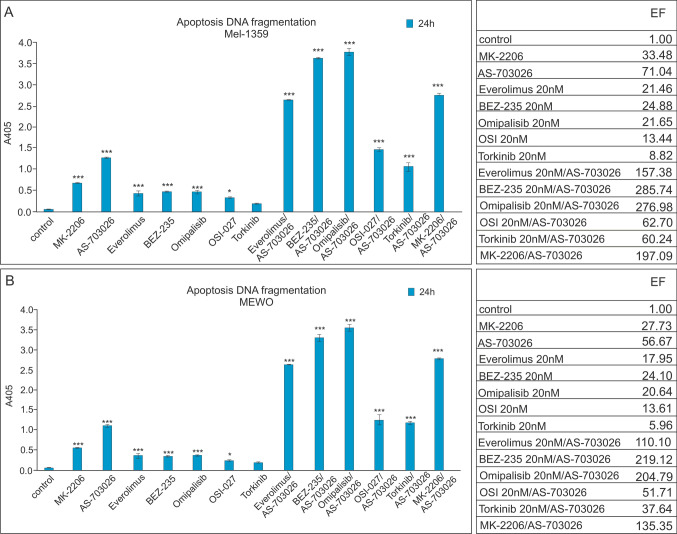
Many signaling pathways are involved in the mammalian target of rapamycin (mTOR), and this serine/threonine kinase regulates the most important cellular processes such as cell proliferation, autophagy, and apoptosis. The subject of this research was the effect of protein kinase inhibitors involved in the AKT, MEK, and mTOR kinase signaling pathways on the expression of pro-survival proteins, activity of caspase-3, proliferation, and induction of apoptosis in melanoma cells. The following inhibitors were used: protein kinase inhibitors such as AKT-MK-2206, MEK-AS-703026, mTOR-everolimus and Torkinib, as well as dual PI3K and mTOR inhibitor-BEZ-235 and Omipalisib, and mTOR1/2-OSI-027 inhibitor in single-mode and their combinations with MEK1/2 kinase inhibitor AS-703026. The obtained results confirm the synergistic effect of nanomolar concentrations of mTOR inhibitors, especially the dual PI3K and mTOR inhibitors (Omipalisib, BEZ-235) in combination with the MAP kinase inhibitor (AS-703026) in the activation of caspase 3, induction of apoptosis, and inhibition of proliferation in melanoma cell lines. Our previous and current studies confirm the importance of the mTOR signal transduction pathway in the neoplastic transformation process. Melanoma is a case of a very heterogeneous neoplasm, which causes great difficulties in treating this neoplasm in an advanced stage, and the standard approach to this topic does not bring the expected results. There is a need for research on the search for new therapeutic strategies aimed at particular groups of patients. Effect of three generations of mTOR kinase inhibitors on caspase-3 activity, apoptosis and proliferation in melanoma cell lines.
许多信号通路都与雷帕霉素哺乳动物靶点(mTOR)有关,这种丝氨酸/苏氨酸激酶调节着细胞增殖、自噬和凋亡等最重要的细胞过程。本研究的主题是参与AKT、MEK和mTOR激酶信号通路的蛋白激酶抑制剂对黑色素瘤细胞中促生存蛋白表达、半胱天冬酶-3活性、增殖及凋亡诱导的影响。使用了以下抑制剂:蛋白激酶抑制剂,如AKT-MK-2206、MEK-AS-703026、mTOR-依维莫司和托瑞替尼,以及双PI3K和mTOR抑制剂-BEZ-235和奥米帕利,还有单模式的mTOR1/2-OSI-027抑制剂及其与MEK1/2激酶抑制剂AS-703026的组合。所得结果证实了纳摩尔浓度的mTOR抑制剂,尤其是双PI3K和mTOR抑制剂(奥米帕利、BEZ-235)与MAP激酶抑制剂(AS-703026)联合使用对黑色素瘤细胞系中半胱天冬酶3的激活、凋亡诱导和增殖抑制具有协同作用。我们之前和当前的研究证实了mTOR信号转导通路在肿瘤转化过程中的重要性。黑色素瘤是一种非常异质性的肿瘤,这给晚期肿瘤的治疗带来了很大困难,而针对该主题的标准方法并未带来预期效果。需要针对特定患者群体寻找新治疗策略的研究。三代mTOR激酶抑制剂对黑色素瘤细胞系中半胱天冬酶-3活性、凋亡和增殖的影响。