Rana Natasha, Aziz Marwa A, Serya Rabah A T, Lasheen Deena S, Samir Nermin, Wuest Frank, Abouzid Khaled A M, West F G
Department of Chemistry, University of Alberta, Edmonton, AB T6G 2G2, Canada.
Department of Oncology, University of Alberta-Cross Cancer Institute, Edmonton, AB T6G IZ2, Canada.
ACS Bio Med Chem Au. 2022 Nov 7;3(1):51-61. doi: 10.1021/acsbiomedchemau.2c00056. eCollection 2023 Feb 15.
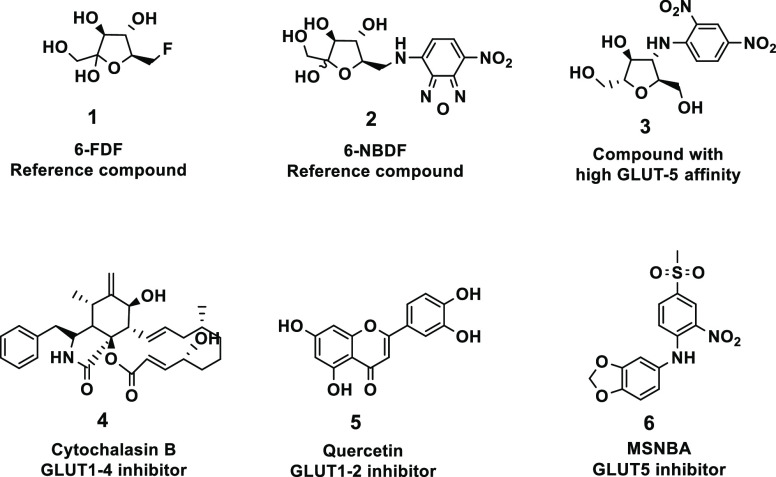
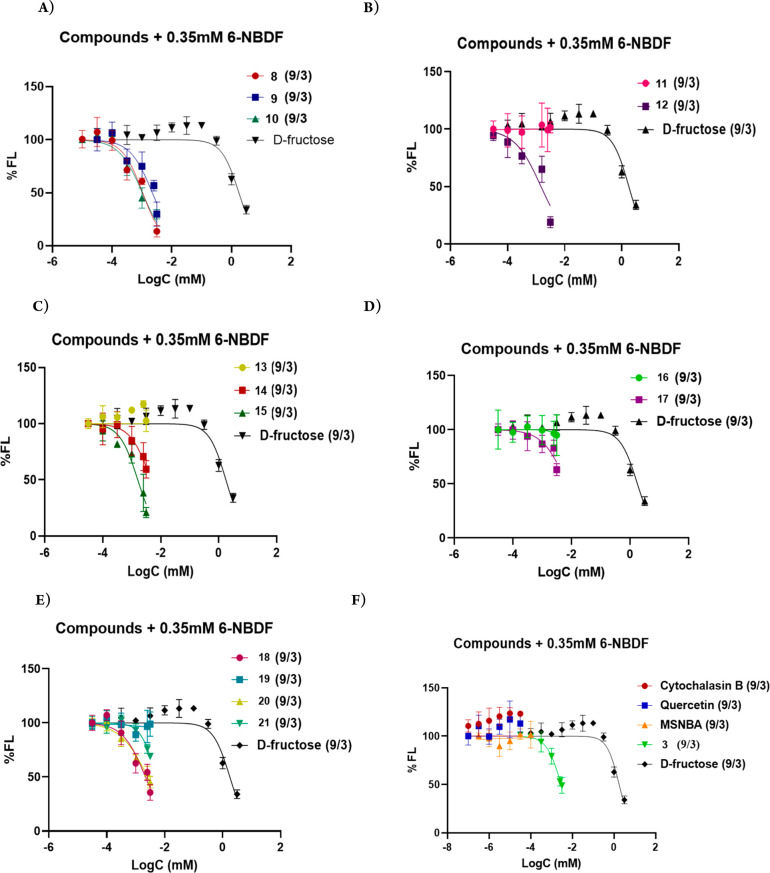
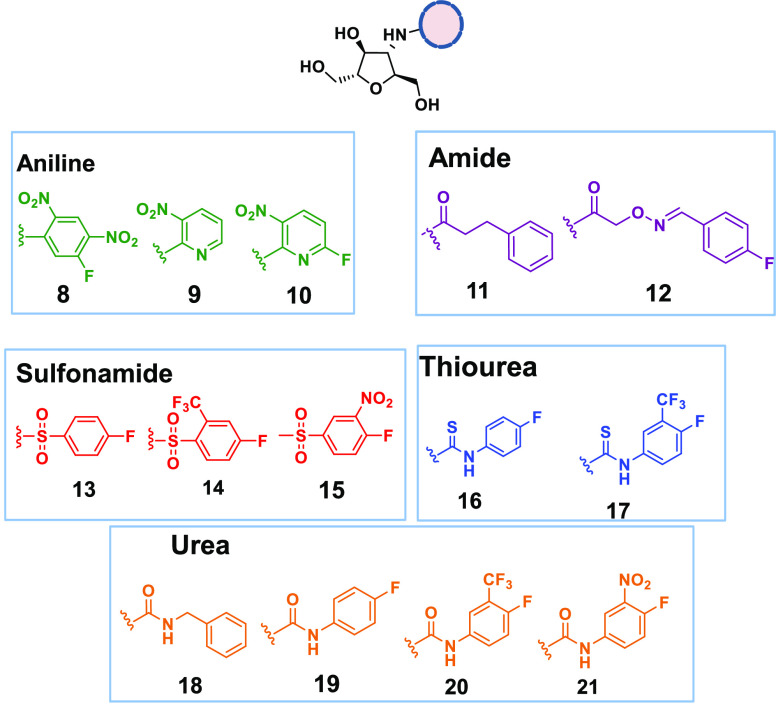
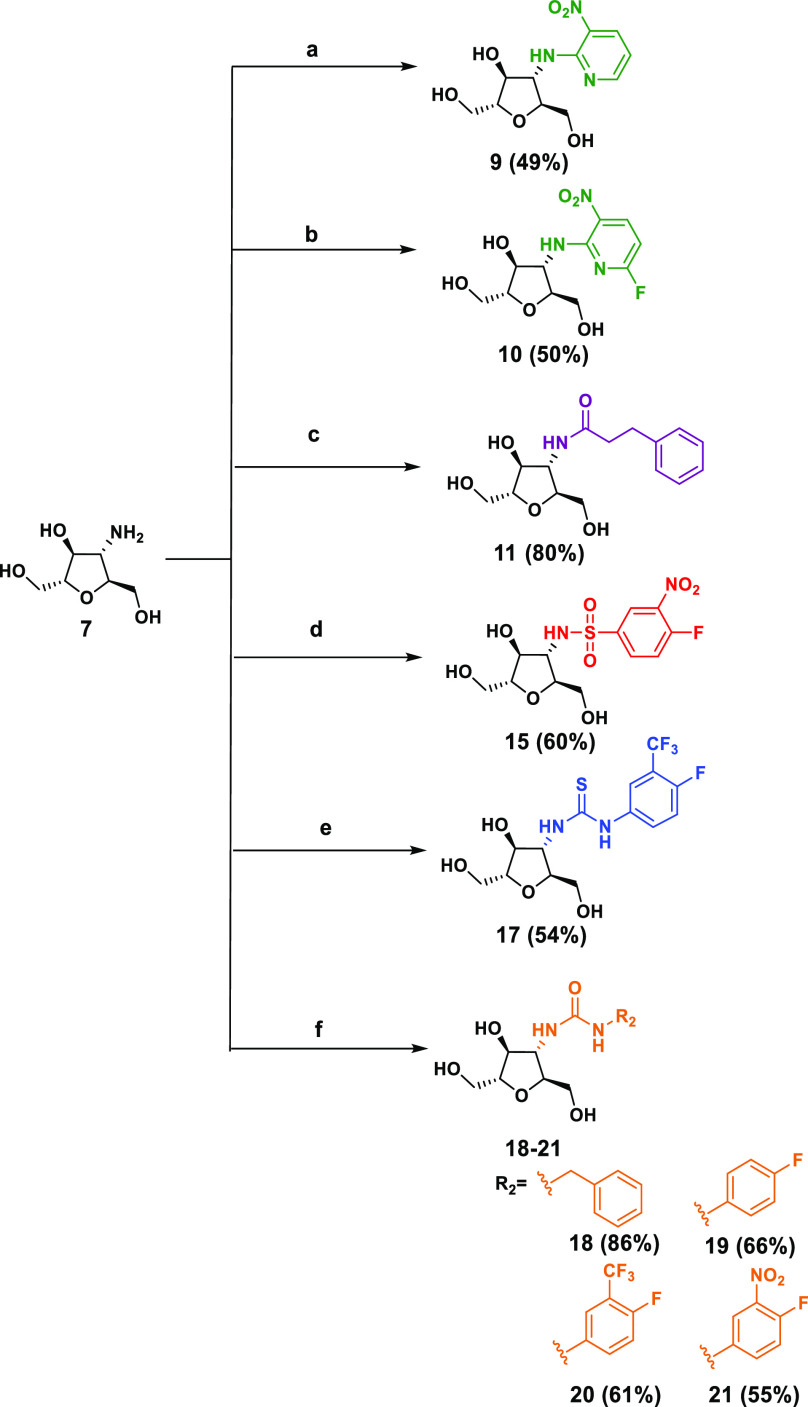
Rapid cell division and reprogramming of energy metabolism are two crucial hallmarks of cancer cells. In humans, hexose trafficking into cancer cells is mainly mediated through a family of glucose transporters (GLUTs), which are facilitative transmembrane hexose transporter proteins. In several breast cancers, fructose can functionally substitute glucose as an alternative energy supply supporting rapid proliferation. GLUT5, the principal fructose transporter, is overexpressed in human breast cancer cells, providing valuable targets for breast cancer detection as well as selective targeting of anticancer drugs using structurally modified fructose mimics. Herein, a novel fluorescence assay was designed aiming to screen a series of C-3 modified 2,5-anhydromannitol (2,5-AM) compounds as d-fructose analogues to explore GLUT5 binding site requirements. The synthesized probes were evaluated for their ability to inhibit the uptake of the fluorescently labeled d-fructose derivative 6-NBDF into EMT6 murine breast cancer cells. A few of the compounds screened demonstrated highly potent single-digit micromolar inhibition of 6-NBDF cellular uptake, which was substantially more potent than the natural substrate d-fructose, at a level of 100-fold or more. The results of this assay are consistent with those obtained from a previous study conducted for some selected compounds against F-labeled d-fructose-based probe 6-[F]FDF, indicating the reproducibility of the current non-radiolabeled assay. These highly potent compounds assessed against 6-NBDF open avenues for the development of more potent probes targeting GLUT5-expressing cancerous cells.
快速的细胞分裂和能量代谢重编程是癌细胞的两个关键特征。在人类中,己糖进入癌细胞主要通过一类葡萄糖转运蛋白(GLUTs)介导,这些蛋白是促进性跨膜己糖转运蛋白。在几种乳腺癌中,果糖可以在功能上替代葡萄糖作为支持快速增殖的替代能量来源。主要的果糖转运蛋白GLUT5在人乳腺癌细胞中过表达,这为乳腺癌检测以及使用结构修饰的果糖类似物对抗癌药物进行选择性靶向提供了有价值的靶点。在此,设计了一种新型荧光测定法,旨在筛选一系列C-3修饰的2,5-脱水甘露醇(2,5-AM)化合物作为d-果糖类似物,以探索GLUT5结合位点的要求。评估了合成探针抑制荧光标记的d-果糖衍生物6-NBDF进入EMT6小鼠乳腺癌细胞的摄取能力。筛选出的几种化合物对6-NBDF细胞摄取表现出高效的个位数微摩尔抑制作用,其效力比天然底物d-果糖高100倍或更多。该测定结果与先前对一些选定化合物针对F标记的基于d-果糖的探针6-[F]FDF进行的研究结果一致,表明当前非放射性标记测定法的可重复性。这些针对6-NBDF评估的高效化合物为开发更有效的靶向表达GLUT5的癌细胞的探针开辟了道路。