Department of Pathology, University of Iowa Hospitals and Clinics, Iowa City, Iowa, USA.
J Clin Lab Anal. 2023 Apr;37(7):e24887. doi: 10.1002/jcla.24887. Epub 2023 Apr 27.
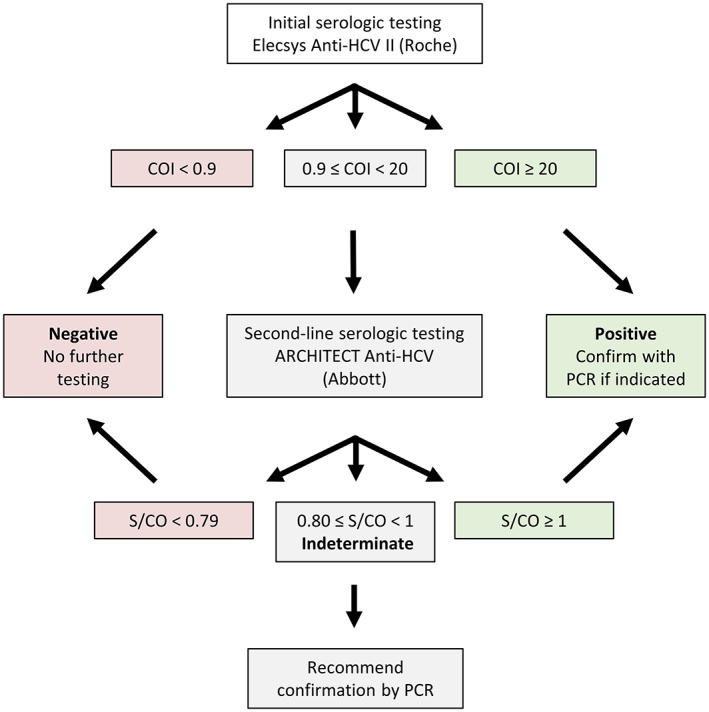
Screening for hepatitis C virus (HCV) is performed by testing for anti-HCV antibodies, which may yield false-positive results leading to additional testing and other downstream consequences for the patient. We report our experience in a low prevalence population (<0.05%) using a two-assay algorithm aimed at testing specimens with borderline or weak positive anti-HCV reactivity in the screening assay by a second anti-HCV assay prior to confirming positive anti-HCV results with RT-PCR.
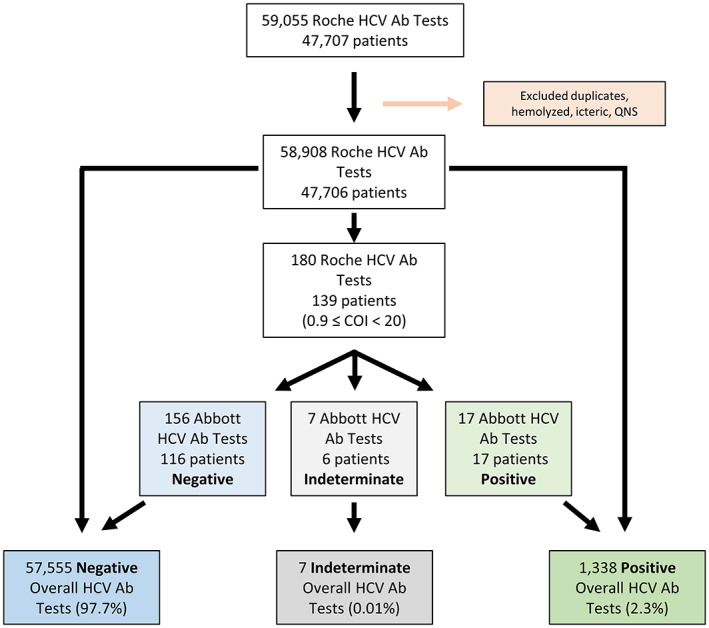
Retrospective analysis of 58,908 plasma samples was obtained over a 5-year period. Samples were initially tested using the Elecsys Anti-HCV II assay (Roche Diagnostics), with borderline or weakly positive results (defined in our algorithm as a Roche cutoff index of 0.9-19.99) reflexively analyzed using the Architect Anti-HCV assay (Abbott Diagnostics). The Abbott anti-HCV results dictated the final anti-HCV interpretation for reflexed samples.
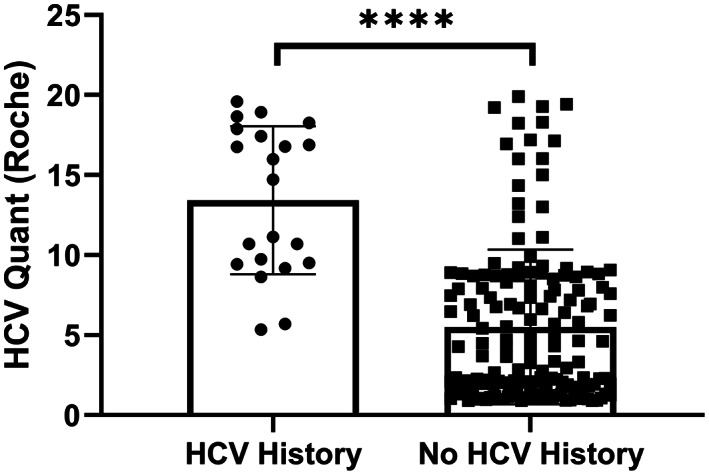
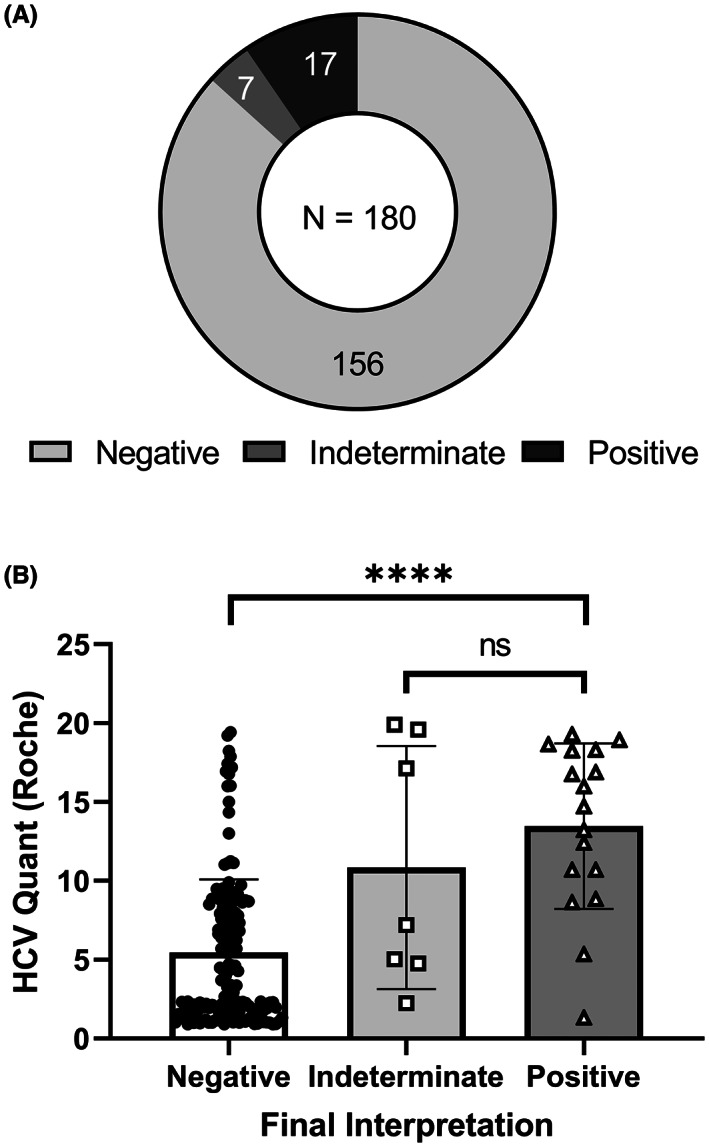
Our testing algorithm resulted in 180 samples requiring second-line testing, with final anti-HCV results interpreted as 9% positive, 87% negative, and 4% indeterminate. The positive predictive value (PPV) of a weakly positive Roche result was 12%, which was significantly lower than the PPV using our two-assay approach (65%).
The incorporation of a two-assay serological testing algorithm in a low prevalence population provides a cost-effective method of improving the PPV of HCV screening in specimens with borderline or weakly positive anti-HCV results.
丙型肝炎病毒 (HCV) 的筛查通过检测抗-HCV 抗体进行,这可能导致假阳性结果,从而导致患者需要进行额外的检测和其他下游检测。我们报告了在低流行人群(<0.05%)中使用两阶段检测算法的经验,该算法旨在通过第二种抗-HCV 检测来检测筛查检测中边界或弱阳性抗-HCV 反应性的标本,然后再使用 RT-PCR 确认阳性抗-HCV 结果。
回顾性分析了 58908 份血浆样本,这些样本是在 5 年内获得的。最初使用 Elecsys Anti-HCV II 检测试剂盒(罗氏诊断)对样本进行检测,将边界或弱阳性结果(我们的算法中定义为罗氏检测试剂盒的 cutoff index 为 0.9-19.99)作为反射性分析,使用 Architect Anti-HCV 检测试剂盒(雅培诊断)进行分析。雅培抗-HCV 的结果决定了反射性样本的最终抗-HCV 解释。
我们的检测算法导致 180 个样本需要进行二线检测,最终抗-HCV 结果解释为 9%阳性、87%阴性和 4%不确定。弱阳性罗氏检测结果的阳性预测值(PPV)为 12%,明显低于我们两阶段检测方法(65%)的 PPV。
在低流行人群中引入两阶段血清学检测算法是一种具有成本效益的方法,可以提高边界或弱阳性抗-HCV 结果标本的 HCV 筛查的 PPV。