Buckley Nicholas, Davey Paul, Jensen Lynn, Baptist Kevin, Jacques Angela, Jansen Bas, Campbell Amity, Downs Jenny
Curtin School of Allied Health, Curtin University, Perth 6102, Australia.
Telethon Kids Institute, Perth 6009, Australia.
Bioengineering (Basel). 2023 Mar 25;10(4):408. doi: 10.3390/bioengineering10040408.
The assessment of sleep biomechanics (comprising movement and position during sleep) is of interest in a wide variety of clinical and research settings. However, there is no standard method by which sleep biomechanics are measured. This study aimed to (1) compare the intra- and inter-rater reliability of the current clinical standard, manually coded overnight videography, and (2) compare sleep position recorded using overnight videography to sleep position recorded using the XSENS DOT wearable sensor platform.
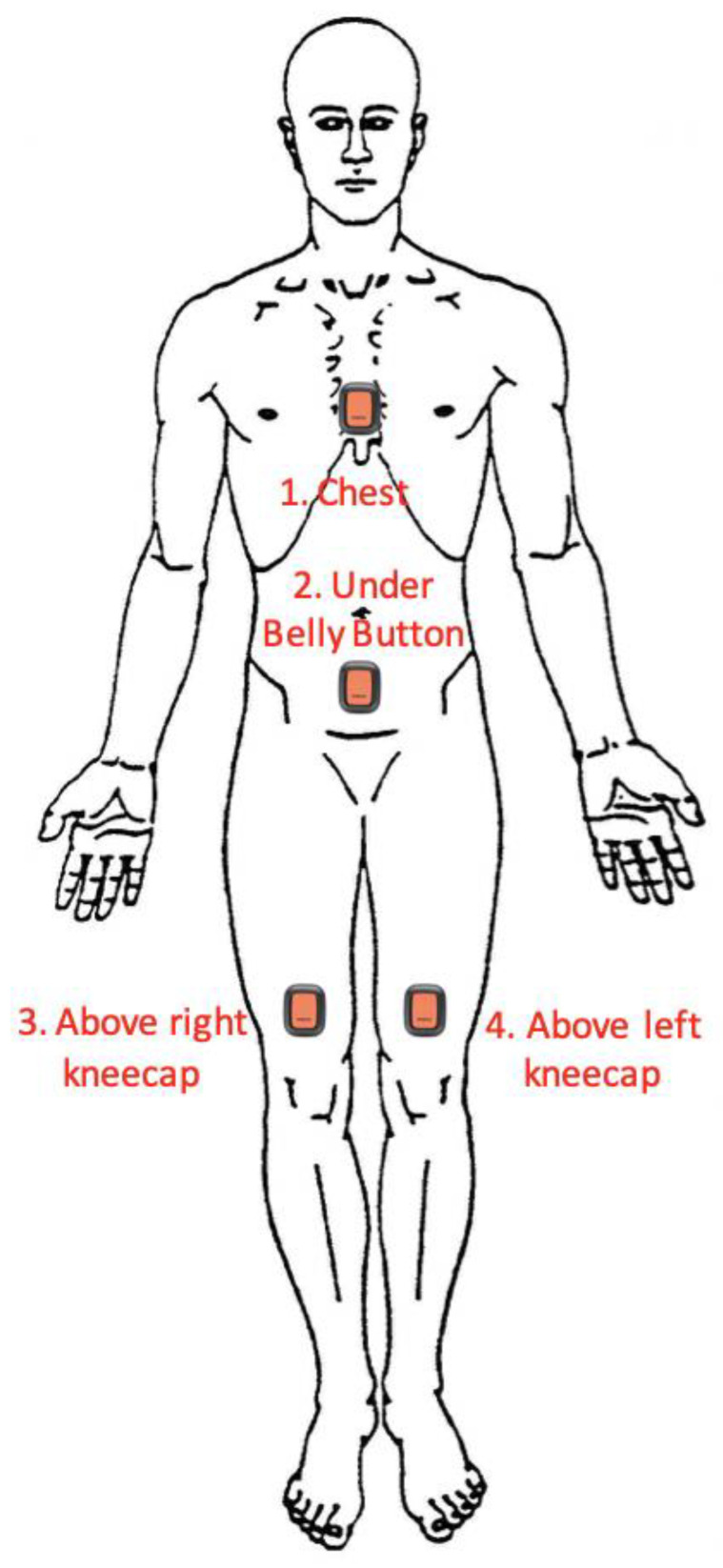
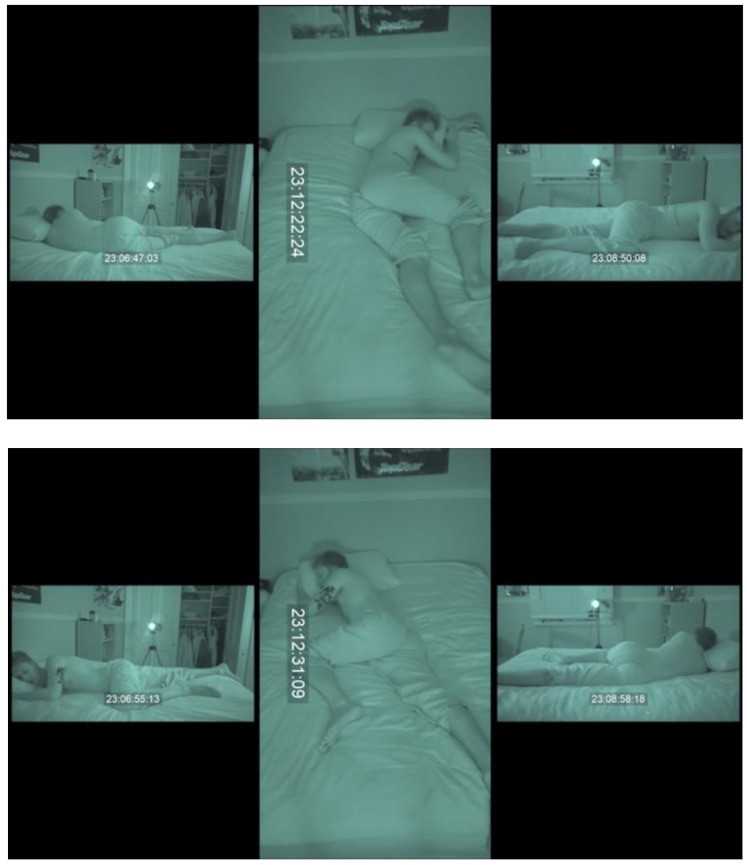
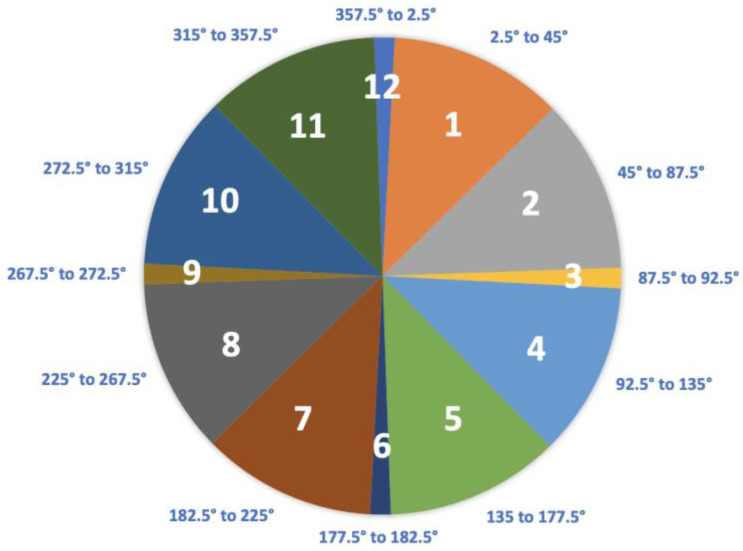
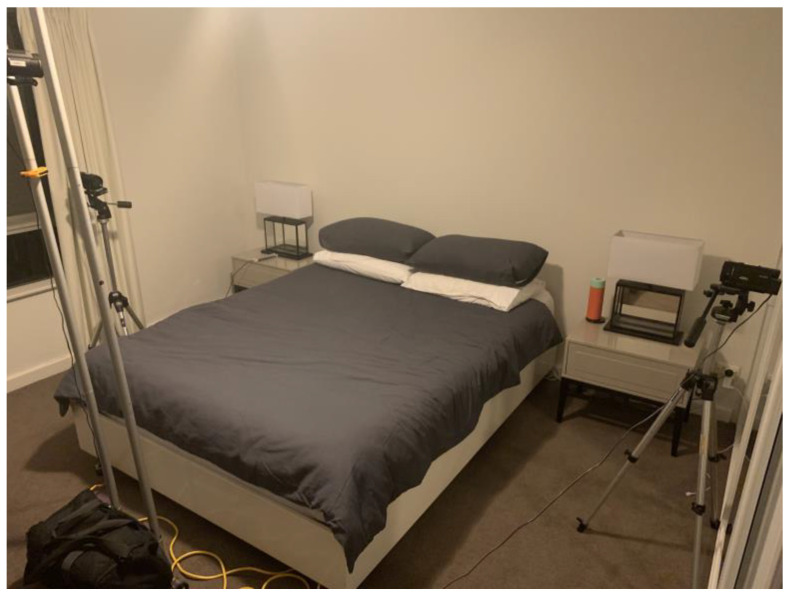
Ten healthy adult volunteers slept for one night with XSENS DOT units in situ (on their chest, pelvis, and left and right thighs), with three infrared video cameras recording concurrently. Ten clips per participant were edited from the video. Sleeping position in each clip was coded by six experienced allied health professionals using the novel Body Orientation During Sleep (BODS) Framework, comprising 12 sections in a 360-degree circle. Intra-rater reliability was assessed by calculating the differences between the BODS ratings from repeated clips and the percentage who were rated with a maximum of one section of the XSENS DOT value; the same methodology was used to establish the level of agreement between the XSENS DOT and allied health professional ratings of overnight videography. Bennett's S-Score was used to assess inter-rater reliability.
High intra-rater reliability (90% of ratings with maximum difference of one section) and moderate inter-rater reliability (Bennett's S-Score 0.466 to 0.632) were demonstrated in the BODS ratings. The raters demonstrated high levels of agreement overall with the XSENS DOT platform, with 90% of ratings from allied health raters being within the range of at least 1 section of the BODS (as compared to the corresponding XSENS DOT produced rating).
The current clinical standard for assessing sleep biomechanics, manually rated overnight videography (as rated using the BODS Framework) demonstrated acceptable intra- and inter-rater reliability. Further, the XSENS DOT platform demonstrated satisfactory levels of agreement as compared to the current clinical standard, providing confidence for its use in future studies of sleep biomechanics.
睡眠生物力学评估(包括睡眠期间的运动和姿势)在各种临床和研究环境中都备受关注。然而,目前尚无测量睡眠生物力学的标准方法。本研究旨在:(1)比较当前临床标准(手动编码的夜间摄像)的评分者内和评分者间信度;(2)比较使用夜间摄像记录的睡眠姿势与使用XSENS DOT可穿戴传感器平台记录的睡眠姿势。
10名健康成年志愿者佩戴XSENS DOT设备(分别置于胸部、骨盆以及左右大腿)睡了一晚,同时有三台红外摄像机进行同步记录。从视频中为每位参与者编辑10个片段。六名经验丰富的专职医疗人员使用新颖的睡眠期间身体方位(BODS)框架对每个片段中的睡眠姿势进行编码,该框架在360度圆周内包含12个部分。通过计算重复片段的BODS评分之间的差异以及评分与XSENS DOT值最多相差一个部分的百分比来评估评分者内信度;使用相同方法确定XSENS DOT与专职医疗人员对夜间摄像的评分之间的一致性水平。使用贝内特S评分来评估评分者间信度。
BODS评分显示出较高的评分者内信度(90%的评分差异最大为一个部分)和中等的评分者间信度(贝内特S评分为0.466至0.632)。评分者总体上与XSENS DOT平台显示出高度一致性,专职医疗评分者90%的评分在BODS至少一个部分的范围内(与相应的XSENS DOT产生的评分相比)。
用于评估睡眠生物力学的当前临床标准,即手动评分的夜间摄像(使用BODS框架进行评分)显示出可接受的评分者内和评分者间信度。此外,与当前临床标准相比,XSENS DOT平台显示出令人满意的一致性水平,为其在未来睡眠生物力学研究中的应用提供了信心。