Lu Huajie, Wang Rui, Chen Jing, Ou Yuzhe, Zhao Maolin, Zhang Biqiang
College of Marine Sciences, Shanghai Ocean University, Shanghai 201306, China.
Key Laboratory of Marine Ecological Monitoring and Restoration Technologies, MNRs, Shanghai 201306, China.
Biology (Basel). 2023 Apr 4;12(4):551. doi: 10.3390/biology12040551.
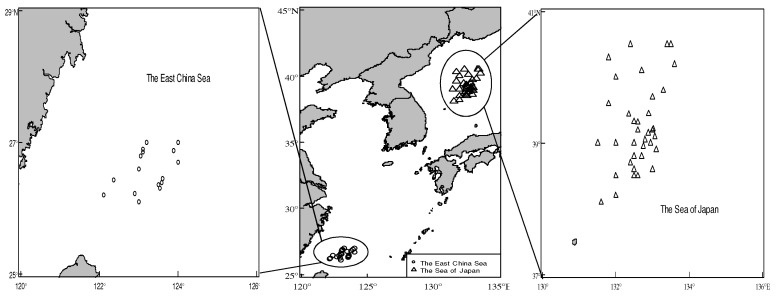
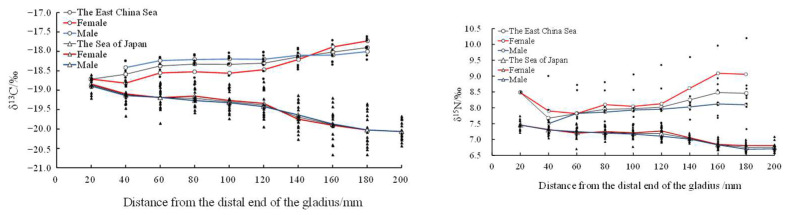
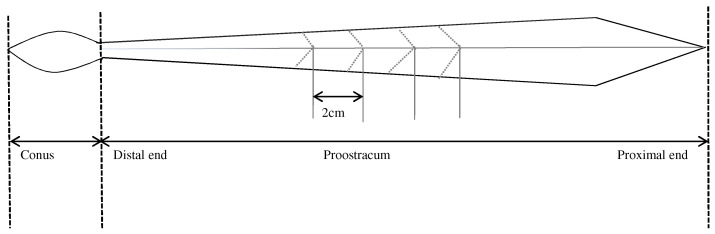
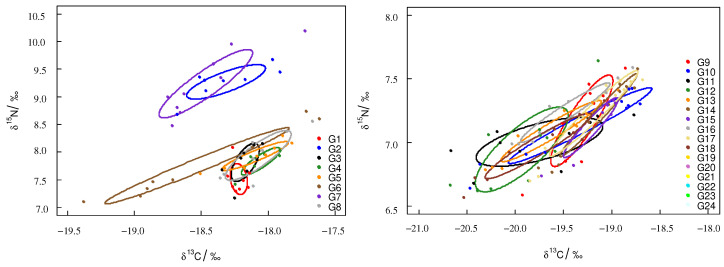
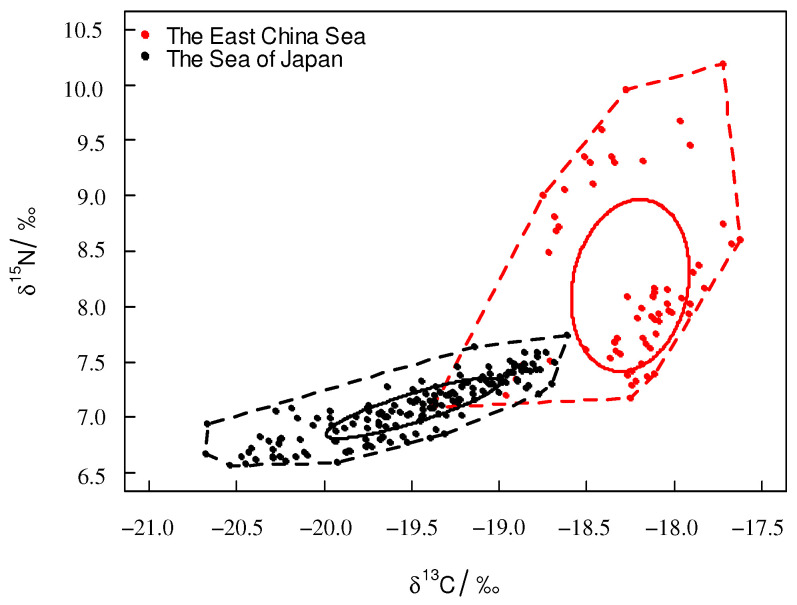
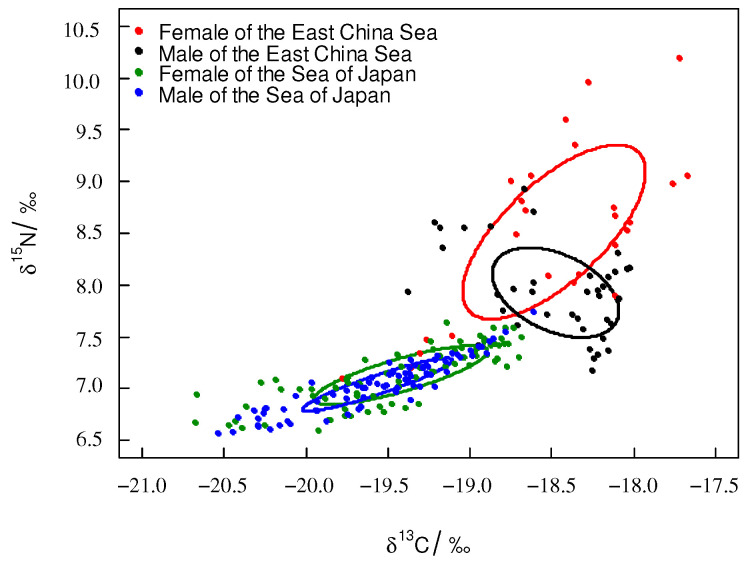
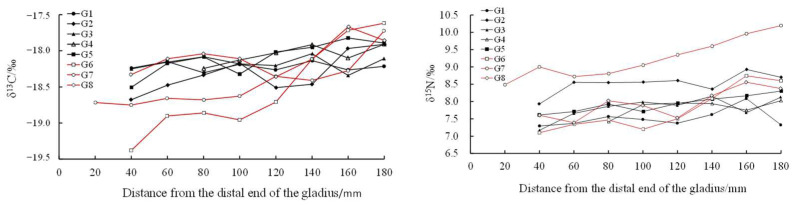
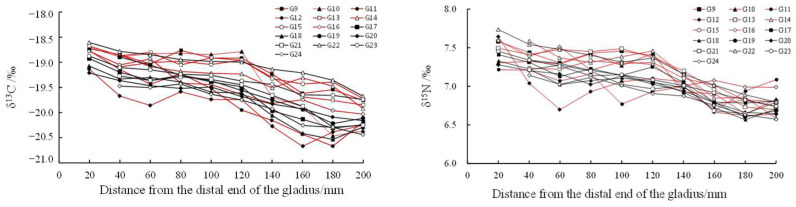
The Japanese flying squid () is an important cephalopod in the northwest Pacific Ocean. In this study, the proostracum of the gladius of samples collected by Chinese squid fishing vessels in the East China Sea and the Sea of Japan in August and December 2018 were continuously cut, and stable isotope values of the cut fragments were used to analyze the migration path and feeding ecology of . The results showed that when the proostracum grew to 120 mm from the distal end, began to migrate. In the East China Sea, migrated to low latitudes and nearshore areas, and the trophic level of their food showed no large changes during migration. In the Sea of Japan, migrated to high latitudes and offshore areas, and the trophic level of their food showed a decreasing trend during migration. There was no significant difference in migration or feeding ecology between females and males, but the competitive capacity of the females may be stronger than that of the males. The results provided a scientific basis for the scientific management and development of resources.
日本枪乌贼是西北太平洋一种重要的头足类动物。在本研究中,对2018年8月和12月中国鱿鱼捕捞船在东海和日本海采集的样本的角质颚的前鳍进行连续切割,利用切割片段的稳定同位素值分析日本枪乌贼的洄游路径和摄食生态。结果表明,当角质颚前鳍从远端长到120毫米时,日本枪乌贼开始洄游。在东海,日本枪乌贼洄游到低纬度和近岸区域,其食物的营养级在洄游过程中没有大的变化。在日本海,日本枪乌贼洄游到高纬度和近海区域,其食物的营养级在洄游过程中呈下降趋势。雌雄个体在洄游或摄食生态方面没有显著差异,但雌性的竞争能力可能比雄性更强。研究结果为日本枪乌贼资源的科学管理和开发提供了科学依据。