Yuan Jingyao, Qin Fang, He Zhiyong, Zeng Maomao, Wang Zhaojun, Chen Jie
State Key Laboratory of Food Science and Technology, Jiangnan University, Wuxi 214122, China.
International Joint Laboratory on Food Safety, Jiangnan University, Wuxi 214122, China.
Foods. 2023 Apr 15;12(8):1650. doi: 10.3390/foods12081650.
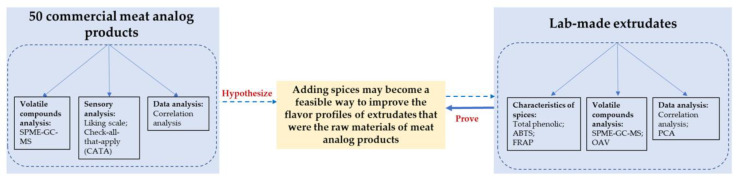
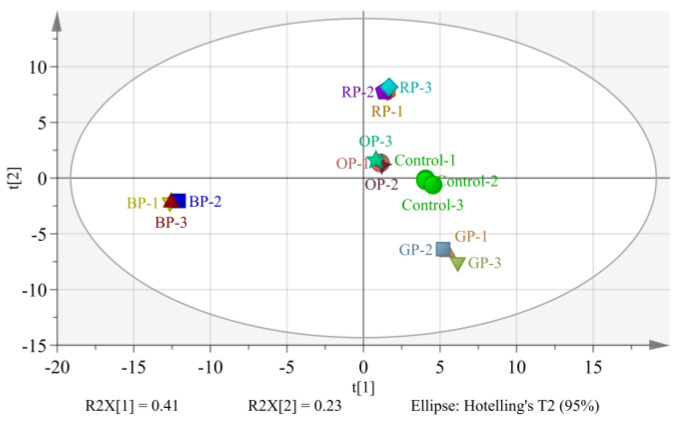
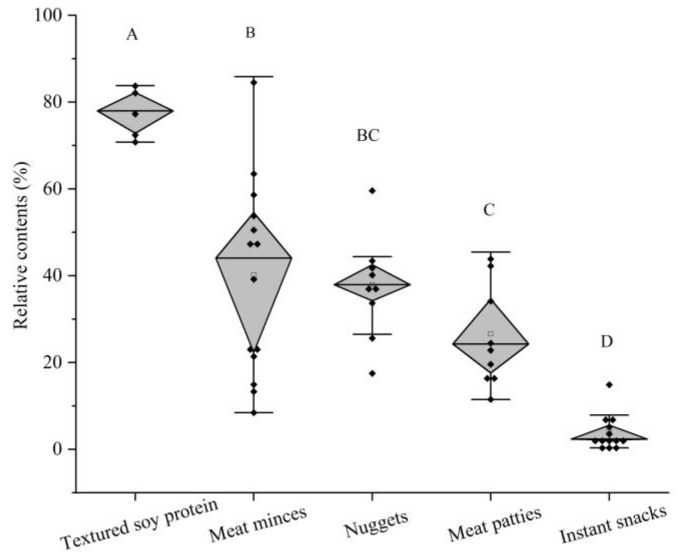
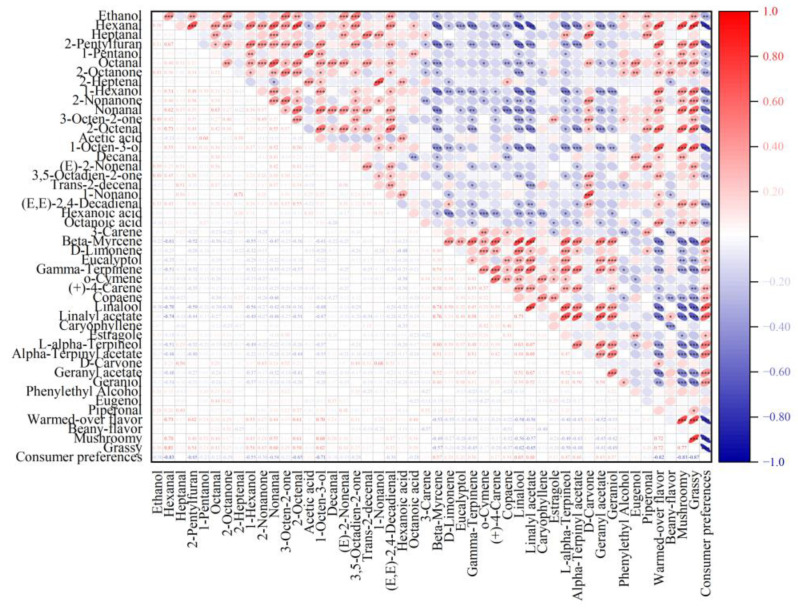
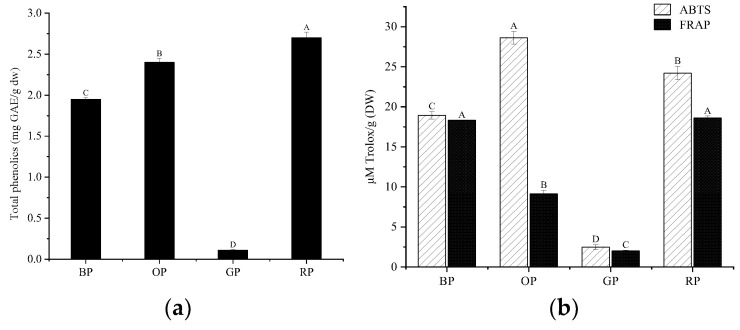
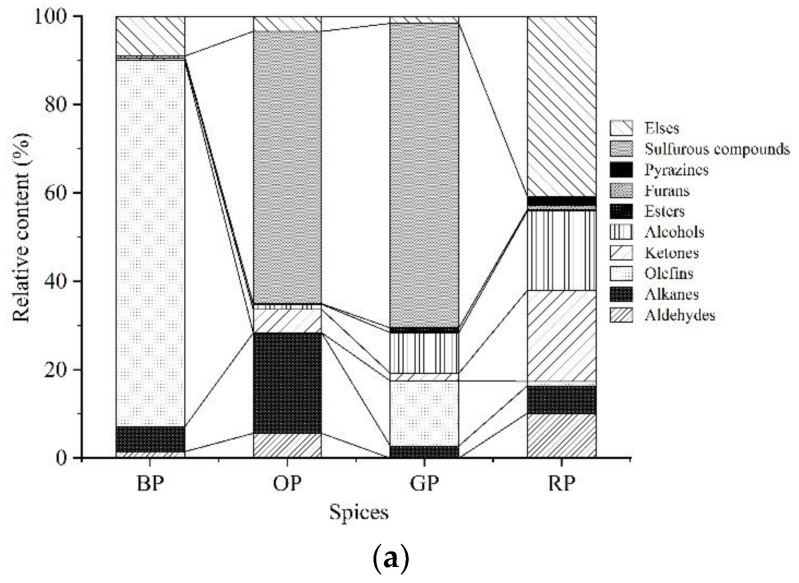
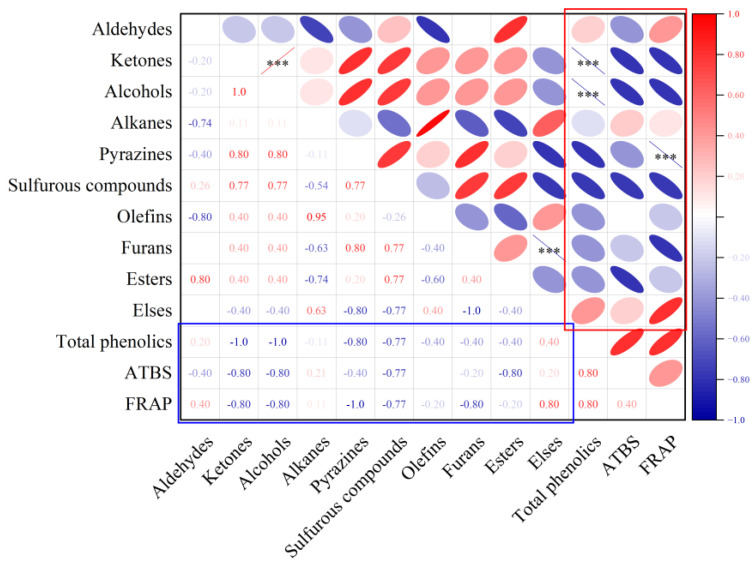
This study evaluated the correlation between the sensory characteristics and spices of 50 commercial meat analogs and selected 4 spices to improve the flavor characteristics of soy protein concentrate (SPC) extrudates. Volatile compounds in extrudates and commercial meat analogs were investigated using headspace solid-phase microextraction and gas chromatography-mass spectrometry. The total concentrations of off-flavor volatile compounds in commercial products decreased with an increasing degree of processing. Furthermore, after adding spices during extrusion, the concentrations of volatile compounds such as aldehydes, alcohols, and furans related to thermal treatment decreased by approximately 5-39%, 5-15%, and 11-56%, respectively. Among them, compounds such as nonanal, 2-pentlyufuran, and 1-octen-3-ol, typical off-flavors in soy-based food, decreased by 8-42%, 11-55%, 2-52%, respectively. The correlation analysis between the antioxidative abilities of spices and volatile compounds showed that the contents of total phenolics were negatively correlated with the contents of ketones and alcohols in extrudates ( < 0.001). Moreover, the aroma-active compounds in extrudates were changed. More pleasant compounds, including alkanes and olefins, were observed by adding different spices as well. Especially in black pepper treated extrudates, the OAV value of off-flavor volatile compounds such as hexanal, octanal, 2-pentlyfuran decreased. In conclusion, the addition of spices can reduce off-flavor compounds related to thermal reactions, such as oxidation and the Maillard reaction, and impart newly pleasant flavors to extrudates during the extrusion of SPC. It is important to explore new methods that can be used to improve the flavor of extrudates so that consumers' preferences of meat analog products can be improved.
本研究评估了50种商业肉类替代品的感官特性与香料之间的相关性,并选择了4种香料来改善大豆浓缩蛋白(SPC)挤出物的风味特性。采用顶空固相微萃取和气相色谱-质谱联用技术研究了挤出物和商业肉类替代品中的挥发性化合物。商业产品中异味挥发性化合物的总浓度随着加工程度的增加而降低。此外,在挤出过程中添加香料后,与热处理相关的醛、醇和呋喃等挥发性化合物的浓度分别降低了约5-39%、5-15%和11-56%。其中,壬醛、2-戊基呋喃和1-辛烯-3-醇等大豆基食品中的典型异味化合物分别降低了8-42%、11-55%、2-52%。香料抗氧化能力与挥发性化合物之间的相关性分析表明,挤出物中总酚含量与酮类和醇类含量呈负相关(<0.001)。此外,挤出物中的香气活性化合物也发生了变化。添加不同香料后还观察到了更多令人愉悦的化合物,包括烷烃和烯烃。特别是在黑胡椒处理的挤出物中,己醛、辛醛、2-戊基呋喃等异味挥发性化合物的OAV值降低。总之,添加香料可以减少与热反应相关的异味化合物,如氧化和美拉德反应,并在SPC挤出过程中赋予挤出物新的愉悦风味。探索可用于改善挤出物风味的新方法很重要,这样可以提高消费者对肉类替代品产品的偏好。