Kagawa School of Pharmaceutical Sciences, Tokushima Bunri University, Kagawa 769-2193, Japan.
Institute of Neuroscience, Tokushima Bunri University, Kagawa 769-2193, Japan.
Genes (Basel). 2023 Mar 29;14(4):825. doi: 10.3390/genes14040825.
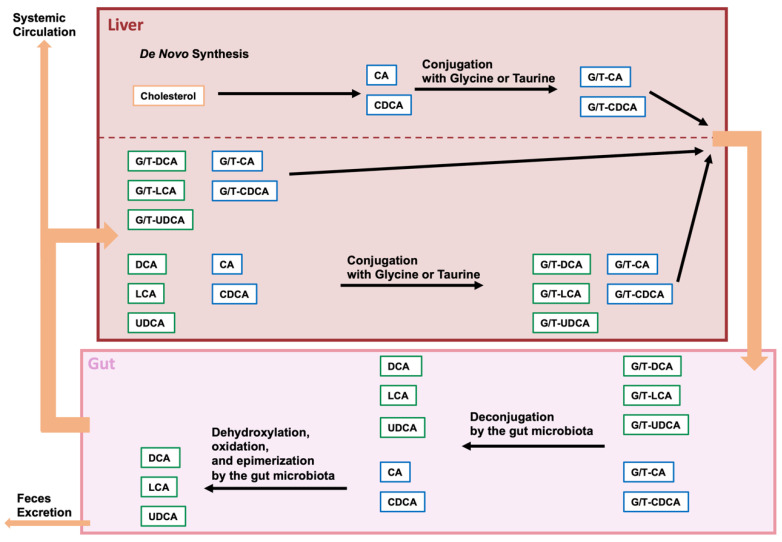
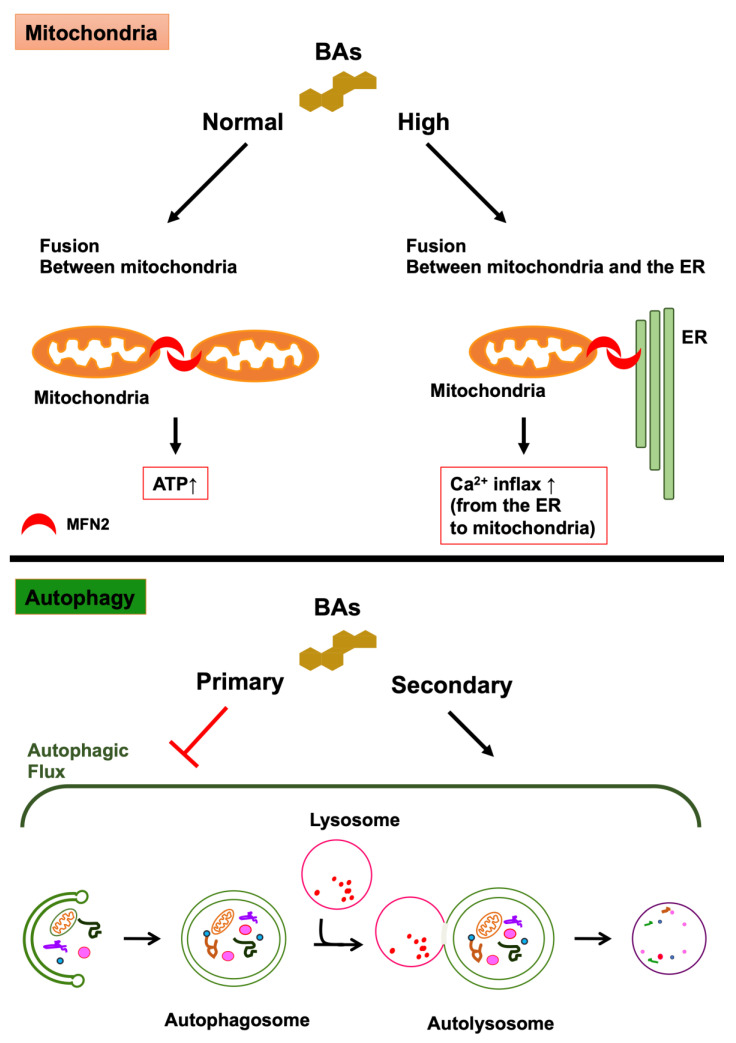
Bile acids (BAs) are amphiphilic steroidal molecules generated from cholesterol in the liver and facilitate the digestion and absorption of fat-soluble substances in the gut. Some BAs in the intestine are modified by the gut microbiota. Because BAs are modified in a variety of ways by different types of bacteria present in the gut microbiota, changes in the gut microbiota can affect the metabolism of BAs in the host. Although most BAs absorbed from the gut are transferred to the liver, some are transferred to the systemic circulation. Furthermore, BAs have also been detected in the brain and are thought to migrate into the brain through the systemic circulation. Although BAs are known to affect a variety of physiological functions by acting as ligands for various nuclear and cell-surface receptors, BAs have also been found to act on mitochondria and autophagy in the cell. This review focuses on the BAs modified by the gut microbiota and their roles in intracellular organelles and neurodegenerative diseases.
胆汁酸(BAs)是肝脏中胆固醇生成的两亲性甾体分子,有助于肠道中脂溶性物质的消化和吸收。肠道中的一些 BAs 被肠道微生物群修饰。由于肠道微生物群中的不同类型细菌以多种方式修饰 BAs,因此肠道微生物群的变化会影响宿主中 BAs 的代谢。尽管从肠道吸收的大多数 BAs 被转移到肝脏,但有些 BAs 被转移到全身循环。此外,大脑中也检测到了 BAs,据认为它们通过全身循环进入大脑。尽管 BAs 被认为通过作为各种核和细胞表面受体的配体来影响多种生理功能,但也发现 BAs 作用于细胞中的线粒体和自噬。本综述重点介绍肠道微生物群修饰的 BAs 及其在细胞内细胞器和神经退行性疾病中的作用。